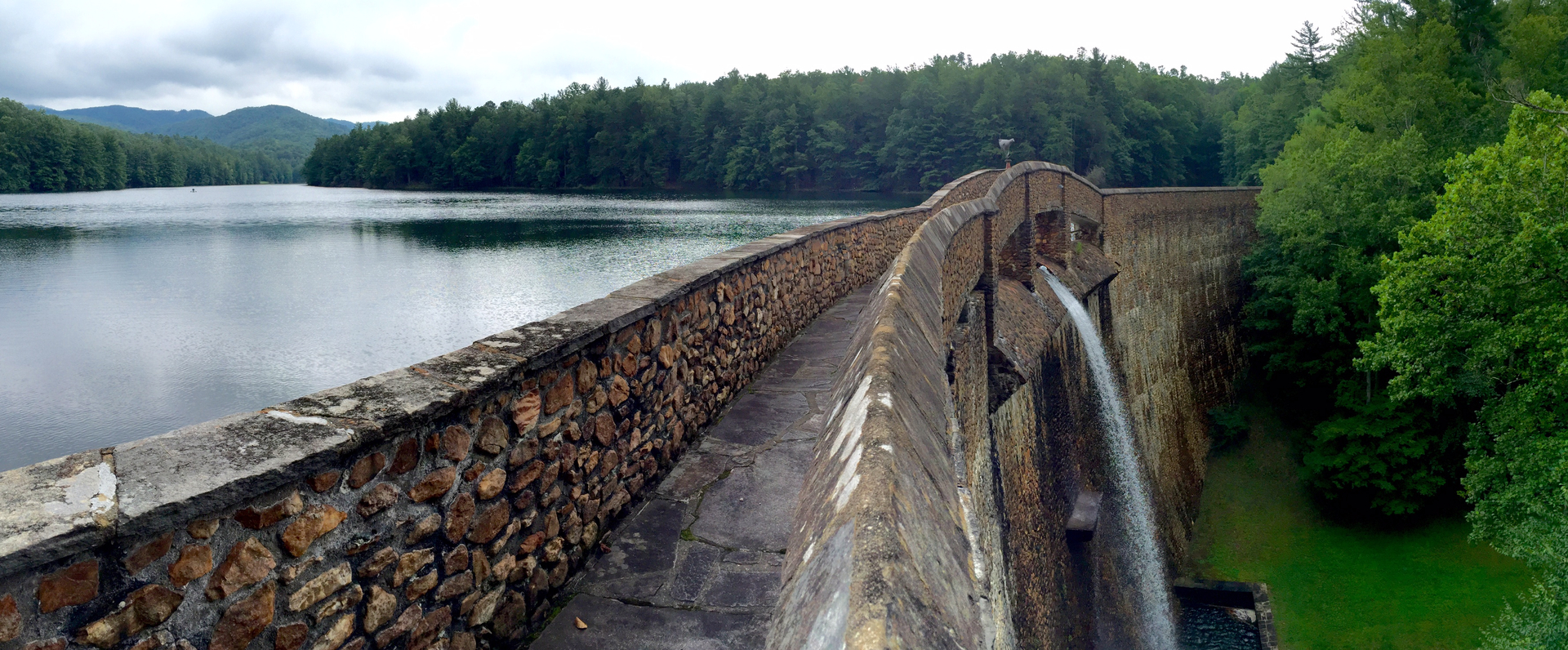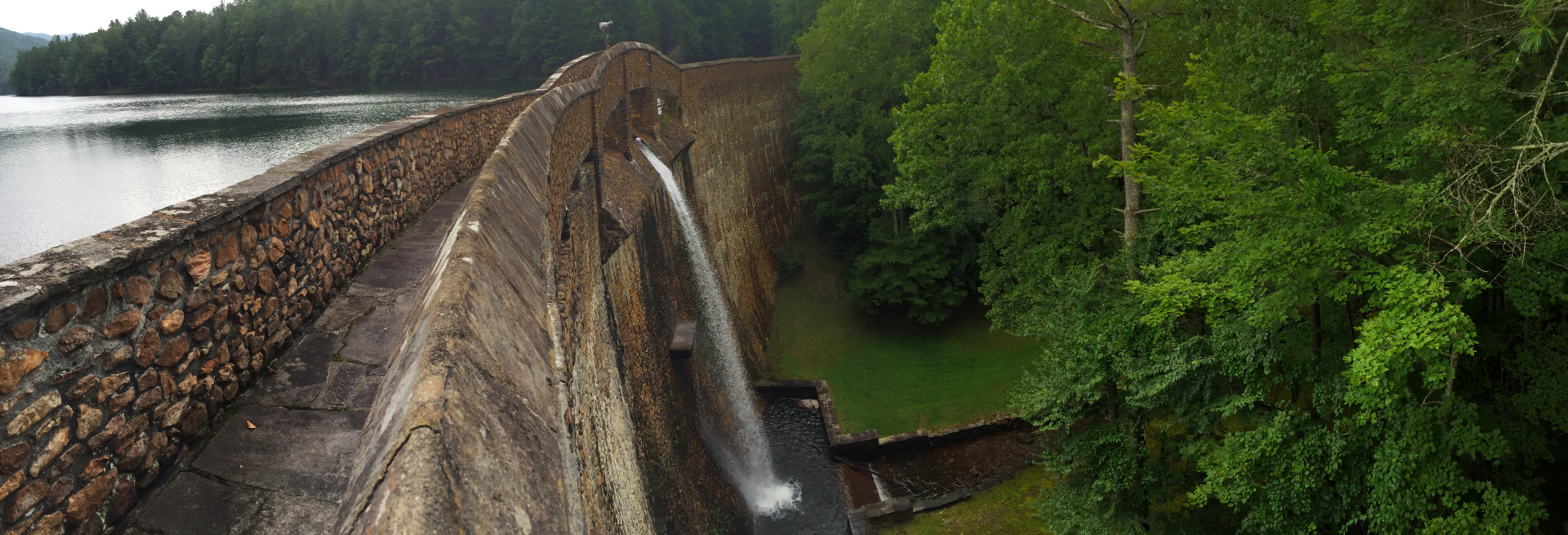

Panorama along the stone crest walkway of the Devotion hydroelectric dam, the lake on the left and the spillway falling into the green gorge on the right
Foothills of North Carolina

The R.J. Reynolds Estate, Devotion

A historic, fully self-sustaining estate designed and built by the forward-thinking R.J. "Dick" Reynolds during the Great Depression.

Scroll
Introduction

In the foothills of northwestern North Carolina lies one of America's most remarkable yet largely forgotten private estates.

Known simply as Devotion, this extraordinary mountain community was conceived during the darkest years of the Great Depression by Richard Joshua "Dick" Reynolds, Jr. (1906–1964), eldest son of tobacco industrialist Richard Joshua Reynolds and Katharine Smith Reynolds.

Far more than a country retreat, Devotion was envisioned as a fully self-sustaining mountain estate where engineering, agriculture, conservation, craftsmanship, and community would operate together as one integrated system. Spanning nearly 10,000 acres of forests, rivers, lakes, fertile farmland, and mountain wilderness, the estate became an extraordinary demonstration of what thoughtful planning and private enterprise could accomplish during one of America's greatest economic crises.

Nearly 10,000

acres on the Mitchell River

1930s

Rustic Revival construction

Long Creek Lodge

the estate's earlier name

Read the full history of the estate

The Estate

A landscape shaped by intention

Cover of Kid Carolina by Heidi Schnakenberg, a biography of R.J. Reynolds Jr.
Kid Carolina — Heidi Schnakenberg
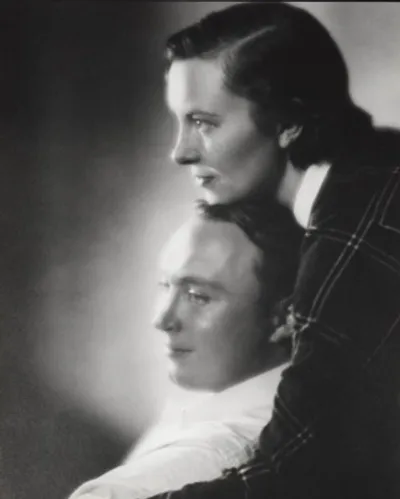
Studio portrait of R.J. "Dick" Reynolds Jr. and his wife Elizabeth "Blitz" Dillard Reynolds in profile
"Dick" and "Blitz" Reynolds
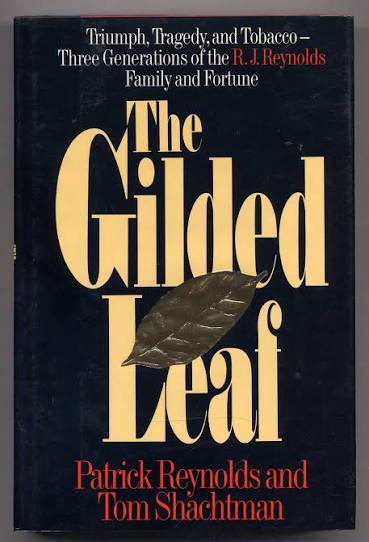
Cover of The Gilded Leaf by Patrick Reynolds and Tom Shachtman
The Gilded Leaf — Reynolds & Shachtman

One Man's "New Deal"

A private answer to a national crisis

The self-sustaining 10,000-acre estate, named Devotion, was designed and built by the forward-thinking "Dick" Reynolds in the midst of the Great Depression, forging the way for progressive engineering and serving as a prototype for numerous national landmarks and historic buildings.

During the early 1930s, tobacco magnate "Dick" Reynolds was one of the wealthiest men in America. Reynolds had his hands, and his mind, entrenched in national politics, economics, and business. He was the acting CEO of the R.J. Reynolds Tobacco Company and of various airline companies, as well as Mayor of Winston-Salem, North Carolina. In 1941, Reynolds was elected Treasurer of the Democratic Party under our 32nd President, Franklin Delano Roosevelt.

Dick Reynolds and Franklin Delano Roosevelt's personal friendship had gone back many years, and prior to FDR's national "New Deal" proposal, "Dick" Reynolds had begun his very own "New Deal" to boost the economy of North Carolina.

"Dick" Reynolds and his wife, Elizabeth Dillard Reynolds ("Blitz"), began purchasing large tracts of land in Surry County, North Carolina. They dreamed of creating a self-sustaining estate spanning over 10,000 acres — complete with everything a sophisticated town would need to function as efficiently as a well-greased engine.

The goal was to lift the North Carolina economy far above the economic depression that had swept the nation after the 1929 stock market crash. The plan was to create his own small-scale "New Deal," one that would create the jobs to put his fellow North Carolinians — as well as countless others worldwide — back to work, and usher in a new era of prosperity.

Constructed between 1933 and 1939, Devotion provided employment for hundreds of craftsmen, stone masons, carpenters, engineers, farmers, foresters, and laborers throughout northwestern North Carolina during a period when steady work had become increasingly difficult to find. "Dick" and "Blitz" planned to bring together the culmination of their knowledge, their philanthropic desires, and their deep love for each other into an estate to be called Devotion — reminiscent of their unwavering devotion to all things upstanding and altruistic.
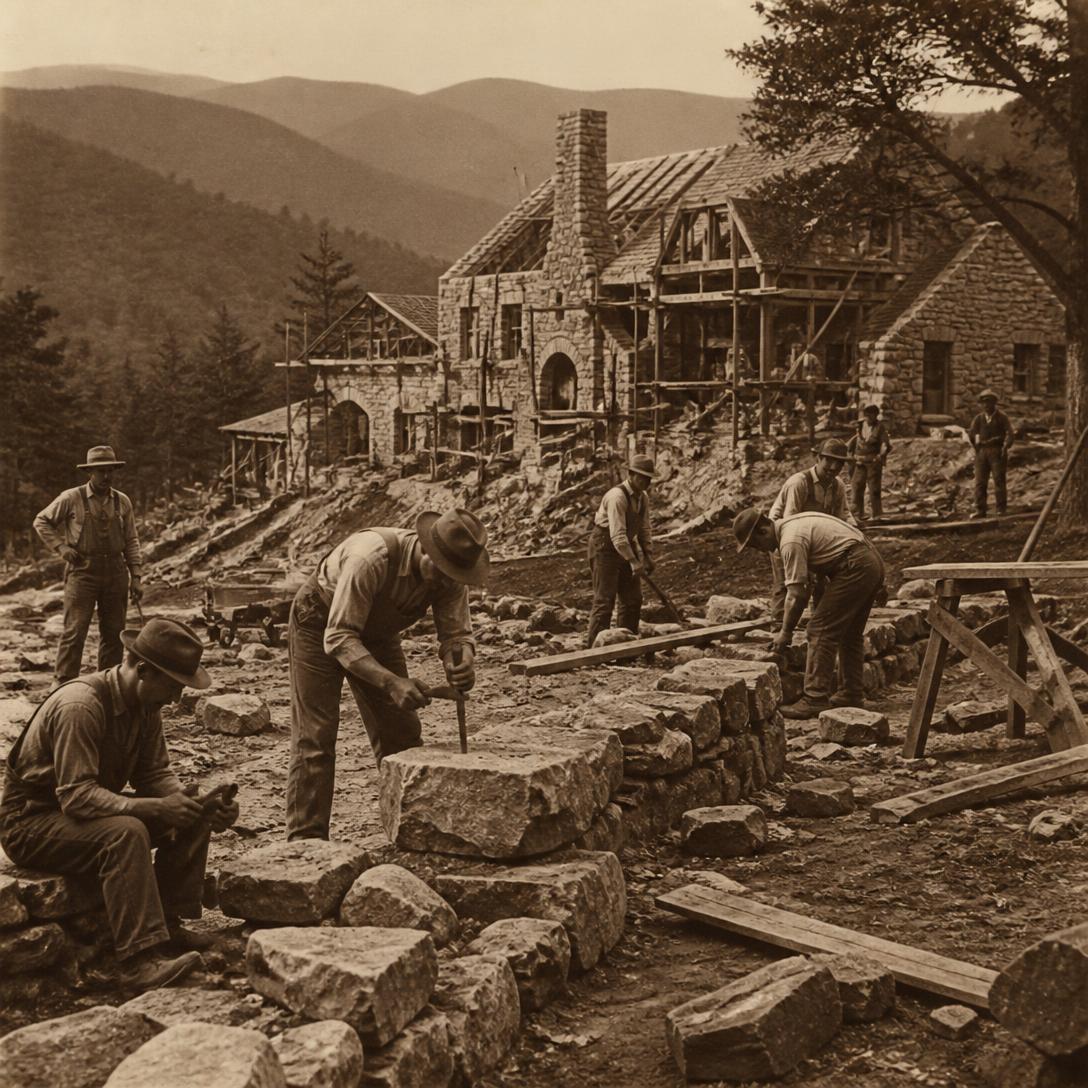
Craftsmen building the Devotion estate during the 1930s
"Things built to last should also inspire."

The conviction behind Devotion

"Carolina Gold" — original written by Kathryn Reynolds exploring the life and legacy of her father and grandparents life at Devotion Estate.

A Community Built to Sustain Itself

Nothing existed in isolation. Everything belonged to a larger design.

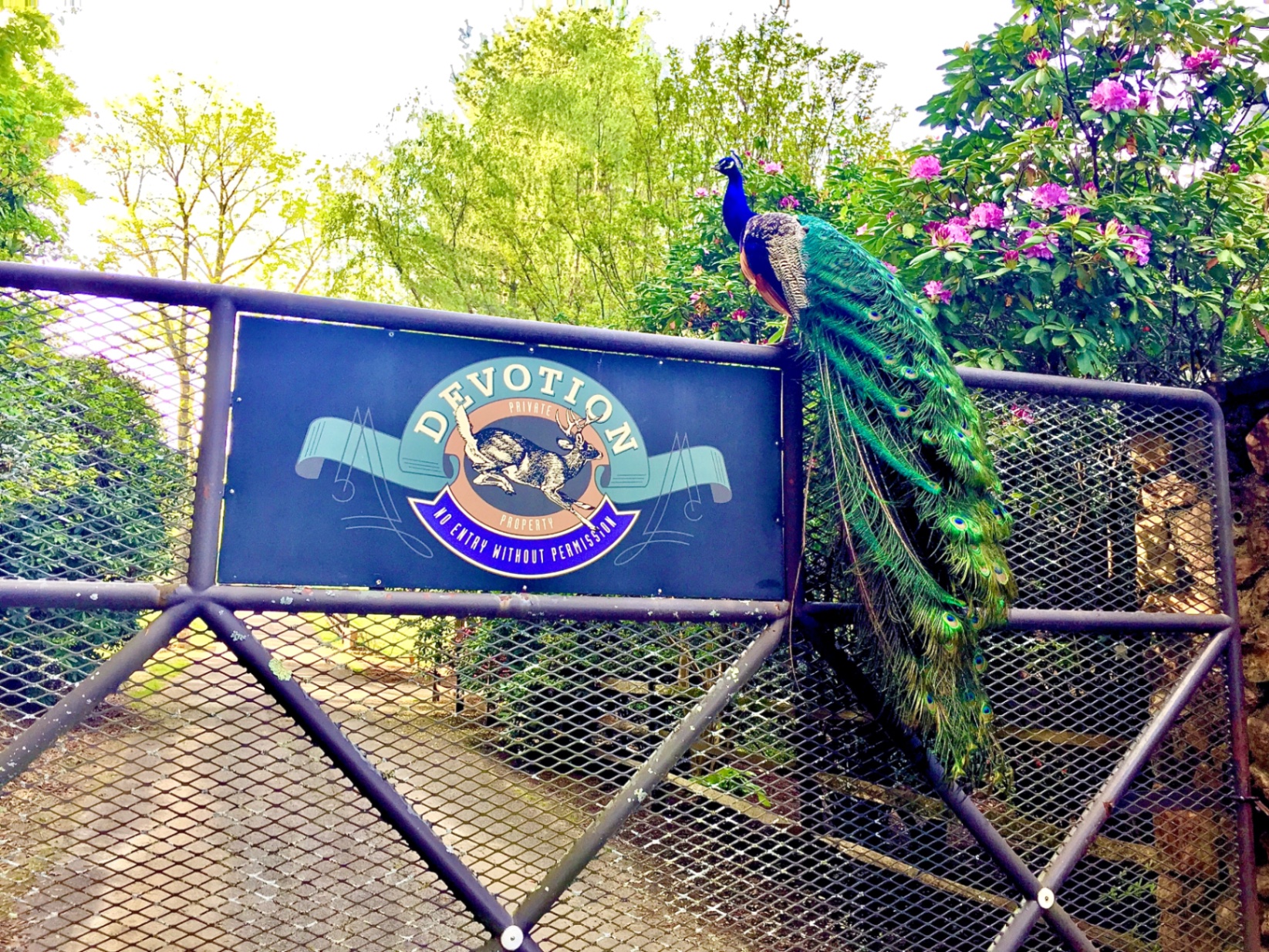
The iron entrance gate at Devotion with its painted leaping-deer sign reading Private Property, No Entry Without Permission, and a peacock perched on the rail

The Entrance Gate

An iron gate and painted sign mark the boundary of the estate — private property then as now, often watched over by one of the resident peafowl.

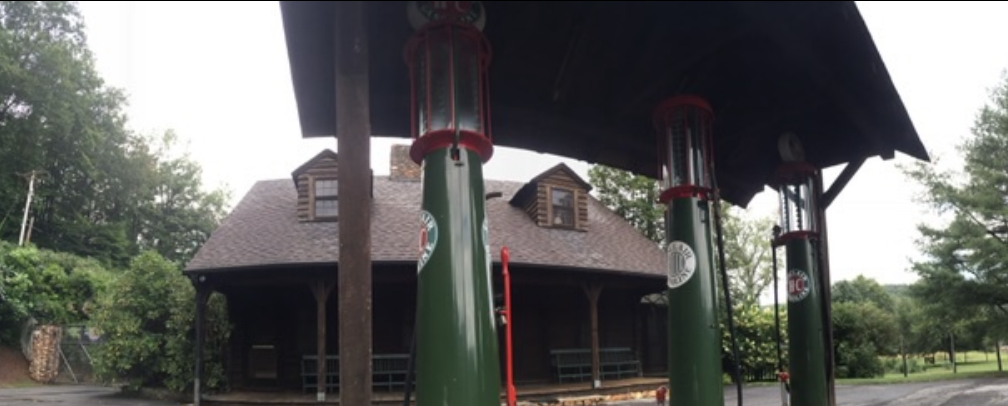
The log general store and post office at Devotion with a shingled roof, stone chimney, vintage Sinclair gasoline pumps, and a black 1930s sedan beneath the shed roof

The General Store & Post Office

A log store with its own post office and Sinclair pumps under the shed roof, supplying groceries, mail, and fuel to everyone living and working on the place.

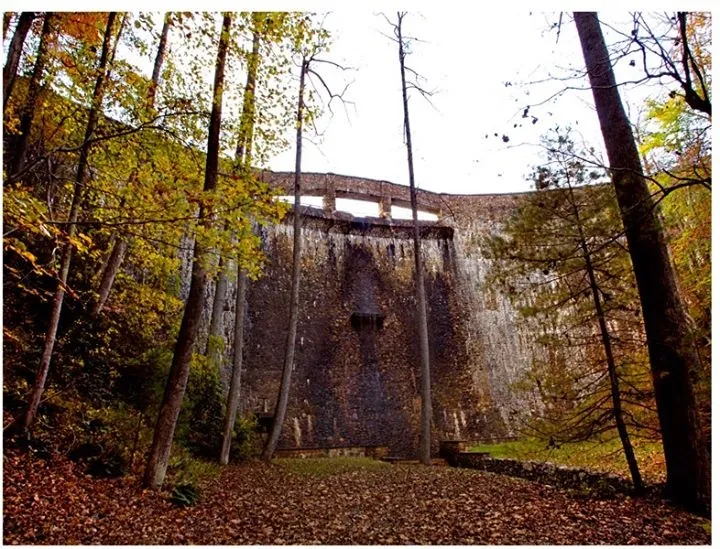
The curved masonry face of the hydroelectric dam at Devotion in autumn

The Hydroelectric Dam

A curved masonry arch dam built in the 1940s to the design of Army Corps engineers, generating the estate's own electricity from mountain water.

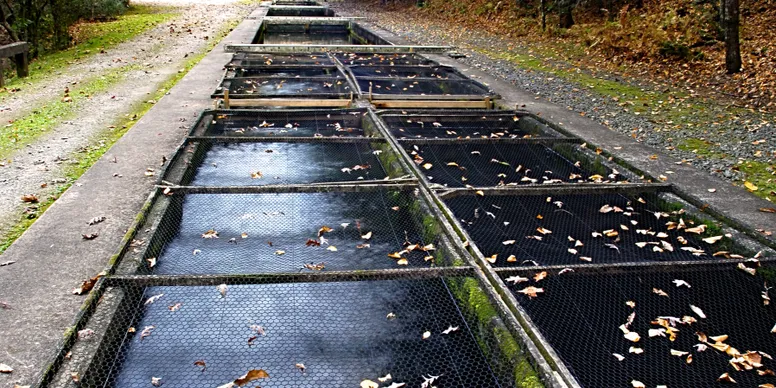
Long screened concrete raceways of the trout hatchery stretching along a gravel road

The Trout Hatchery

Water released from the dam runs by gravity into screened concrete raceways, where trout are graded by age before passing on to the ponds and the Mitchell River.

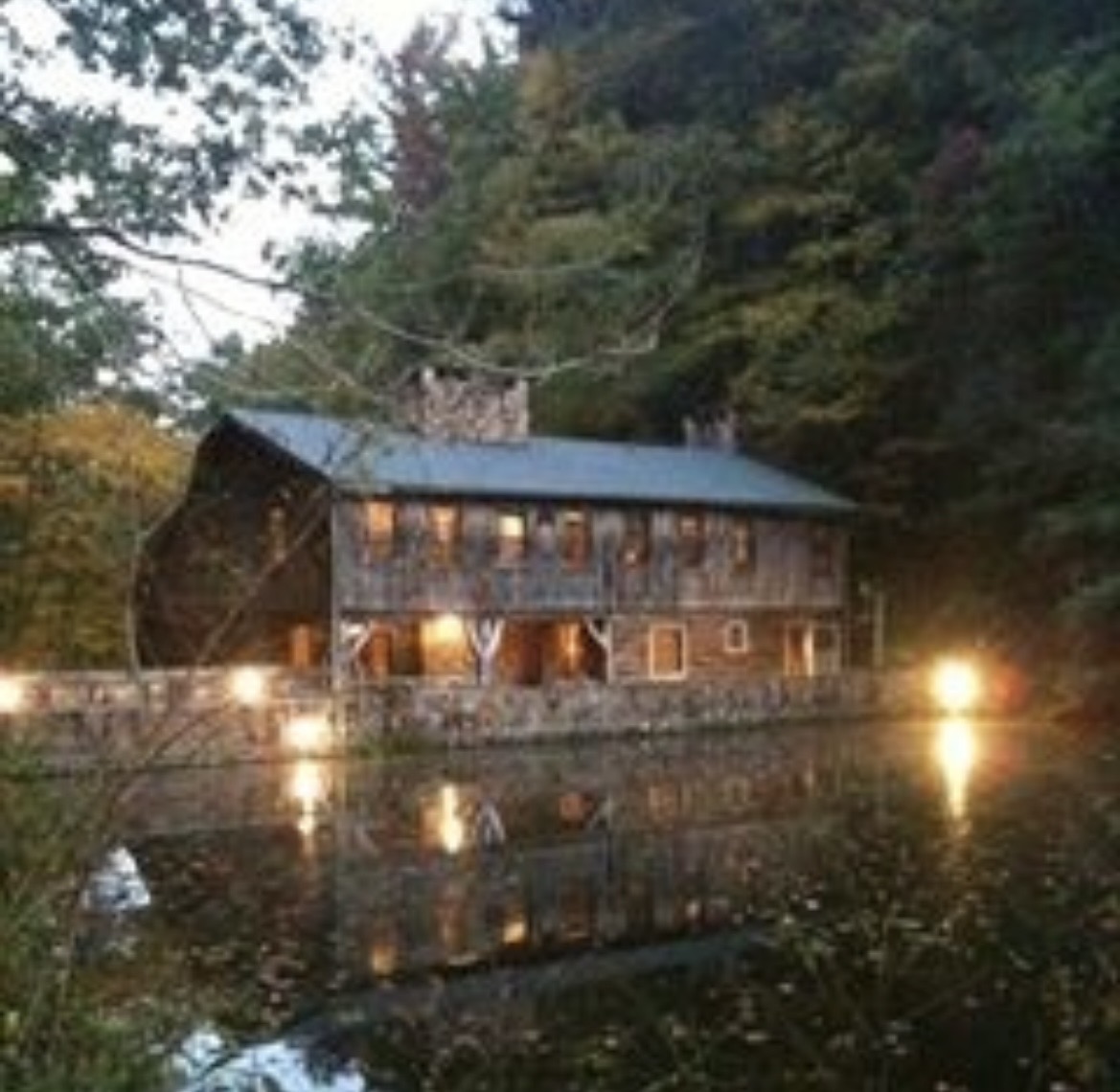
Long Creek Lodge at dusk, its lit windows reflected in the still lake

Long Creek Lodge

The main residence of Dick and Blitz Reynolds, built upon the dam of a second lake in chestnut and river rock — and the birthplace of their two youngest sons.

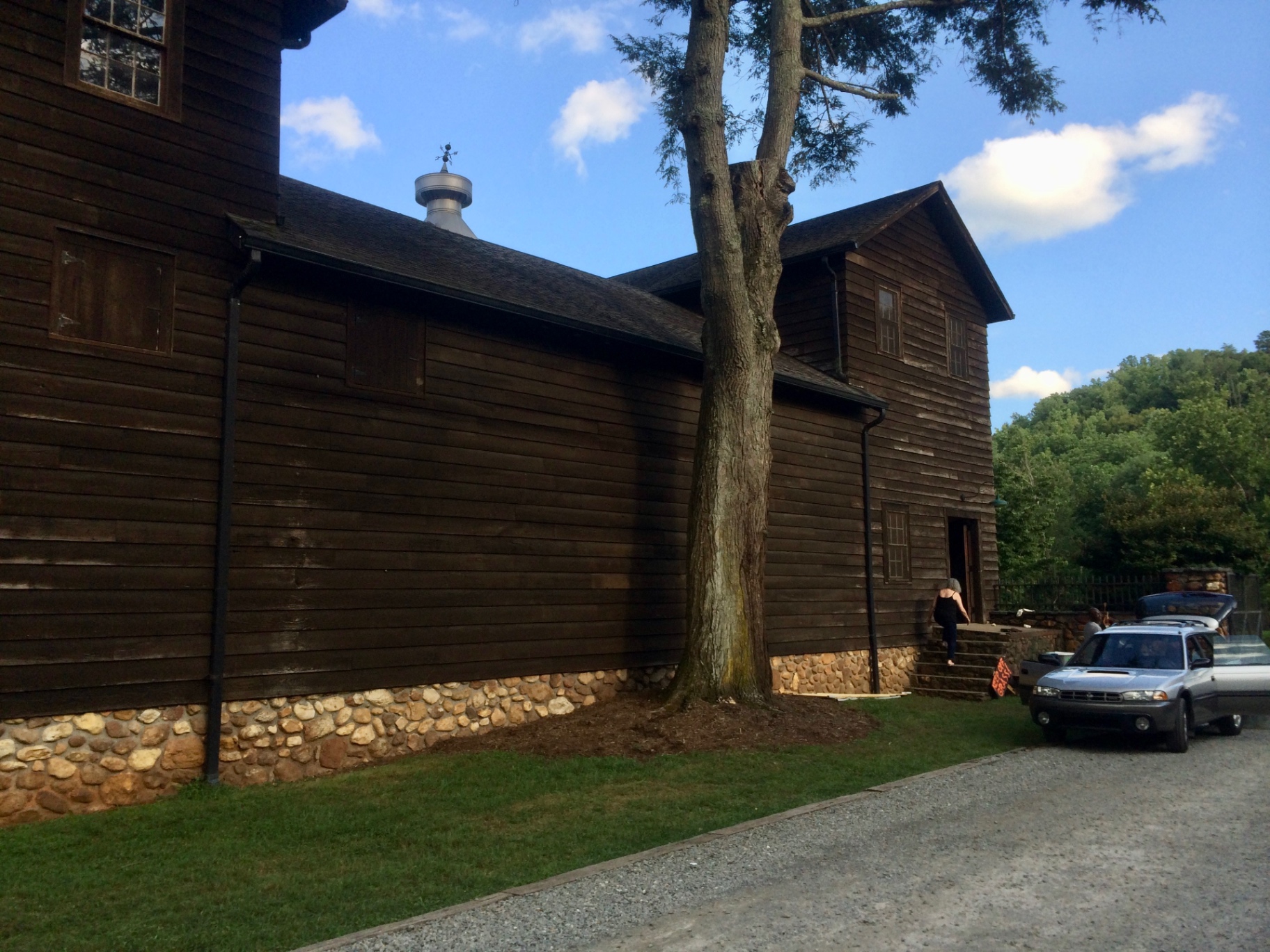
The Mill House at Devotion — a tall dark chestnut-clad building on a river-rock foundation with a metal cupola and weathervane

The Mill House

A tall chestnut-clad mill on a river-rock foundation, capped by a cupola and weathervane, where the estate ground its own grain.

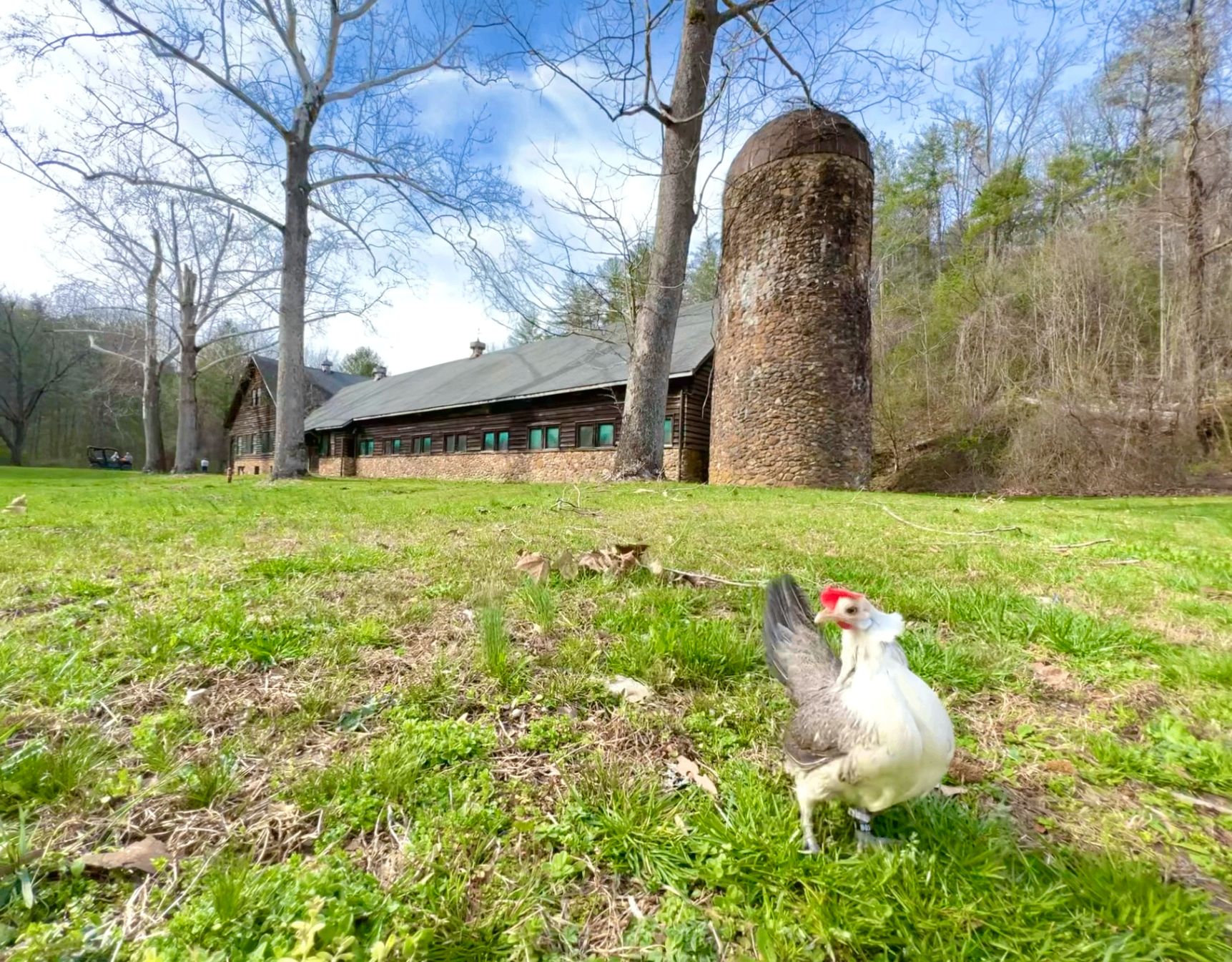
The long chestnut-log dairy barn at Devotion with its river-rock foundation and tall stone silo, a hen in the foreground on green spring grass

The Dairy Barn

The herd was milked on the place and the cream churned into butter, sold under the estate's own Long Creek Lodge Dairy label.

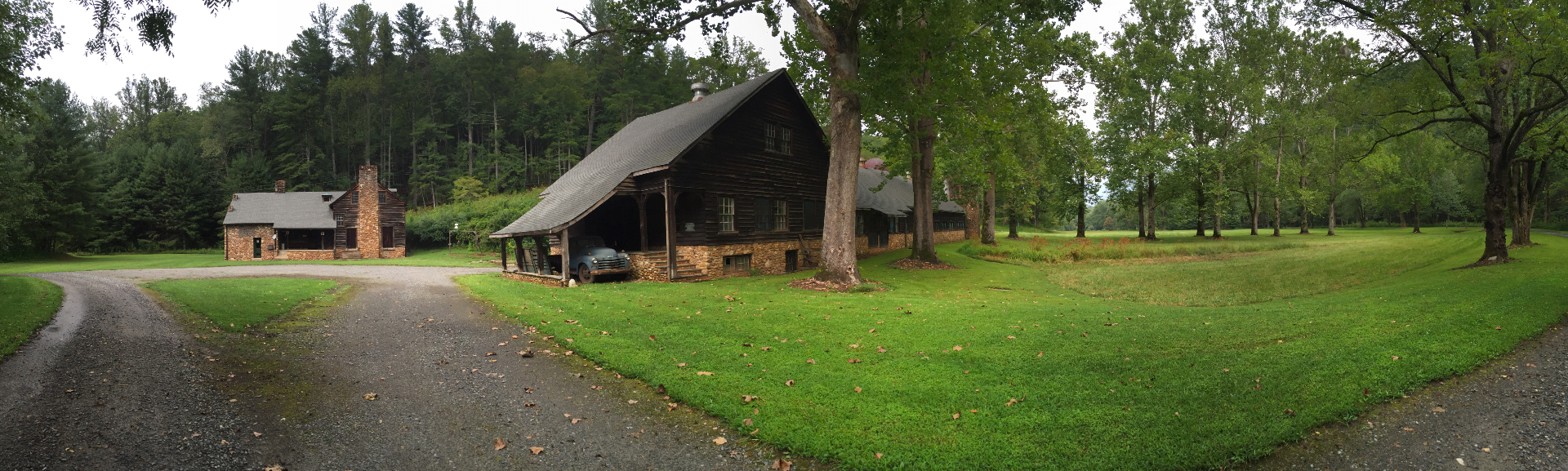
The stone and chestnut farm compound at Devotion with green fields beyond

The Slaughter House

Livestock raised in the surrounding fields was finished, butchered, and cured within the farm compound, alongside the cheese factory.

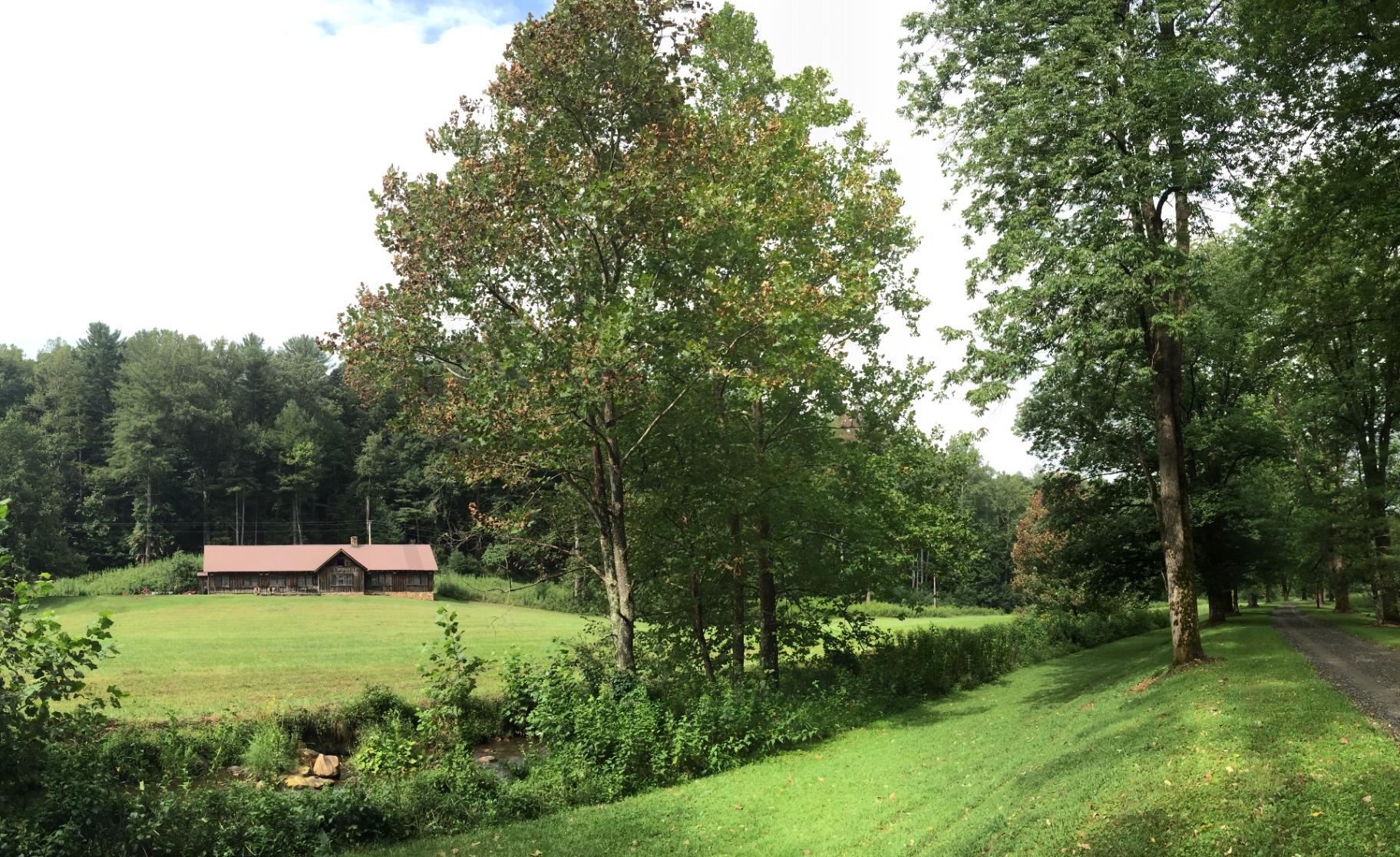
The long low poultry barn at Devotion with its red metal roof, seen across a wide mown field with hardwoods and a small creek in the foreground

The Poultry Barn

A long low barn with a red metal roof at the edge of the pasture, where the Long Creek Lodge flocks were raised and their eggs and birds leg-banded for market.

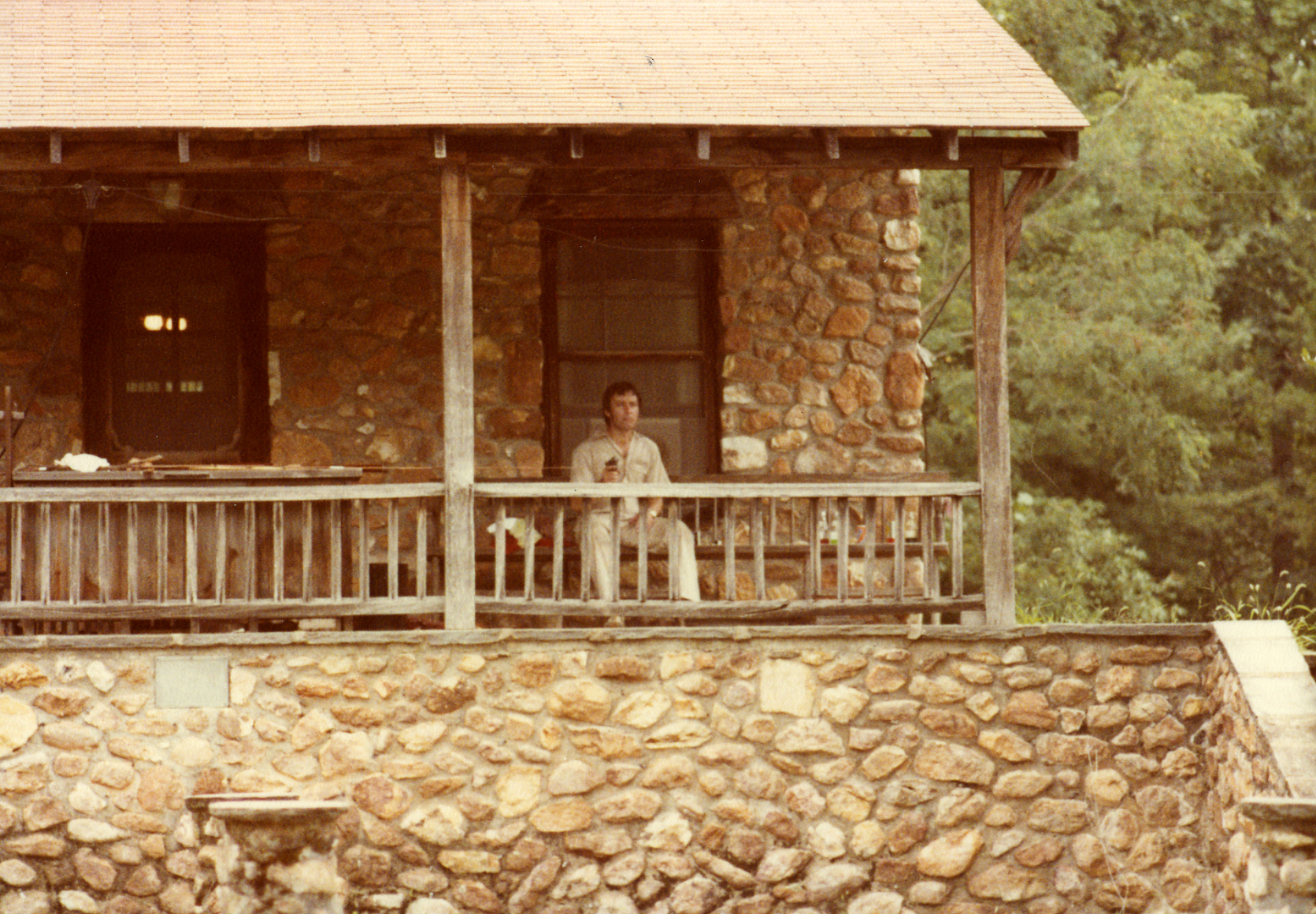
The stone skeet house at Devotion with its deep shaded porch

The Skeet House

A low stone building with a deep porch above the fields, built for shooting — and later a favorite workshop of Zach Reynolds.

The stone crest walkway of the Devotion dam, with the lake on one side and the spillway falling away on the other

More Than a Legacy

The greatest monument was never the lodge, the dam, or the roads

The story of Devotion did not end with its founders. Each generation inherited not only the land itself, but the freedom to imagine new possibilities for its future.

Today, nearly a century after its founding, Devotion continues to stand as a testament to an enduring belief: that vision, when joined with courage and stewardship, can leave a legacy far greater than any single generation.

For in the end, the greatest monument built at Devotion was never its lodge, its dam, or its roads. It was the idea that thoughtful stewardship of the land—and of one another—could create something that would outlive those who first imagined it.

The View From Devotion

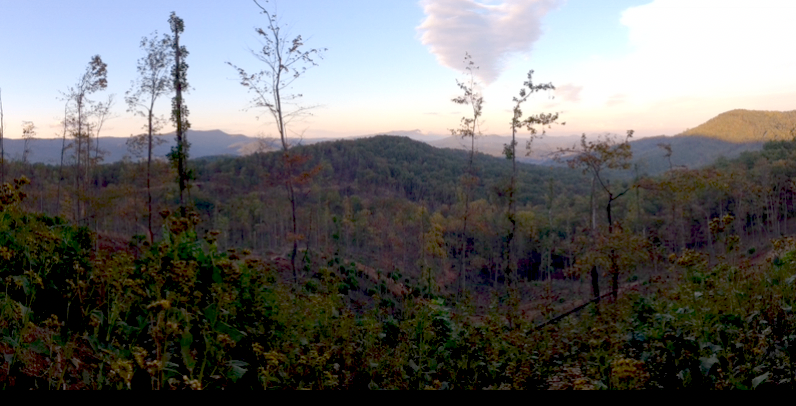
Ridgelines at Dusk

Ridgelines at dusk in the North Carolina foothills seen from the Devotion estate
Ridgelines at dusk, looking out across the estate