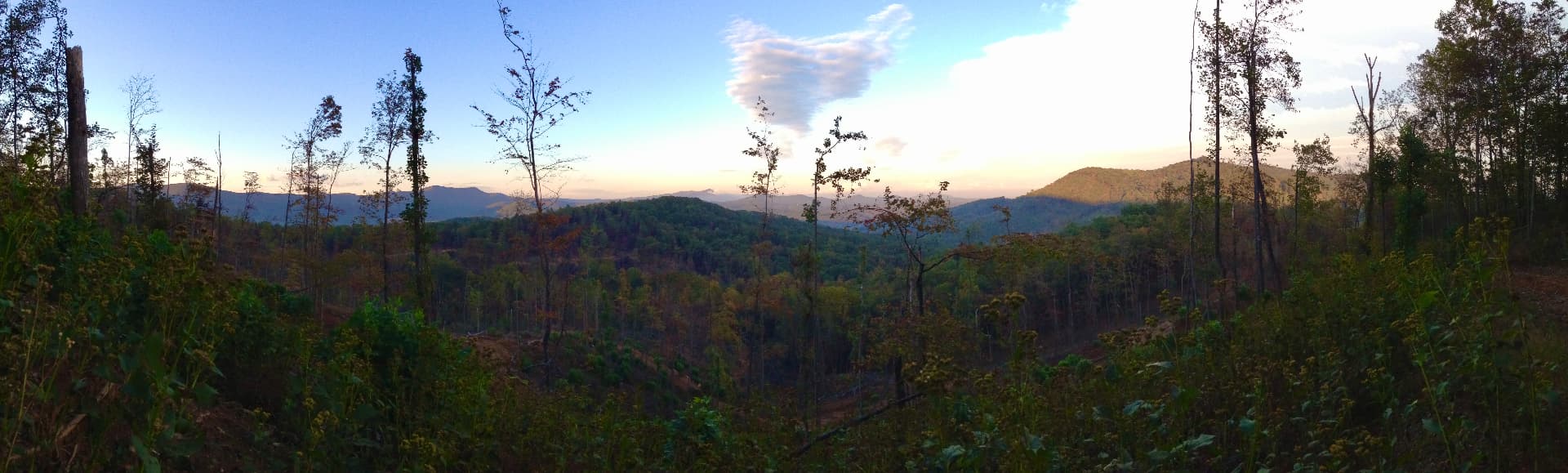
History of the Estate
Devotion — historically known as Long Creek Farm and Long Creek Lodge — is a private mountain estate on the Mitchell River, developed in the 1930s by Dick and Elizabeth "Blitz" Reynolds and recognized for its Rustic Revival architecture, hydroelectric engineering, and integrated agriculture.
- Location
- Bryan Township, Surry County, NC
- River
- The Mitchell River
- Also known as
- Long Creek Farm / Long Creek Lodge
- Built
- 1933–1939, during the Great Depression
- Architecture
- Depression-era Rustic Revival
- Extent
- Up to 11,000 acres
Overview
An unincorporated community and a private estate
Devotion is an unincorporated community in Bryan Township, western Surry County, North Carolina. It sits on the Mitchell River and is the site of a large family estate — recorded at as much as 100 square miles of holdings — owned by members of the R. J. Reynolds family.[18]
Historically also known as Long Creek Farm or Long Creek Lodge, the estate spans Surry and Alleghany counties. It was developed in the 1930s by R. J. Reynolds Jr., known as "Dick" Reynolds (1906–1964), and his wife Elizabeth Dillard Reynolds ("Blitz"), eventually encompassing nearly 10,000 acres, and is recognized for its Rustic Revival architecture, hydroelectric engineering, integrated agricultural systems, and association with the Reynolds family.[1]
Construction through the decade employed hundreds of craftsmen, engineers, stone masons, carpenters, foresters, farmers, and laborers, with buildings and infrastructure raised largely from stone and timber harvested or quarried on the property. Architectural historians Noah Reynolds and Kathryn Reynolds — both grandchildren of Dick Reynolds Jr. — describe Devotion as an intentionally planned, largely self-sustaining mountain community uniting hydroelectric power, agriculture, forestry, trout hatcheries, workshops, employee housing, and recreation into a single estate.[2]
Contemporary newspaper accounts from the 1930s and 1940s document the estate's commercial agricultural operations, including poultry, livestock, and farm products marketed under the Long Creek Lodge name.
A village unto itself
Buildings and workshops for every part of life
What sets Devotion apart is not a single house but the sheer number of buildings raised across it — well over a hundred structures of stone, chestnut, and hand-hewn timber, each built for a purpose and sited so that the whole place could run without help from the outside world. Nothing was ornamental for its own sake, and almost nothing was bought in that could be made on the property.
Work and production had their own quarter: the powerhouse and forebay, the three-story electric grain mill, the sawmill and lumber sheds, blacksmith and machine shops, the woodworking shop and the metallurgy shop, garages and equipment barns, gardeners' storage, greenhouses, canning and cold storage, a slaughterhouse and smokehouse, the creamery where Long Creek Lodge butter and cheese were made, the dairy barn with its stone silo, the poultry houses and brooder ranges, hog and horse barns, kennels, and the trout hatchery with its raceways and rearing ponds.
Daily life was provided for just as deliberately. Dozens of cottages and dormitories housed the families who worked the estate; the log general store carried groceries, dry goods, and fuel and held the Devotion post office; a schoolhouse, a chapel, a commissary, an infirmary, and a working farm office with its own telephone and radio equipment rounded out the settlement, all of it lit and heated by the estate's own current.
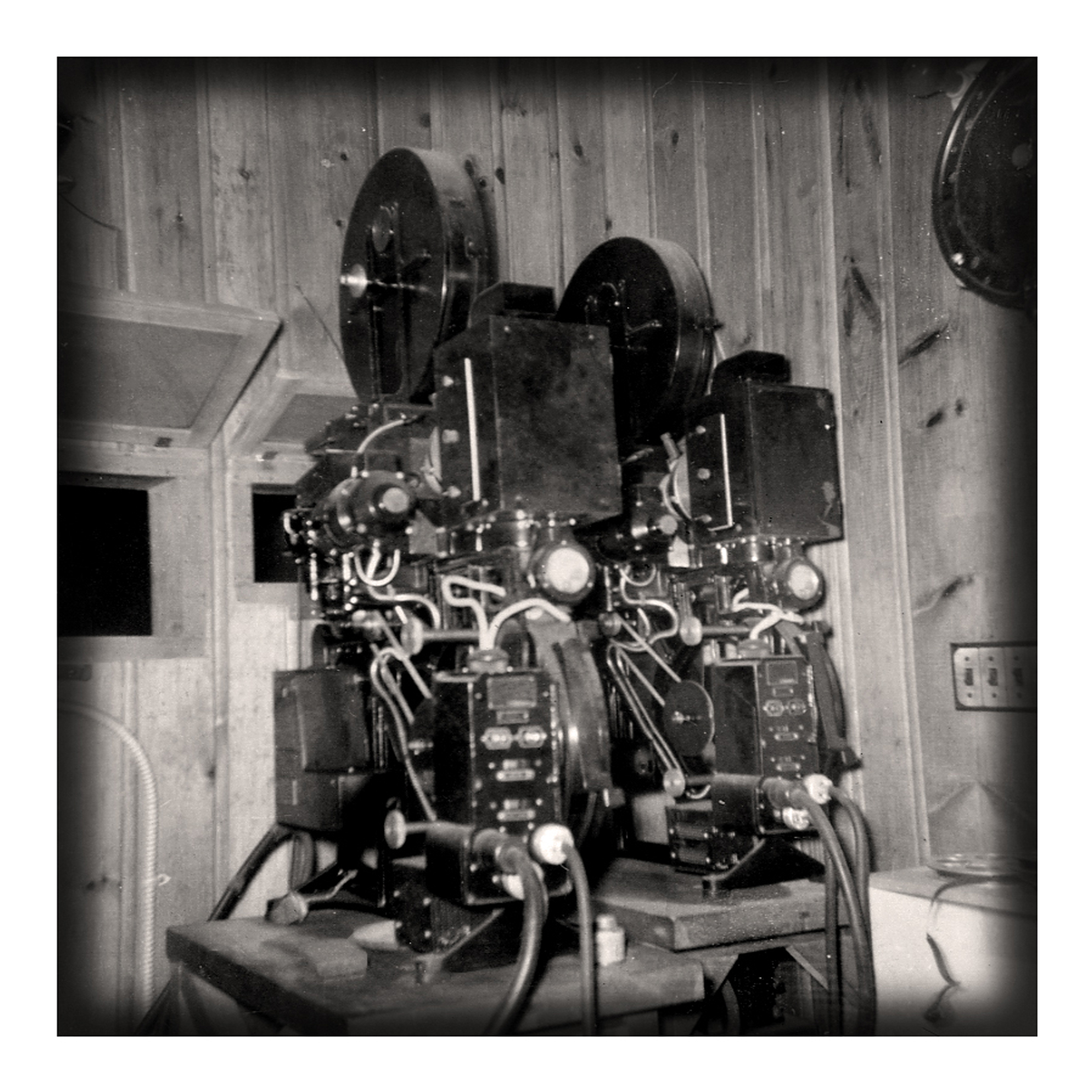
And recreation was treated as a necessity rather than a luxury. Long Creek Lodge itself was built for gathering, with a movie theater connected to the workshop range and projection equipment ordered from Hollywood distributors. Beyond it lay the Olympic-grade stone skeet and trap field with its high and low houses, the lake with its boathouse, diving float, and canoe fleet, bathhouses and picnic shelters, riding stables and bridle trails, tennis and horseshoe grounds, hunting lodges and camps back in the timber, and miles of built roads and stone bridges laid out simply so the place could be enjoyed. Work, worship, schooling, and play were all designed into the same square miles.
Legacy
One of the century's great mountain estates
Devotion remains one of North Carolina's most significant privately developed mountain estates of the twentieth century, noted for integrating architecture, engineering, agriculture, forestry, and landscape planning into a unified mountain community.
Much of the original infrastructure — the hydroelectric dam, the lakes, bridges, roads, and numerous historic buildings — survives as part of the privately owned estate.[17]
- Full name
- Richard Joshua Reynolds Jr.
- Known as
- "Dick" Reynolds
- Born
- April 4, 1906 — Winston-Salem, NC
- Died
- December 14, 1964
- Public office
- Mayor of Winston-Salem, 1941–1945
- Navy service
- USS Makin Island; Bronze Star
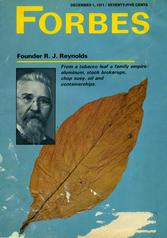
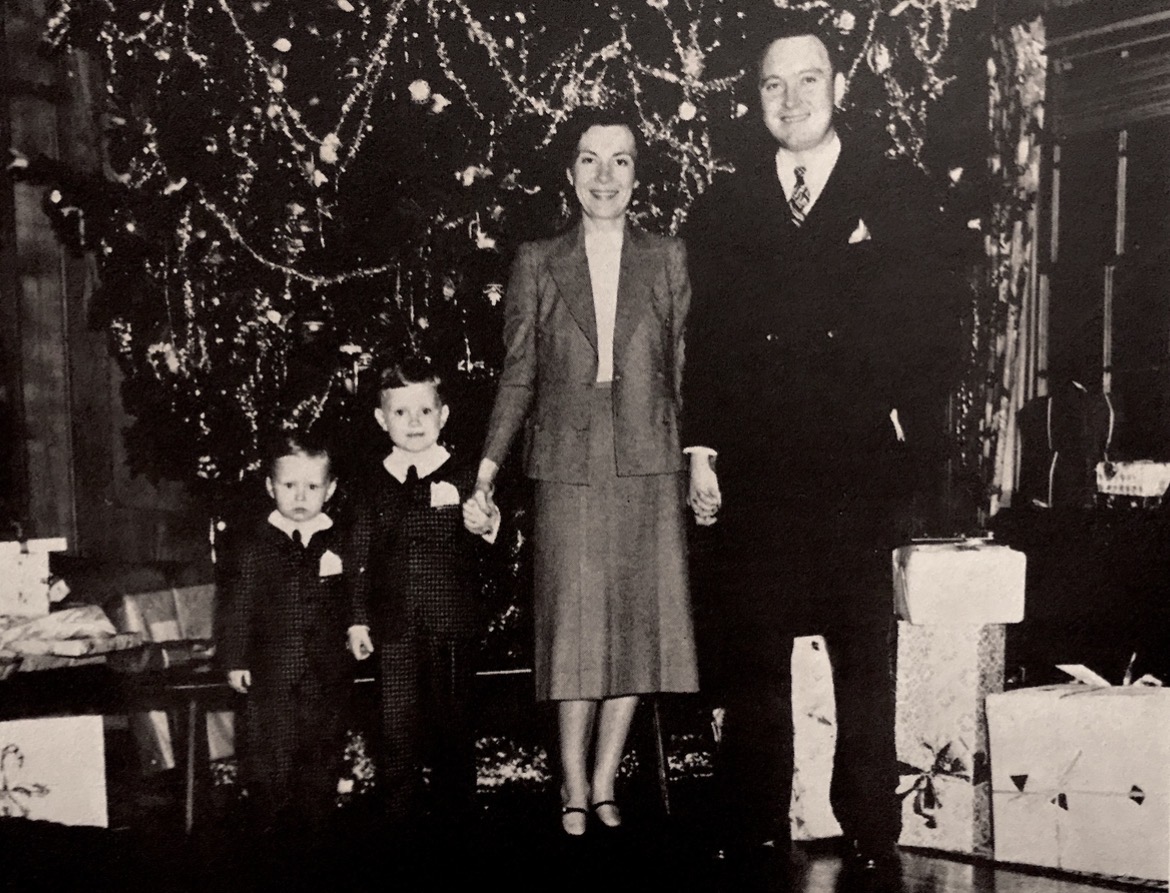

The Man Who Built It
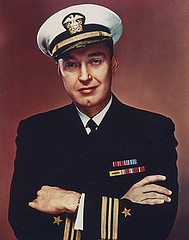
R. J. Reynolds Jr., known as "Dick" Reynolds
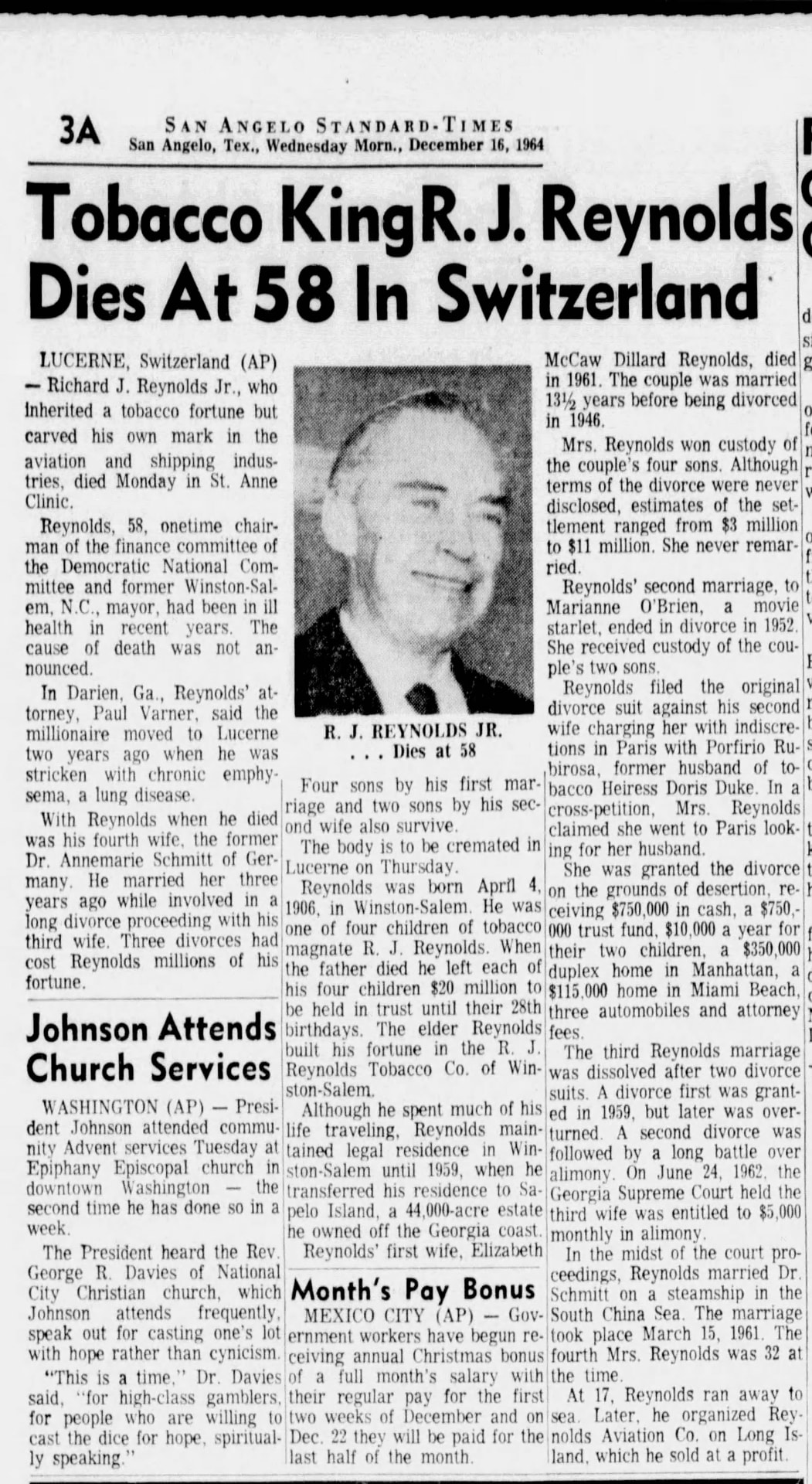
Richard Joshua Reynolds Jr. — called "Dick" by nearly everyone who knew him — was born in Winston-Salem on April 4, 1906, the eldest son of R. J. Reynolds, founder of the R. J. Reynolds Tobacco Company, and Katharine Smith Reynolds. He grew up on the family's Reynolda estate, attended Culver Military Academy, the Tome School, and Woodberry Forest, and studied mechanical engineering at North Carolina State College.[21]
Machines fascinated him early. He earned his pilot's license at eighteen, convinced that passenger and freight aviation was the coming industry. He bought Curtiss Field on Long Island — the airfield from which Charles Lindbergh took off for Paris in 1927 — helped develop the first American amphibian aircraft through the Ireland Amphibian Company, and served as president of Reynolds Aviation from 1927 to 1929. Later he rescued Delta Air Lines with a major stock purchase in 1940 and rebuilt the bankrupt American Mail Line of Seattle into a wartime Pacific shipping fleet.[21]
His youth was as turbulent as it was privileged: a fortune at twenty-one, a restless run through New York cafés, a 1929 manslaughter conviction after a fatal drunk-driving crash and five months in jail, then three years at sea captaining his own steam freighter. He came home to Winston-Salem in 1932, and on January 1, 1933, married Elizabeth "Blitz" McCaw Dillard. It was in the years immediately after that marriage that the couple began buying mountain farmland on the Mitchell River and building Devotion.[21],[22]
He was also, unusually for a man of his fortune, a New Dealer by conviction. His friendship with Franklin Delano Roosevelt went back years, and Devotion took shape as a privately financed answer to the same question the federal programs were asking: how to put people back to work. Reynolds began his own version in the mountains of Surry County before Washington began its — ten thousand acres of it, paid for out of his own pocket.[28]
Public life followed. Elected mayor of Winston-Salem in 1940, he pushed slum clearance through local opposition and secured U.S. Housing Authority funding for it; in 1941 he became finance chairman — and treasurer — of the national Democratic Party. He left politics for the Navy, serving as chief navigator of the escort carrier USS Makin Island, earning the Bronze Star for his navigation at Iwo Jima and in the Philippines, and mustering out in 1945 as a lieutenant commander.[21]
He gave away a great deal of what he made. With his sisters he founded the Z. Smith Reynolds Foundation in 1936 in memory of their brother, and its first major campaign against syphilis in the rural South became the model for a federal program. He endowed the Sapelo Island Research Foundation at the University of Georgia for marine biology and oceanography, helped move Wake Forest University to Winston-Salem, donated the family home for a public library, and funded Tanglewood Park, Reynolds Park, Smith Reynolds Airport, and city and Baptist hospitals.[21]
Married four times and father of seven children, he spent his later years largely at Sapelo Island, Georgia, and abroad, and died on December 14, 1964. Devotion passed to his four sons by Blitz — Josh, John Dillard, Zachary Taylor, and William Neal II — and the estate he had built as a self-sustaining mountain community remains the most complete expression of the man: an engineer's mind, a builder's patience, and a habit of doing things on a scale nobody asked for.[21],[22]
Elizabeth "Blitz" Dillard Reynolds
The other half of Devotion
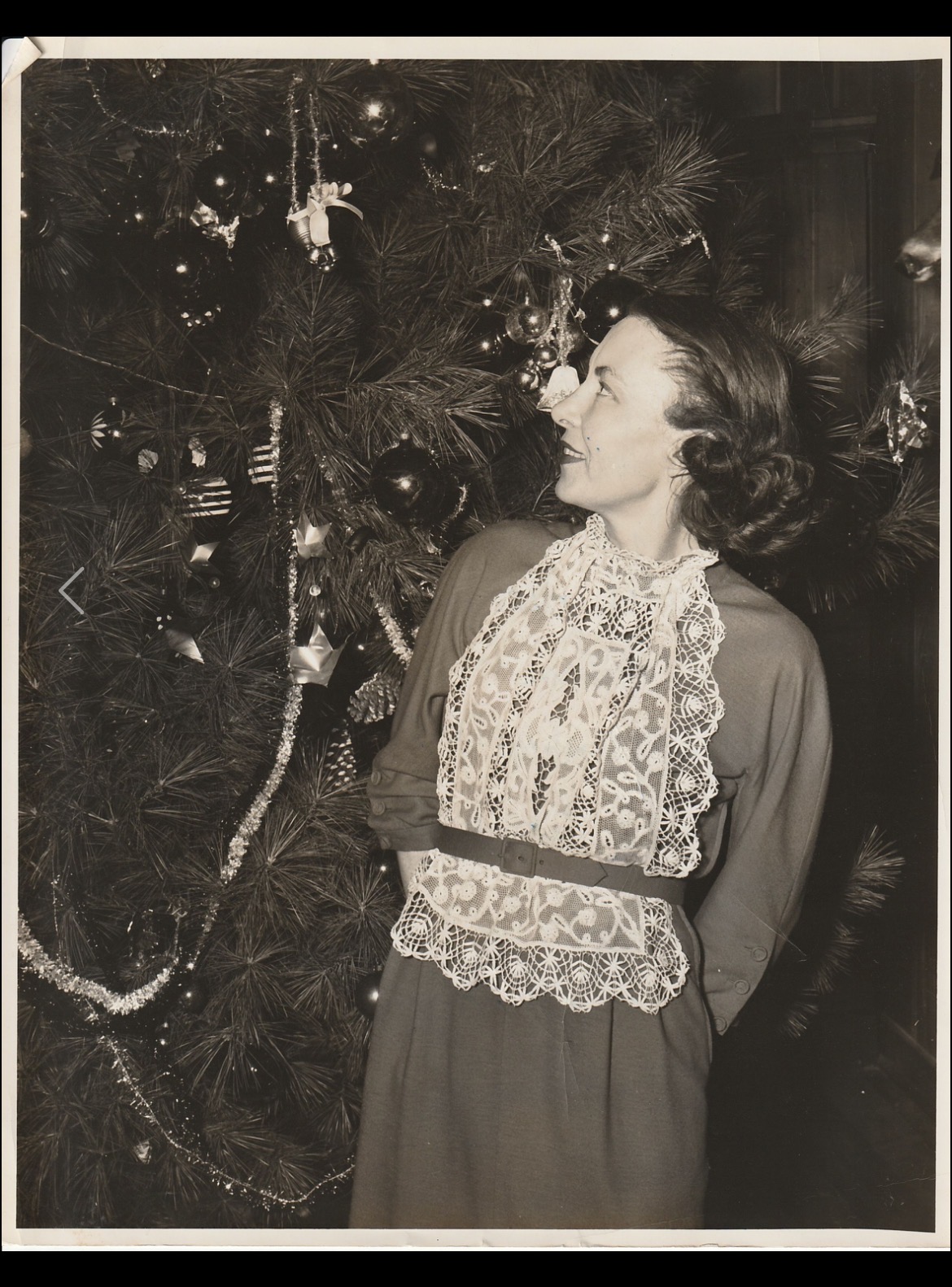
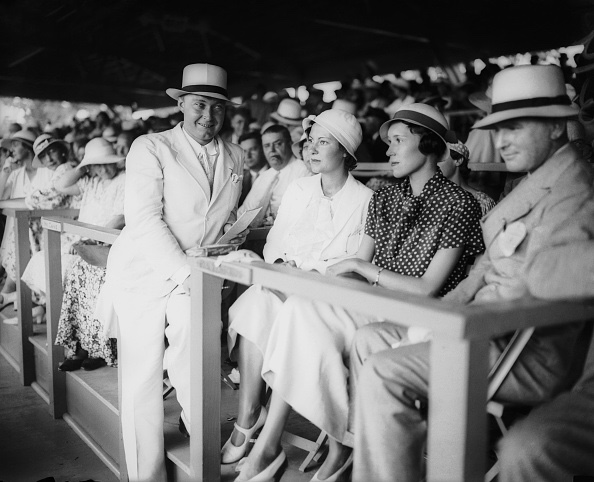
Elizabeth McCaw Dillard — "Blitz" since childhood — was born January 16, 1909, in Forsyth County, North Carolina, and educated at Reynolds High School and Sweet Briar College. She married Richard J. Reynolds Jr. on January 1, 1933, and together they began buying mountain farmland on the Mitchell River and building Devotion. They had four sons — Josh, John Dillard, Zachary Taylor, and William Neal II — and divorced in 1946.[25],[26]
A civic leader in her own right, she chaired the Winston-Salem naval procurement committee for the WAVES and SPARS during the Second World War, served as a trustee of the University of North Carolina, and was a director of the outdoor drama "The Lost Colony," the Tryon Palace restoration, and the local Little Theater. She died in Winston-Salem on December 10, 1961, at fifty-two, and is buried at Devotion at the site of the bowling green.[26],[27]
For much of that time she was, in every practical sense, the manager and overseer of all of Devotion's workings. Dick Reynolds was away for extensive periods during the Second World War, and the running of a nearly self-sustaining estate of some ten thousand acres fell to her: she ordered the supplies, met the payroll for the men and women who worked the farms, dairy, shops, and hatchery, kept the accounts, and directed the daily goings-on of the place — all while raising four young sons.
It was essentially a one-woman show, and her capacity to hold all of it at once was exemplary. Her surviving ledgers and bookkeeping records tell the story plainly: page after page of meticulous, patient organization, kept in a firm hand, by someone determined to see every job at Devotion completed with excellence.
The Working Estate
A planned, largely self-sustaining mountain community
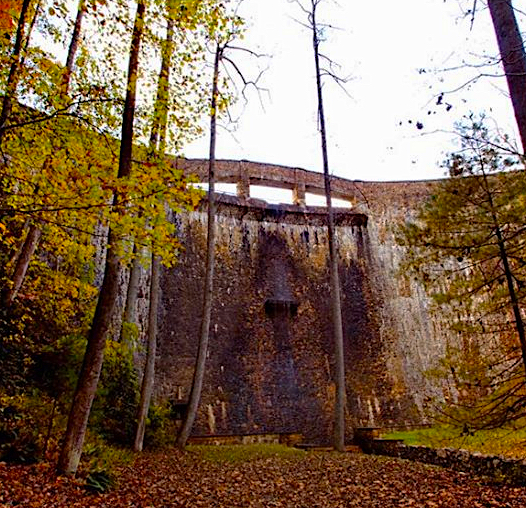
Power & water
- An eighty-foot rock-faced dam — a scale model for Boulder Dam
- A powerhouse, forebay, and concrete catch ponds below the spillway
- Six lakes, bridges, and mountain roads
- Gravity-fed spring water and trout hatcheries
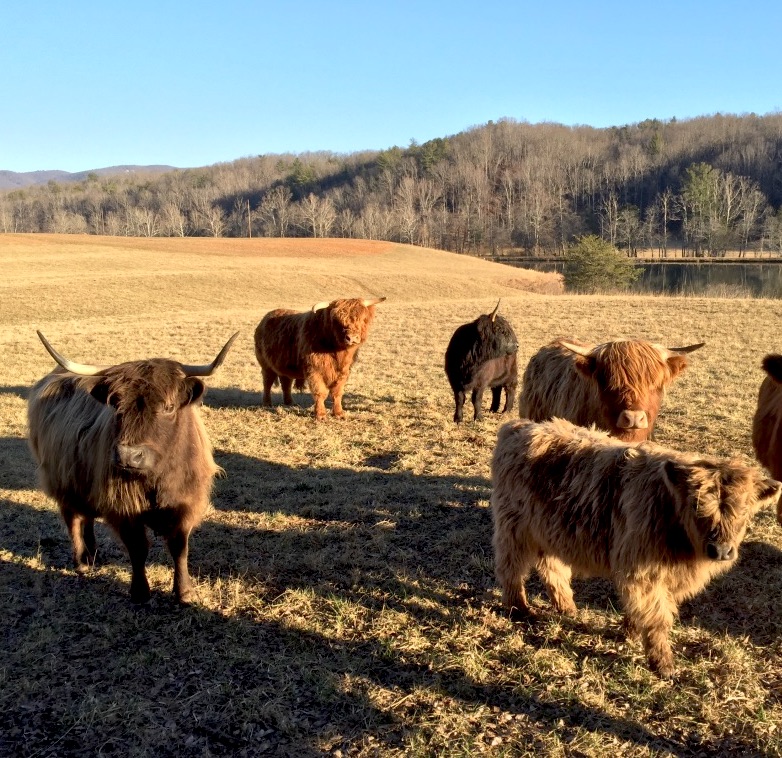
Farm & forest
- Butter, milk, cheese, trout, and grain supplied to the region
- Poultry, turkey houses, pig lots, and a slaughterhouse
- Organic gardens and a cannery for putting the harvest by
- A granary and mill house; managed forests and a wildlife preserve
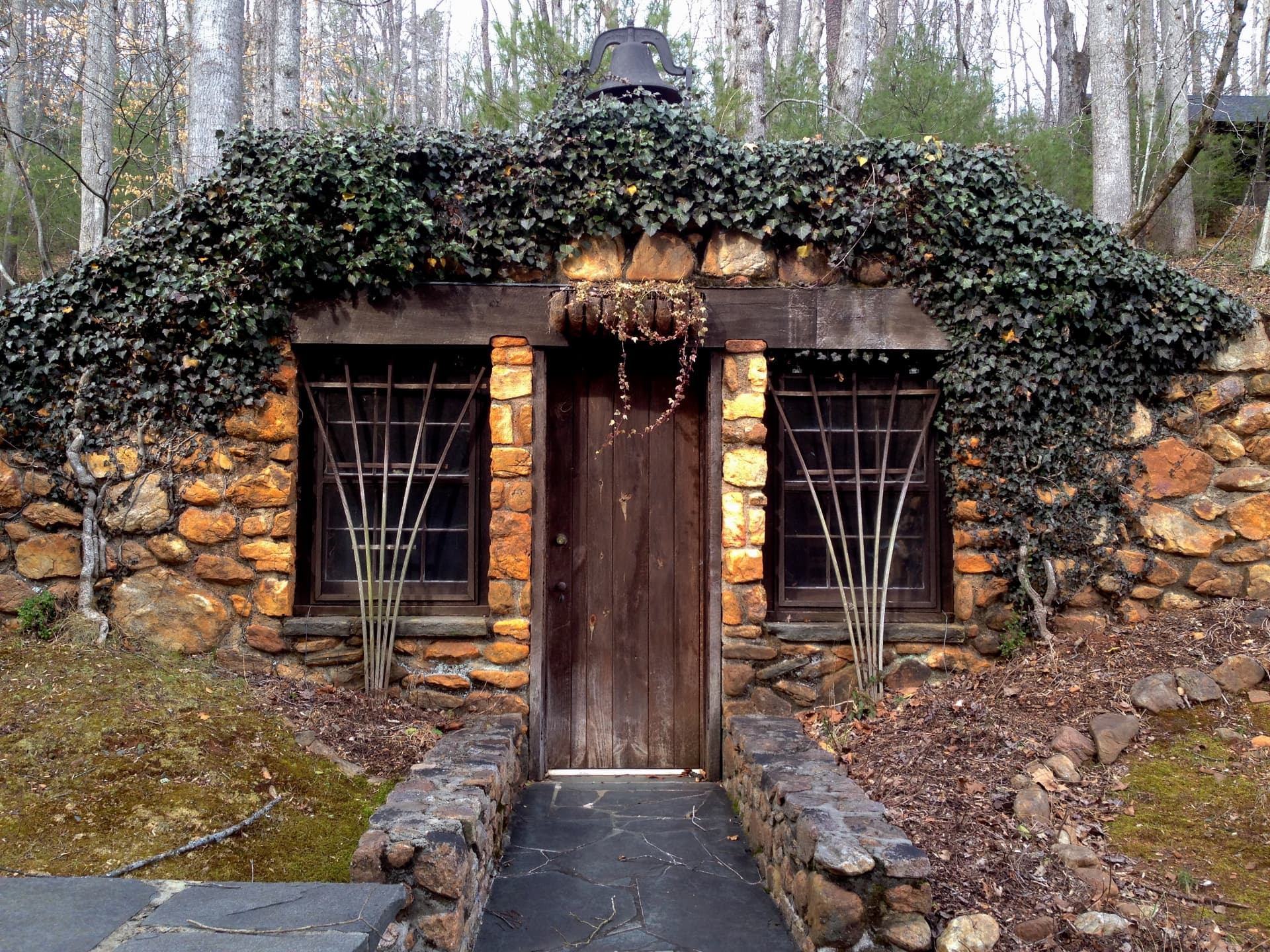
Village life
- Carpenter, woodworking, blacksmith, and machine shops
- A post office and general store — the village of Devotion
- A movie theatre, skeet field, bowling green, and tennis courts
- Housing for a workforce that once reached 1,500 people
The Hydroelectric Dam
Hydroelectric Dam across Mill Creek
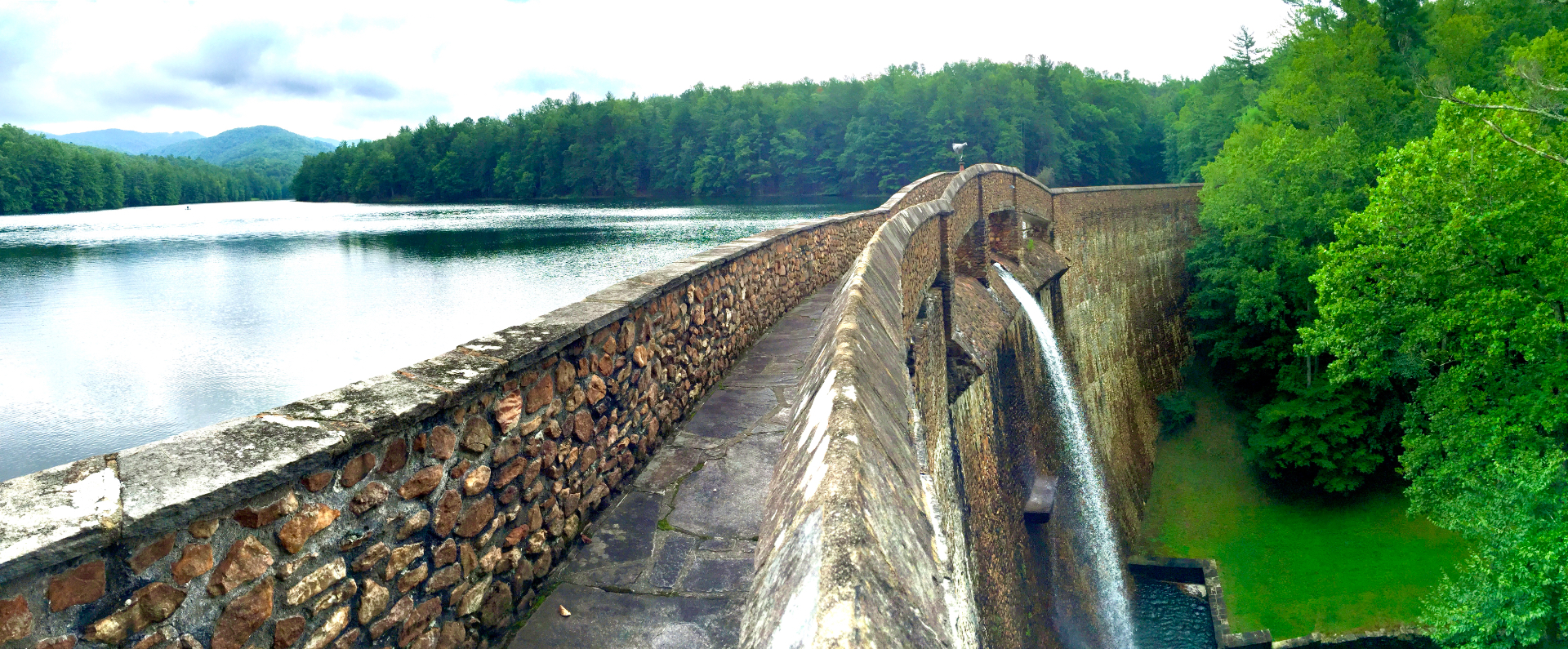
Plans to build the eighty-foot-high hydroelectric dam at Devotion began in the late 1920s, with the help of a U.S. Army Corps of Engineers team and Blitz's father, then employed by the federal government as a structural engineer. The location was agreed upon together: the wall would rise over the existing Mill Creek stream, at the geographic center of the estate.[28]
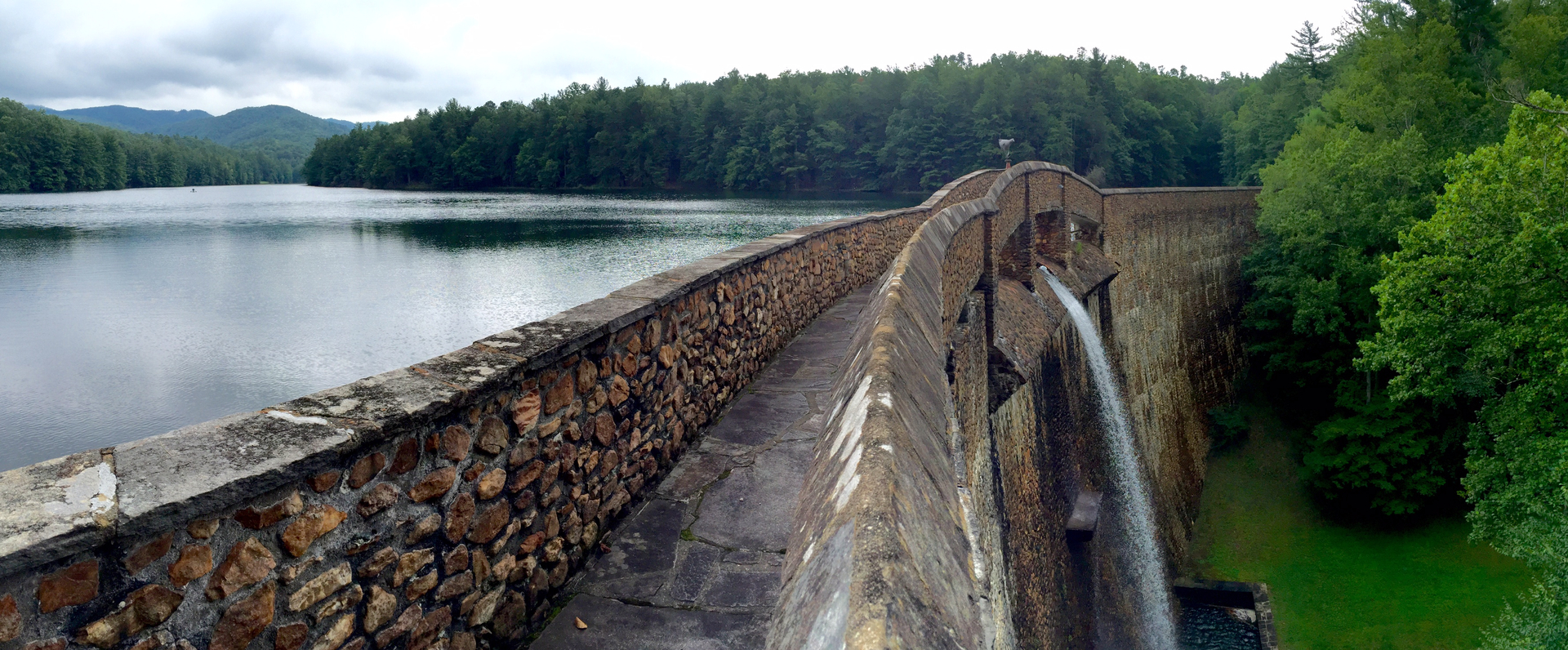
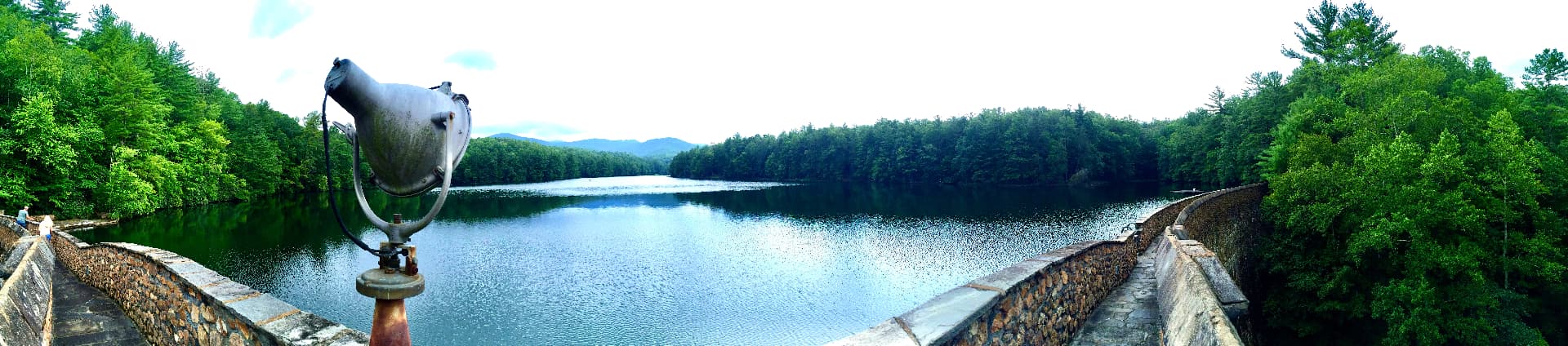
The dam curves around the valley — better than thirty feet thick at the base, eight feet wide at the top. Both faces were covered in river rock, and smooth slate was applied to every walkway and top cap. Each side was built to serve function and aesthetics at once.[28]
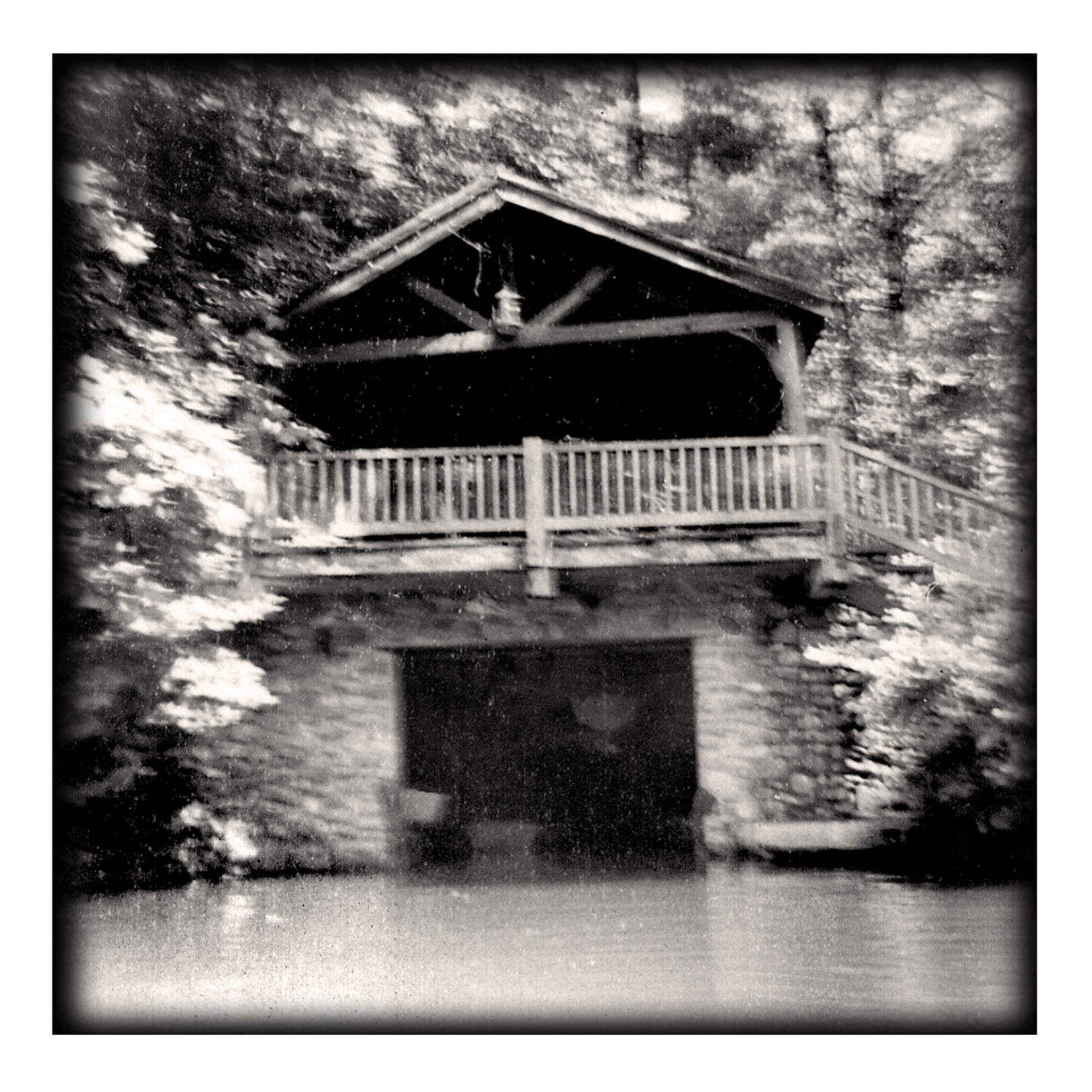
The lake edge was furnished for pleasure as deliberately as the dam was engineered for power: boat launches, covered boat slips — one with a giant navigational key laid in stone across its deck — covered picnic areas, a large metal trapeze set for the children, and a thirty-foot floating lily-pad anchored permanently out on the fifty-acre lake, a floating oasis for sunbathers unfettered by the cares of life.
A waterfall supplies Devotion with electricity
The fall of water from the eighty-foot stone dam, channeled through an intricate system of pipes into another stone building called the power-house, created more than enough power to supply the entire town of Devotion with off-grid electricity. Water entering the forebay was controlled by a valve atop the dam and sent downward over the escarpment through large pipes, falling to meet the Reynolds power-house and the turbines inside the station at the base of the wall.[28]
The power-house
At the power-house the water passed through three 25 Hz electrical generators, which family accounts credit with a combined nameplate capacity of 160 megawatts (210,000 hp).[28]
The catch ponds
Spent water was then released into three concrete catch ponds, which served simultaneously as a trout hatchery — the continuous flow kept the fry in a constant supply of clean, oxygenated water. From there it passed onward into three lakes, then back into the original bed of Mill Creek, a few miles upstream of the Mitchell River.[28]
Historic landmark
The Katharine Reynolds Hydroelectric Dam, its lake, and its falls are of historical significance to the Reynolds family as a national historical landmark. Richard Joshua Reynolds Jr.'s (1906–1964) mother, Katharine Smith Reynolds (1880–1924), was the powerhouse unto her husband, Richard Joshua Reynolds (1850–1918).[28]
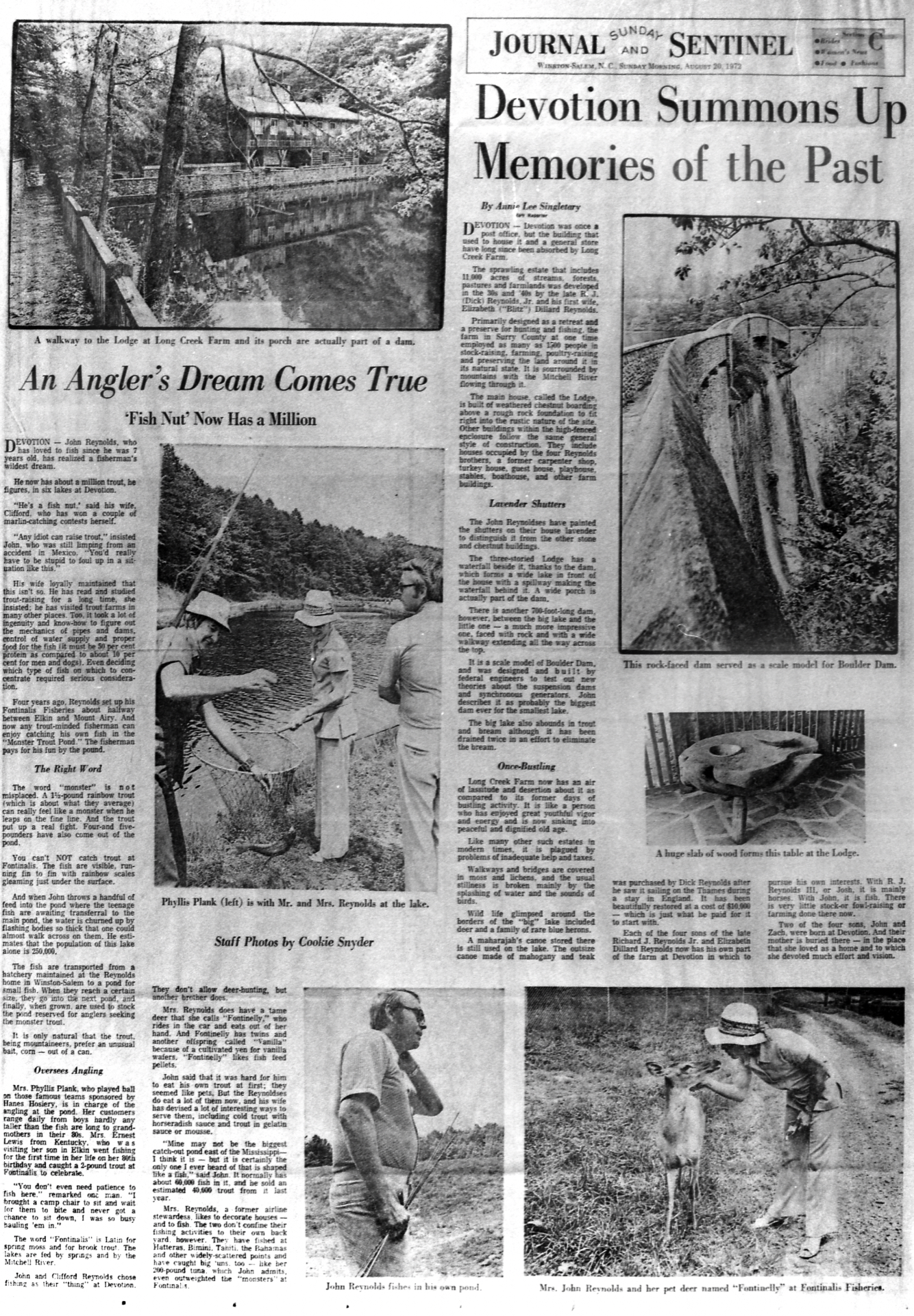
The Winston-Salem Journal, describing the estate in 1950, put the structure at four hundred feet across and noted the extreme depth of the water it held back, even close to shore.[23]
A marvel of Great Depression engineering
The precision of the Katharine Reynolds Hydroelectric Dam's design would only later be recognized as decades ahead of its time. The Reynolds model for forward-thinking hydroelectric power remains a marvel of great-depression engineering — not only innovative, but majestic in its presentation.
Family history holds that the design was carried out in concert with the great federal dam work of the era and served as a prototype study for Boulder Dam — now Hoover Dam — in Nevada. Boulder Dam itself was completed in 1936, so the relationship is best understood as shared engineering lineage: the same Corps-trained expertise, the same curved-arch masonry logic, worked out at estate scale in the North Carolina foothills.
The dam still generates, still holds the lake, and still carries a stone walkway along its crest. Its spillway falls straight into the gorge below, and the Lodge's porch is built into the structure itself — power, architecture, and landscape resolved into one piece of masonry.[17]
The Trout Hatchery
Cold water, put to work twice
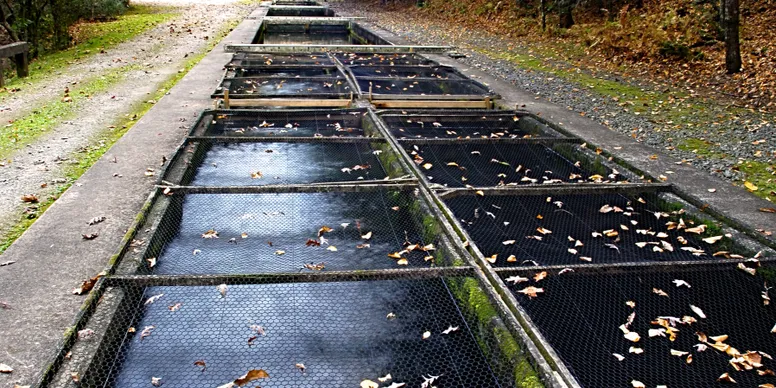
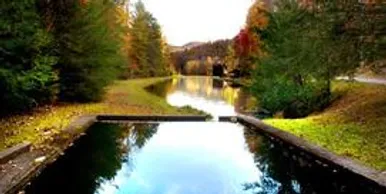
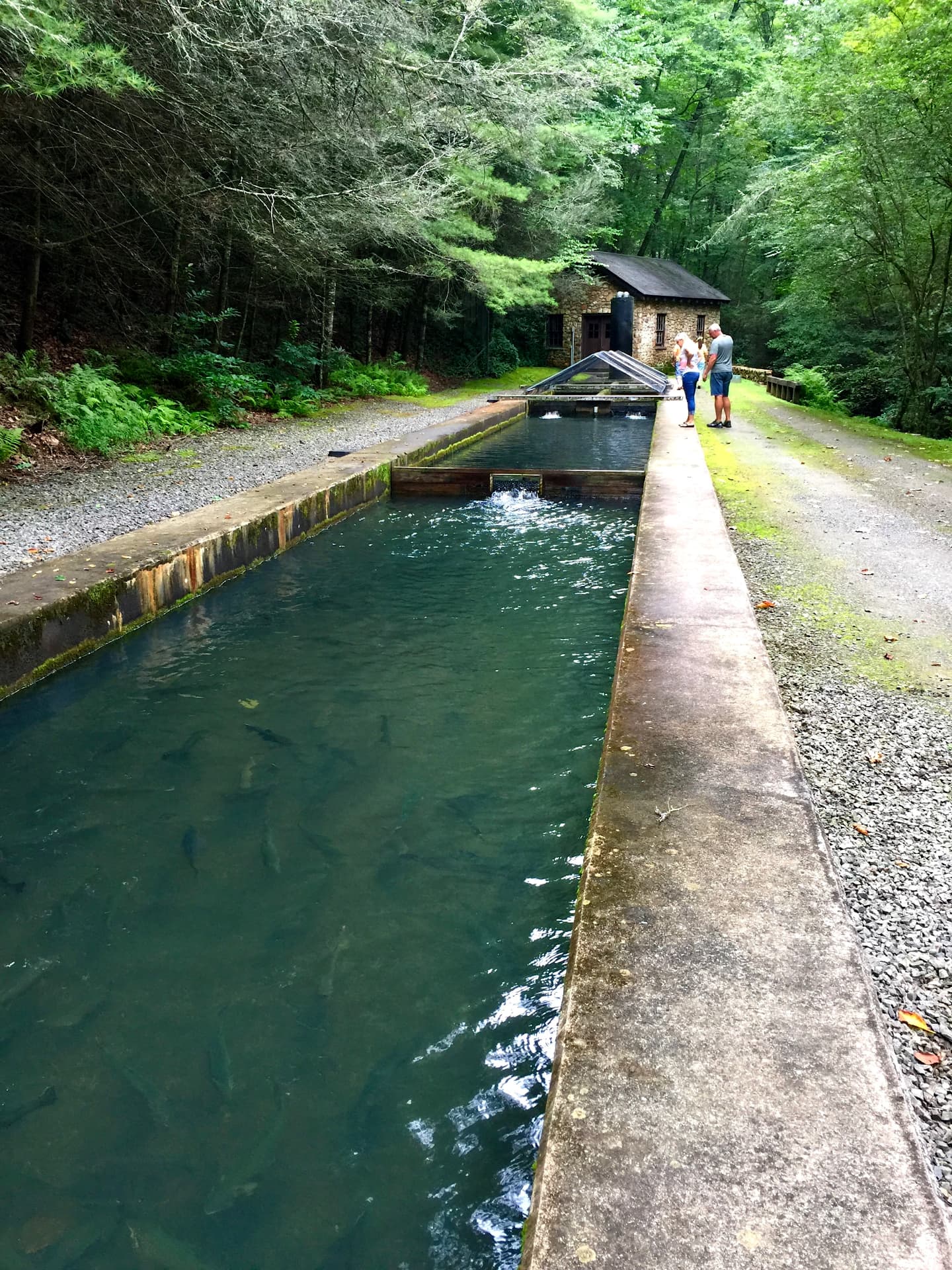
Downstream of the hydroelectric dam's release, the same water that turns the turbines feeds the estate's trout hatchery. A concrete canal carries the discharge from the tailrace down the valley under constant gravity flow — no pumps, no holding tanks, just cold mountain water moving without interruption.
From the canal the flow enters a run of screened concrete raceways, stepped one into the next so each pool drains to the one below. The fish are graded by age and size across the sections: fry and fingerlings in the upper boxes, growing stock in the middle, mature trout at the tail of the run. Every sector receives fresh, cool, oxygenated water first-hand rather than recirculated water, which is what makes continuous rearing at this elevation possible.
Once grown, the trout are released downstream into the estate's ponds and lakes and into the Mitchell River itself. This hatchery below the dam is distinct from Fontinalis Fisheries, the separate commercial trout operation John Reynolds later built on his own portion of Devotion.[17]
It is the estate's founding logic in miniature: one head of water pressed into service twice, first for power and then for food, before it is handed back to the river.
The Farm Buildings
Meat, milk, cheese and eggs, all made on the place
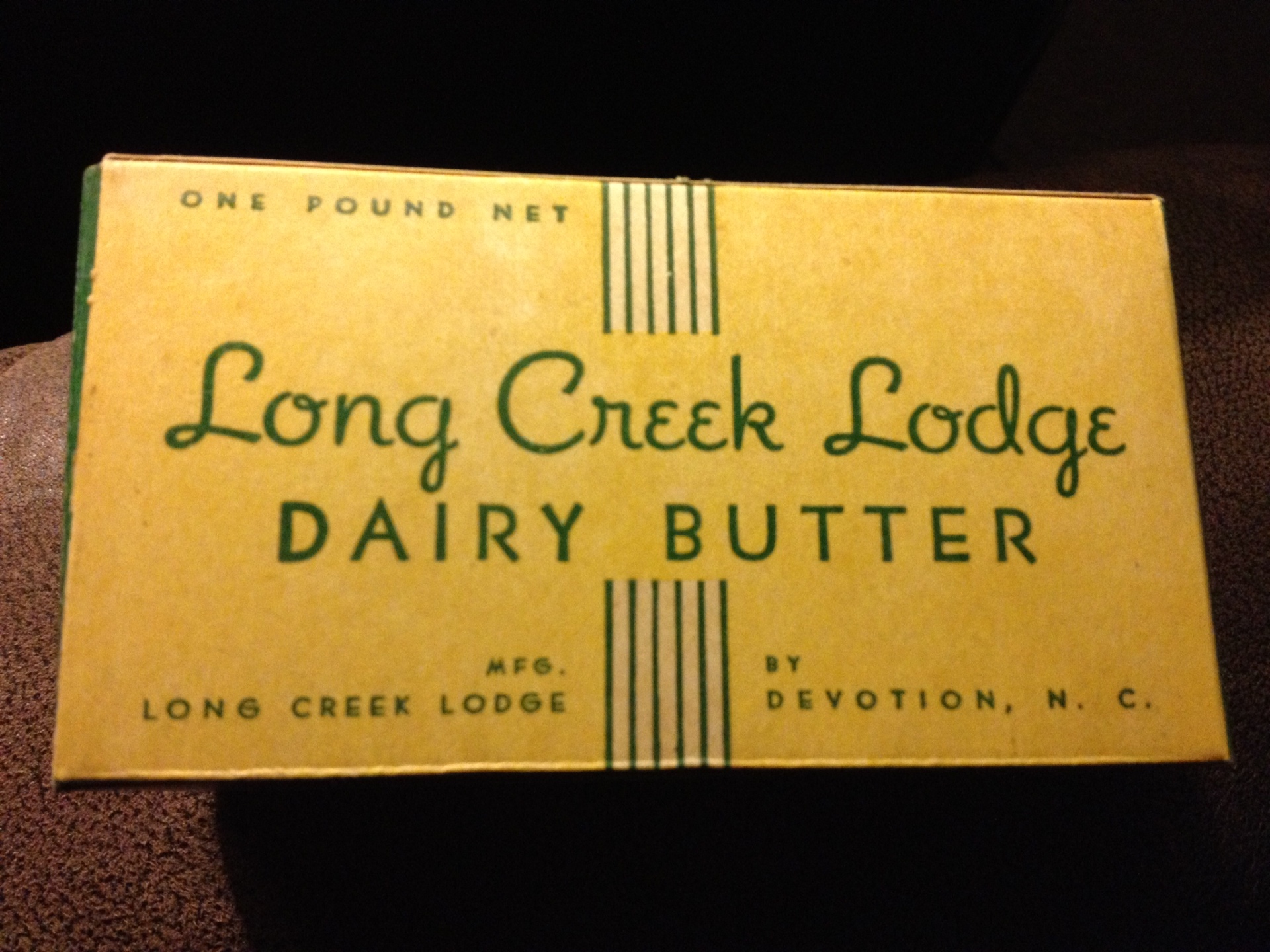
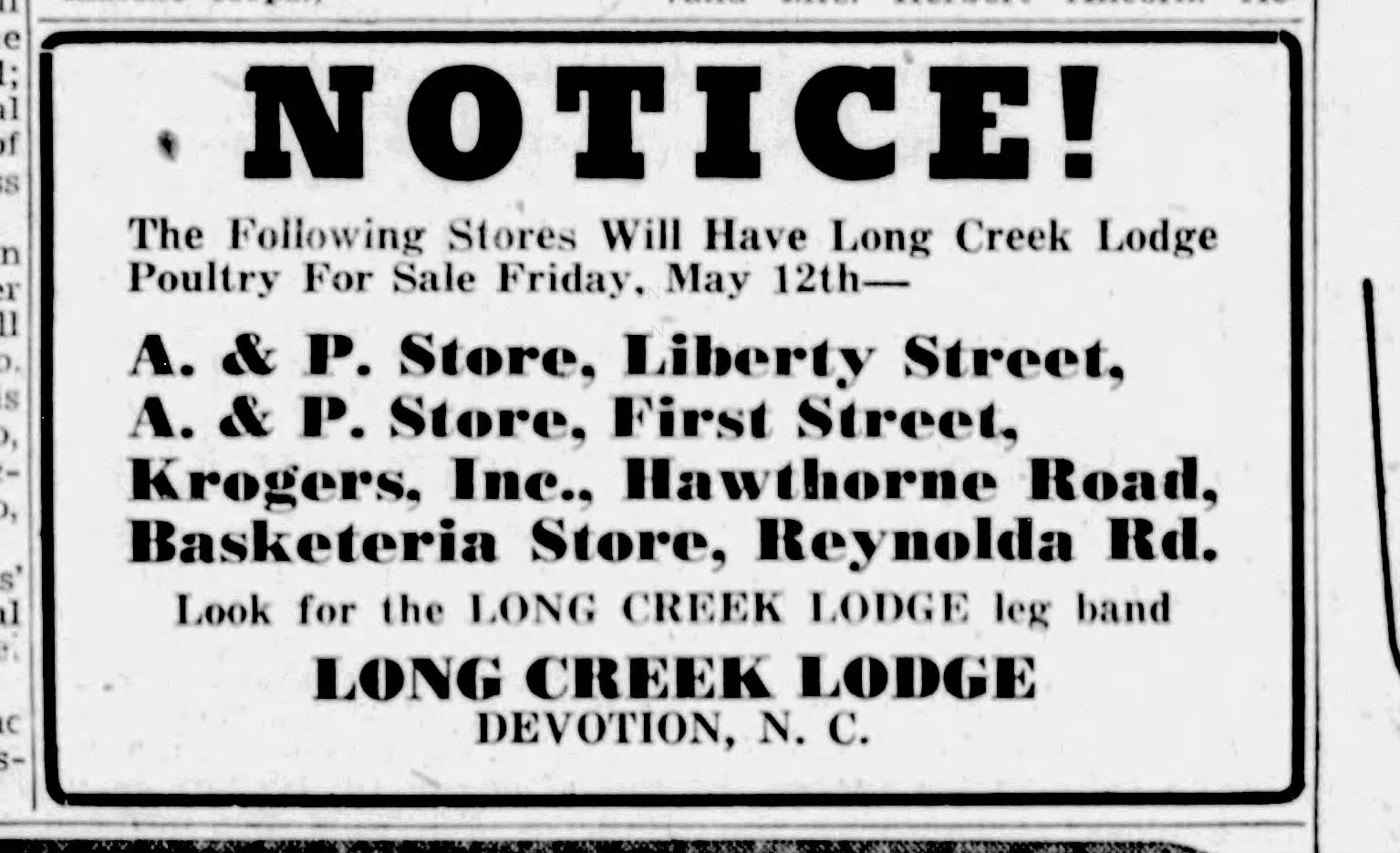
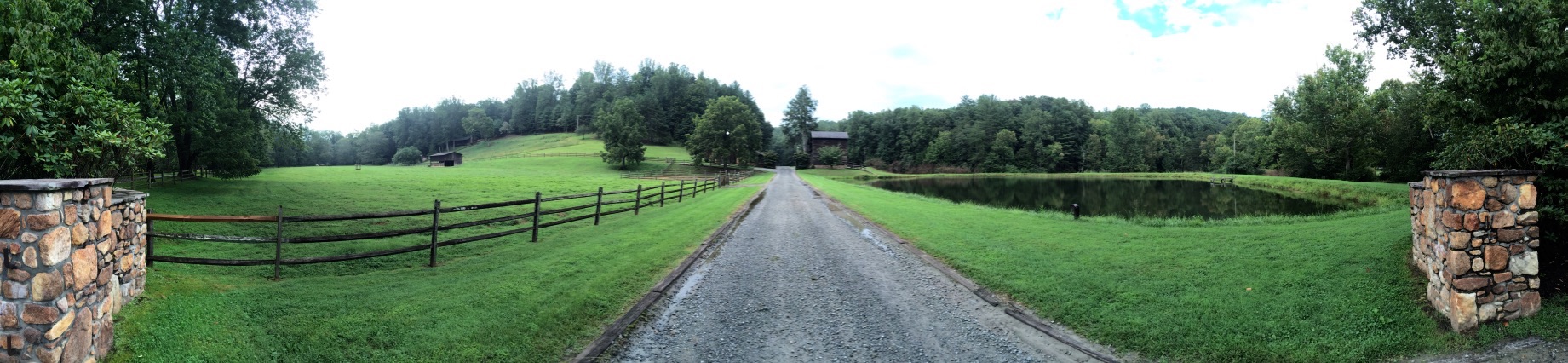
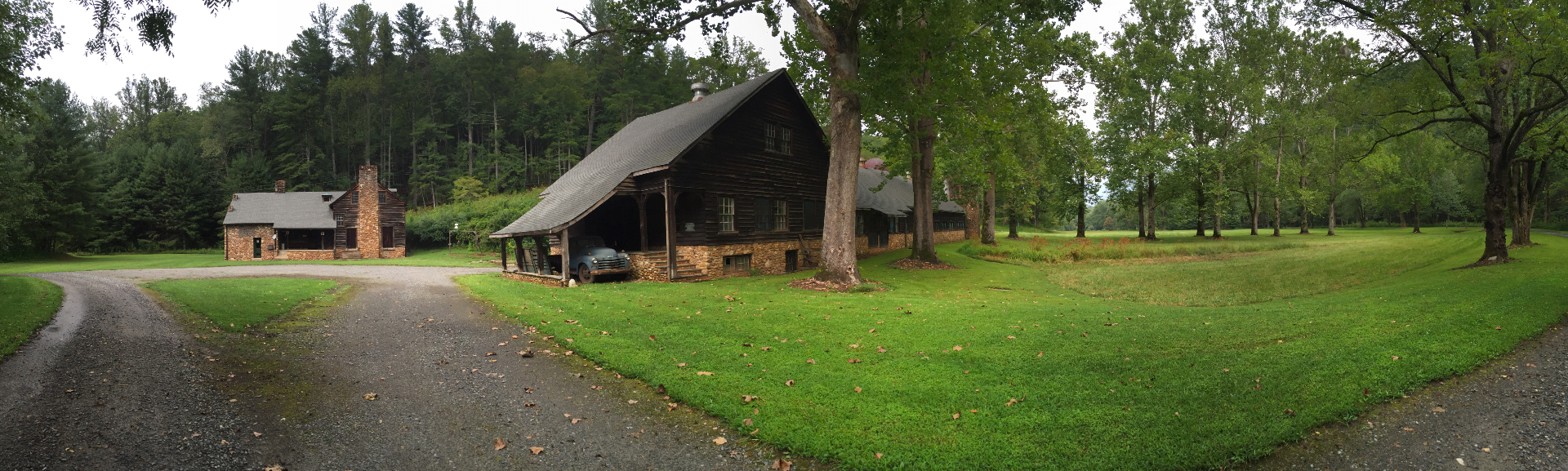
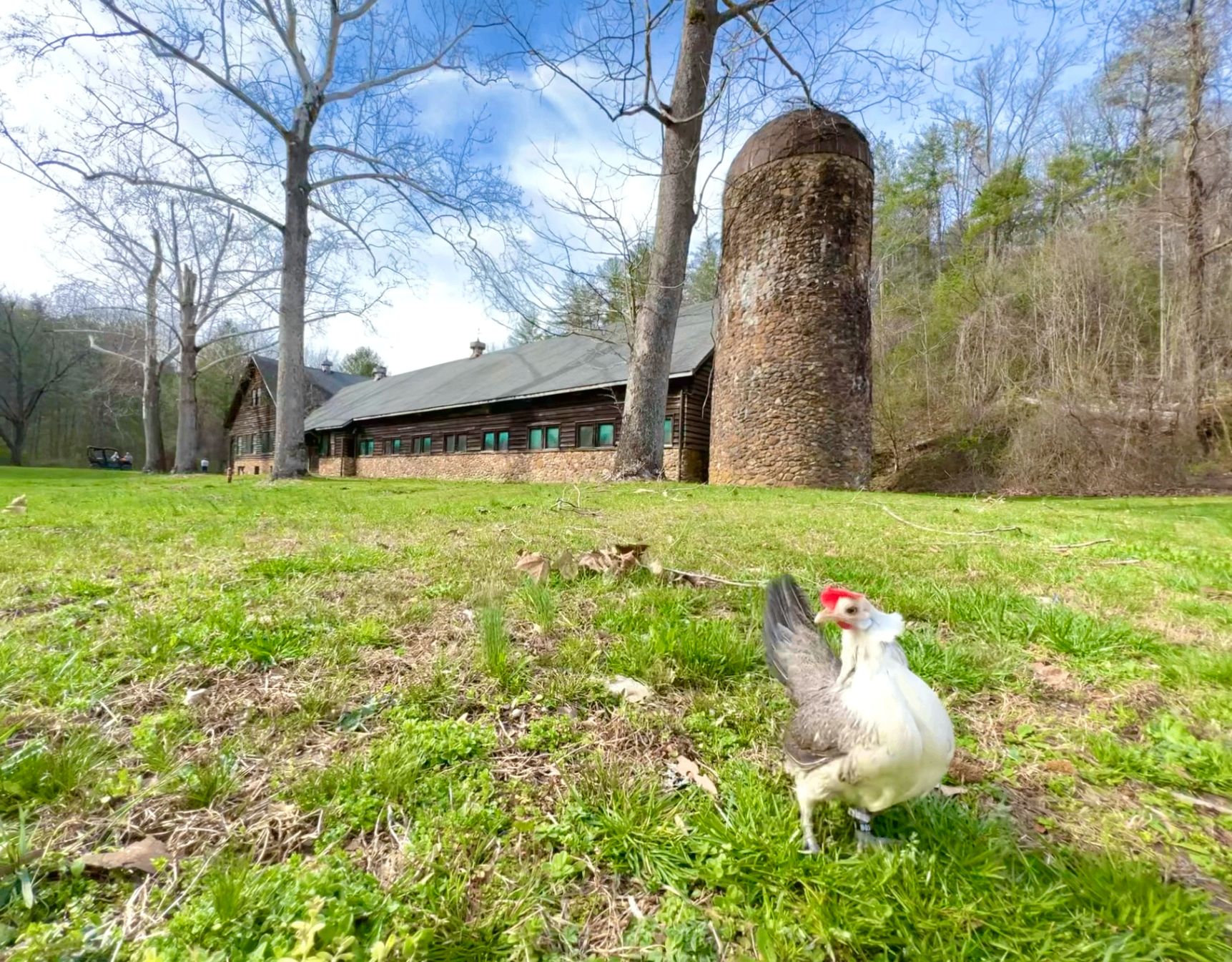
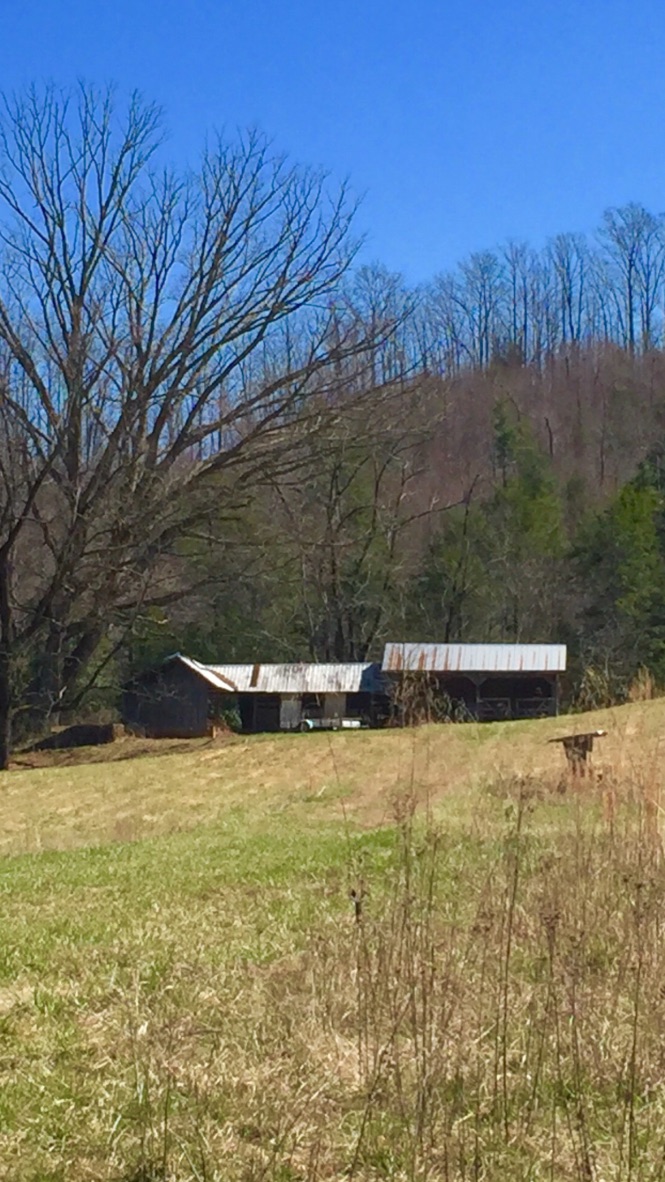
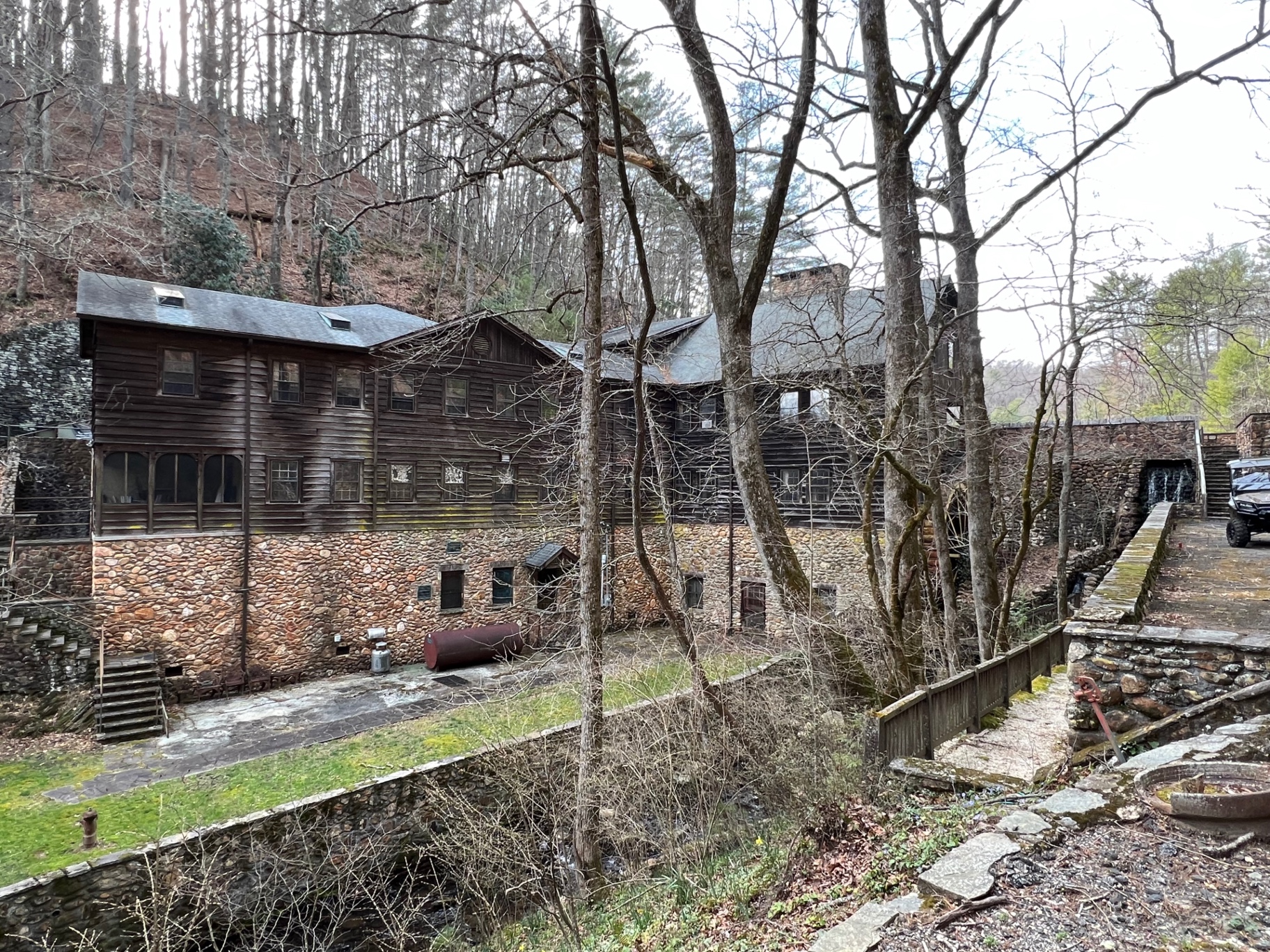
Clustered along the gravel road at the center of the farm stand the buildings that fed the estate: the slaughter house, the dairy barn, and the cheese factory. Chestnut siding weathered to near-black sits on foundations of river rock quarried and gathered on the property, the same vocabulary used at Long Creek Lodge.
Livestock was raised and finished here rather than shipped in. The dairy herd was milked on the place, the cream churned into butter and the milk worked into cheese in the adjoining factory — output that carried the estate's own label, Long Creek Lodge Dairy Butter, Devotion, N. C., sold by the pound.
Poultry was a business of its own. Long Creek Lodge birds were leg-banded and sold through Winston-Salem grocers — A. & P. on Liberty and First Streets, Krogers on Hawthorne Road, and the Basketeria on Reynolda Road — advertised so shoppers could look for the Long Creek Lodge band. The chicken houses that supplied them stood in the open ground beyond the barns until they burned in 1995; the fields they occupied are grassed over today.
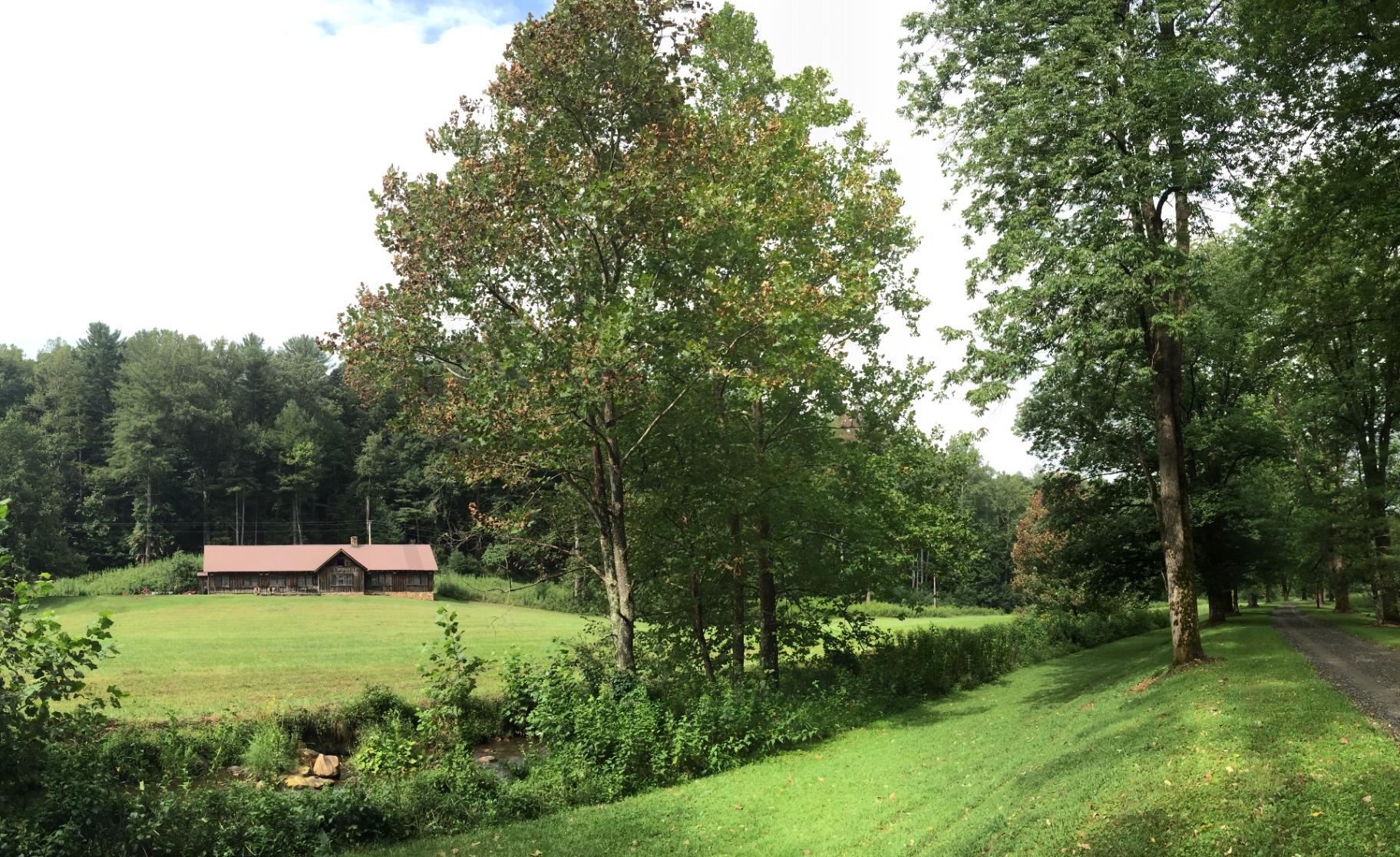
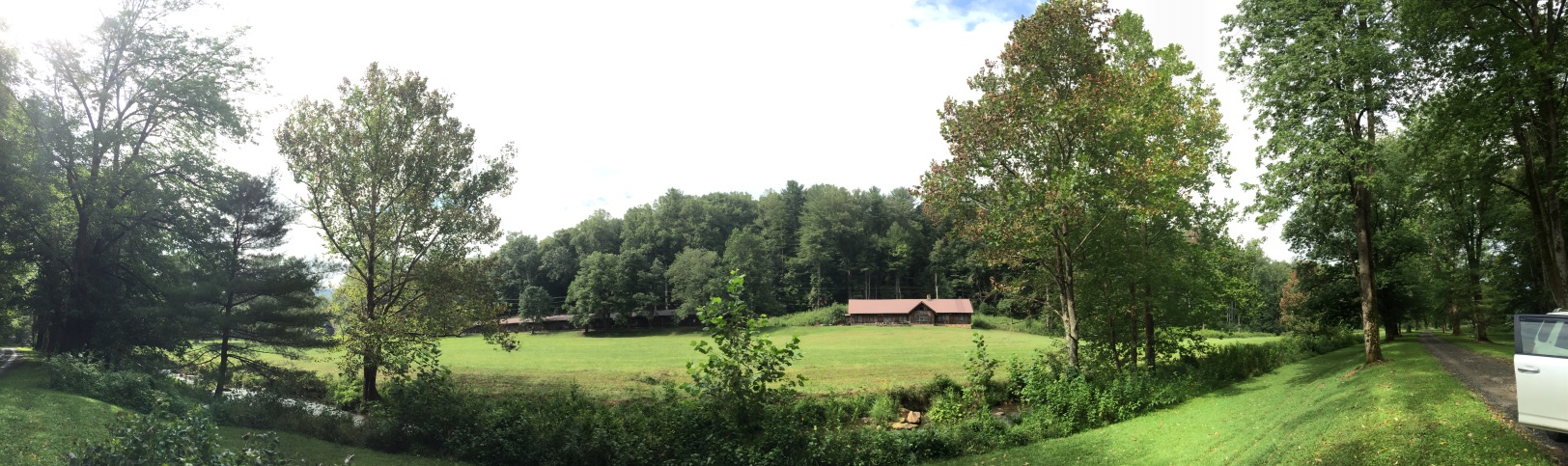
Those broad mown bottoms and hillside pastures, laid out between the creeks and the treelines, are where the cattle, sheep and hogs were kept — the working landscape that made a mountain estate of this size able to feed itself.
The Skeet and Trap Field
An Olympic-grade field in stone
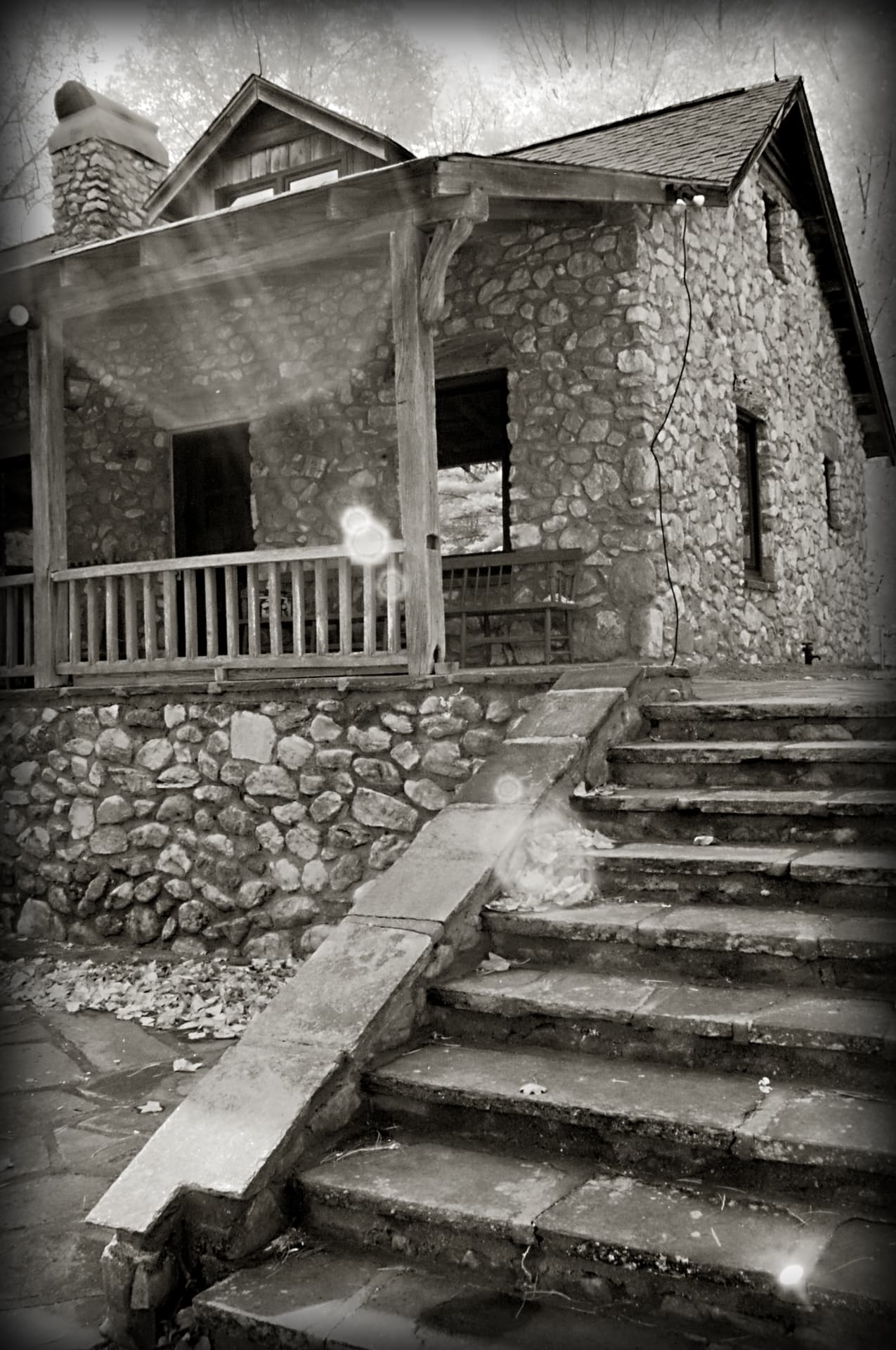
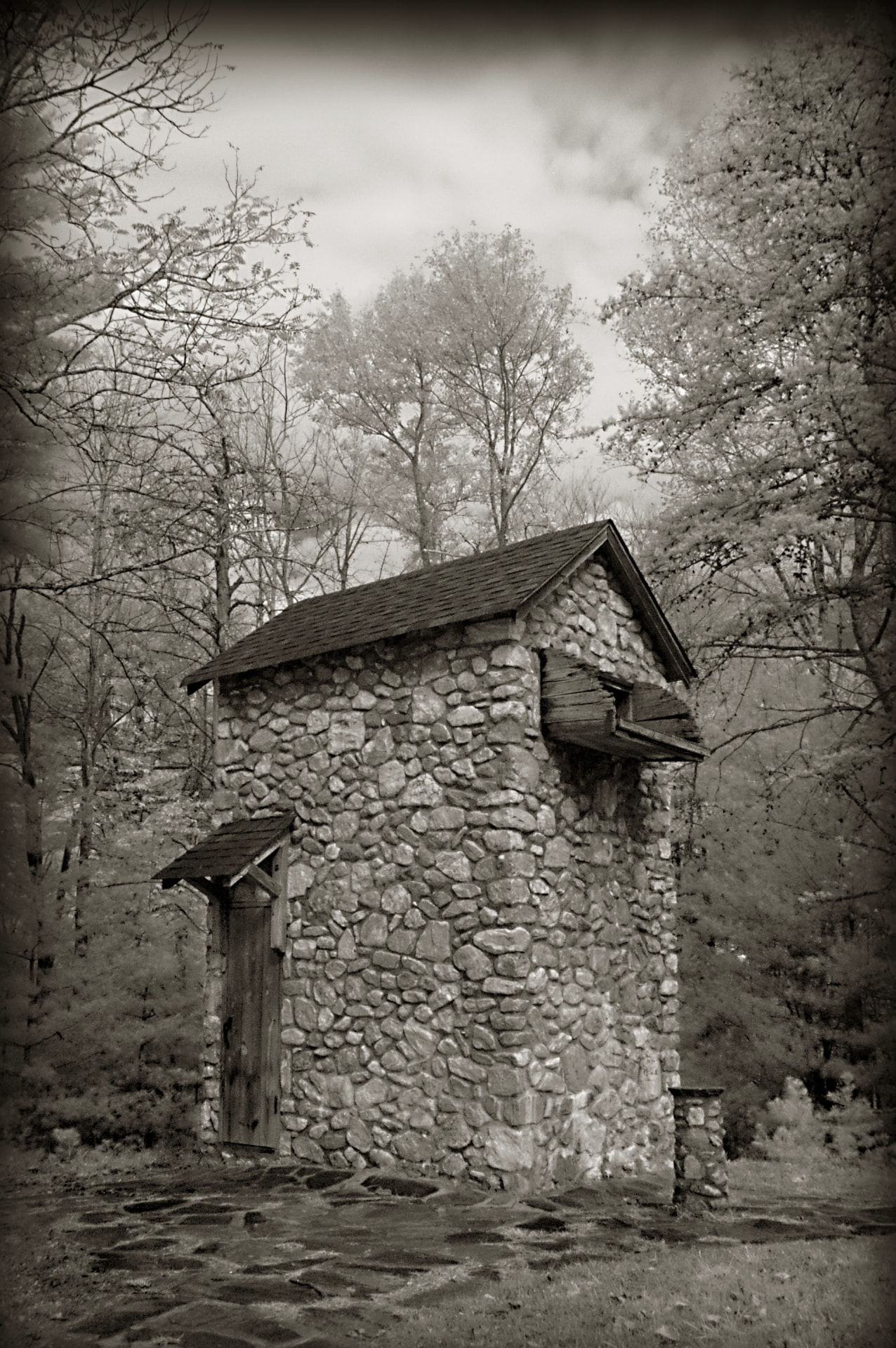
Set on a shelf of open ground above the lake, Devotion's skeet and trap field was laid out to Olympic specification — regulation station spacing, high and low houses, and trap positions sited so that every bird broke against open sky and the ridgeline beyond, with no road, building, or pasture in the fall zone.
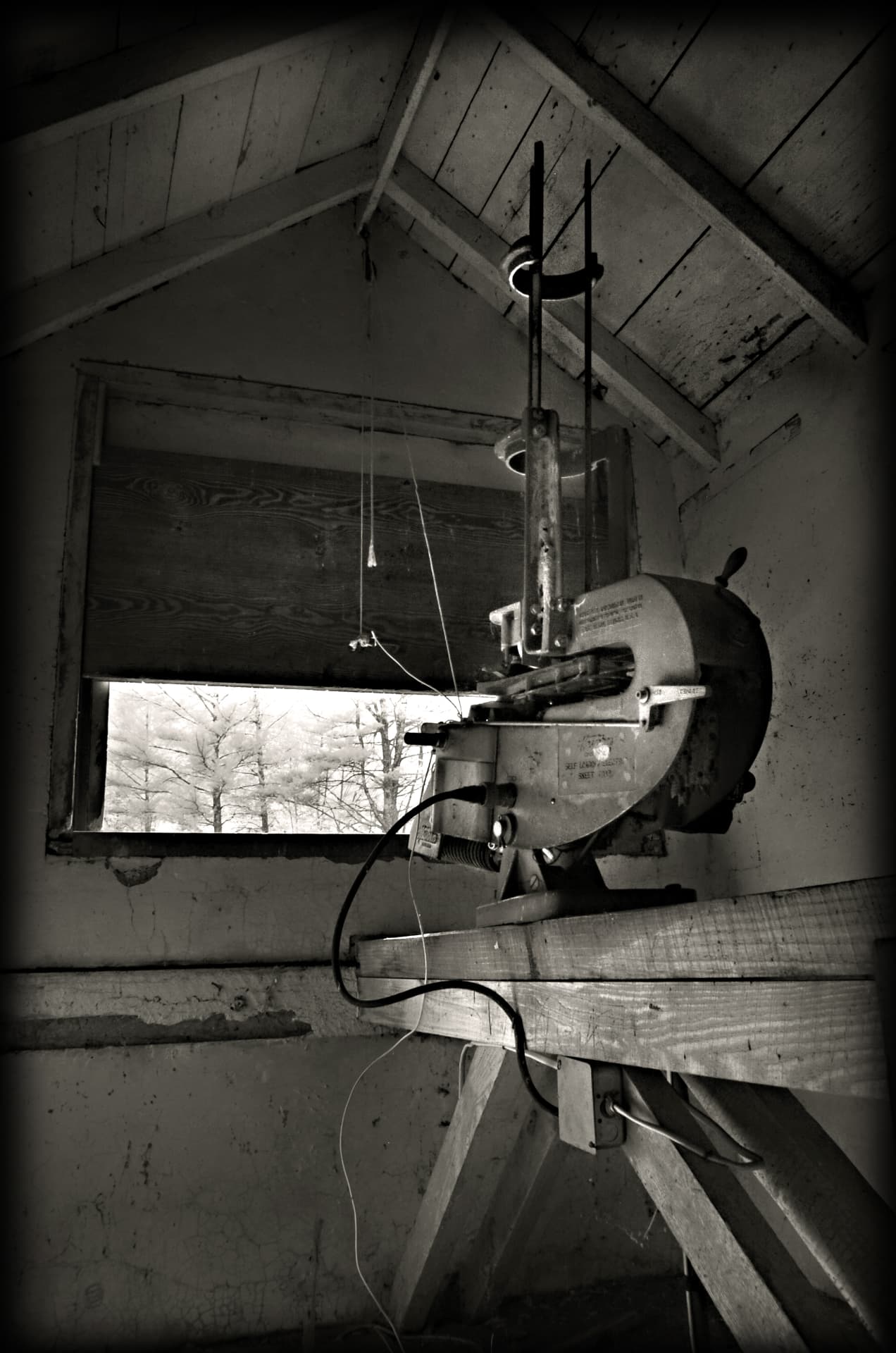
Like everything else Dick Reynolds built here, it was made of the estate itself. The Skeet House and the houses that throw the targets are river rock and native stone, laid up by the same masons who faced the dam and the Lodge, and roofed in timber cut on the property. A deep shaded porch runs across the front of the Skeet House, where shooters waited out the rounds and the afternoon heat.
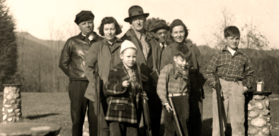
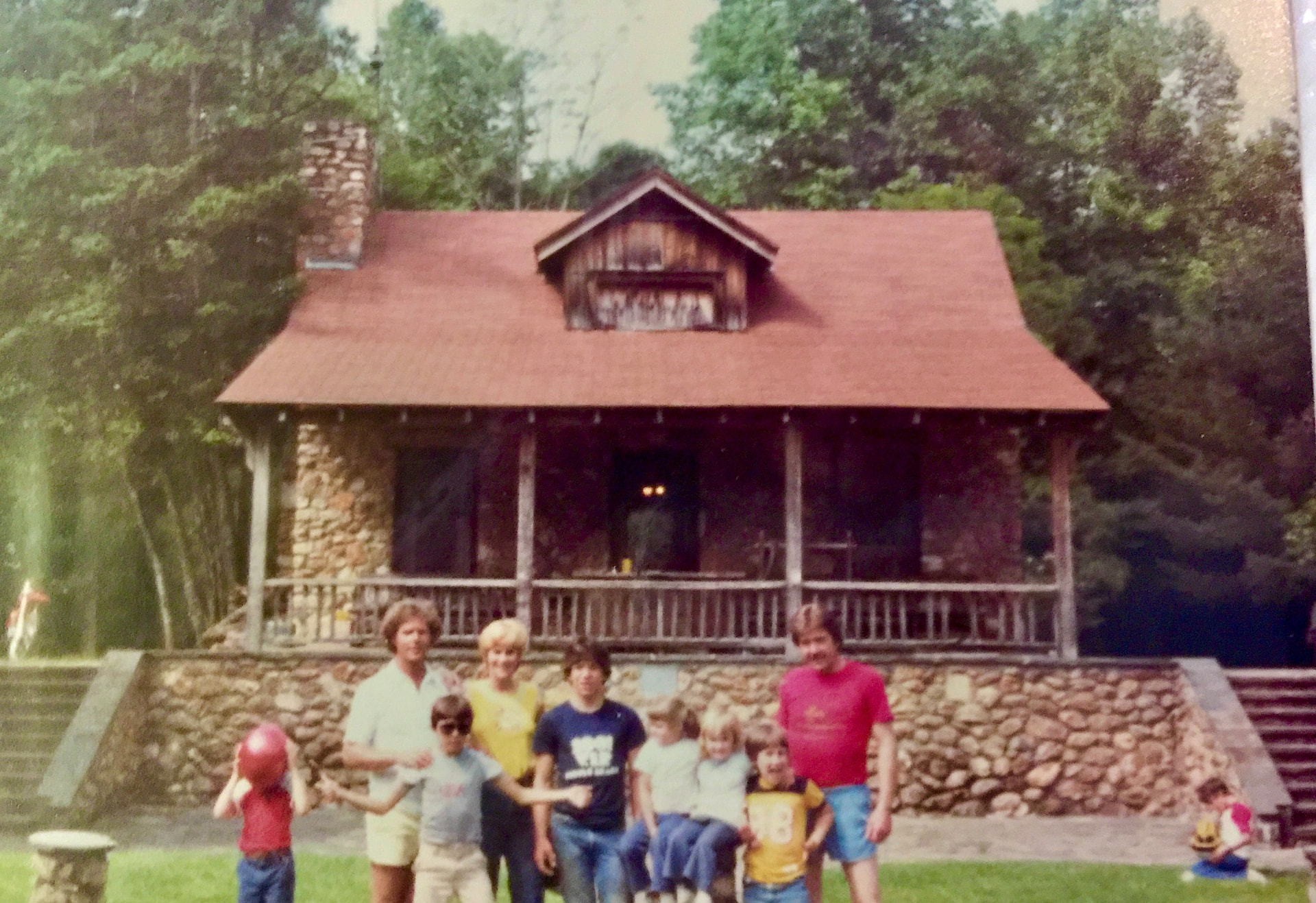
The field was a working part of estate life rather than an ornament. Reynolds was a serious shot, and the field drew family, guests, and visiting competitors through the 1940s and 1950s — Blitz Reynolds and the boys among them, photographed on the steps of the Skeet House in that decade.
The stonework stands today, weathered into the hillside above the water — one more piece of the estate where sport, masonry, and mountain landscape were resolved into a single structure.
Recreation & Leisure
A lake built for pleasure as well as power
The dam was never only machinery. Both of its faces were built to be lived on. Boat launches and covered boat slips were set into the stonework — one slip carrying a giant navigational key laid in stone across its deck — alongside covered picnic areas and a tall metal trapeze set where the children swung out over the grass.
Out on the water floated the family's oasis: a lily-pad raft some thirty feet across, anchored in place on the expansive lake, where sunbathers could lie all afternoon well beyond the reach of anything urgent.
Above the shoreline the estate laid out the rest of a small resort's worth of amusements — tennis courts, a bowling green, a playground, the duck pond picnic area, the Olympic-grade skeet and trap field, and a proper movie theatre in the workshop compound, where films arrived by reel and were projected for family, guests, and staff alike.
Blitz Reynolds is buried at the bowling green, in the middle of the ground where the family had spent its easiest hours.[28]
Architecture
Built from a forest that was dying
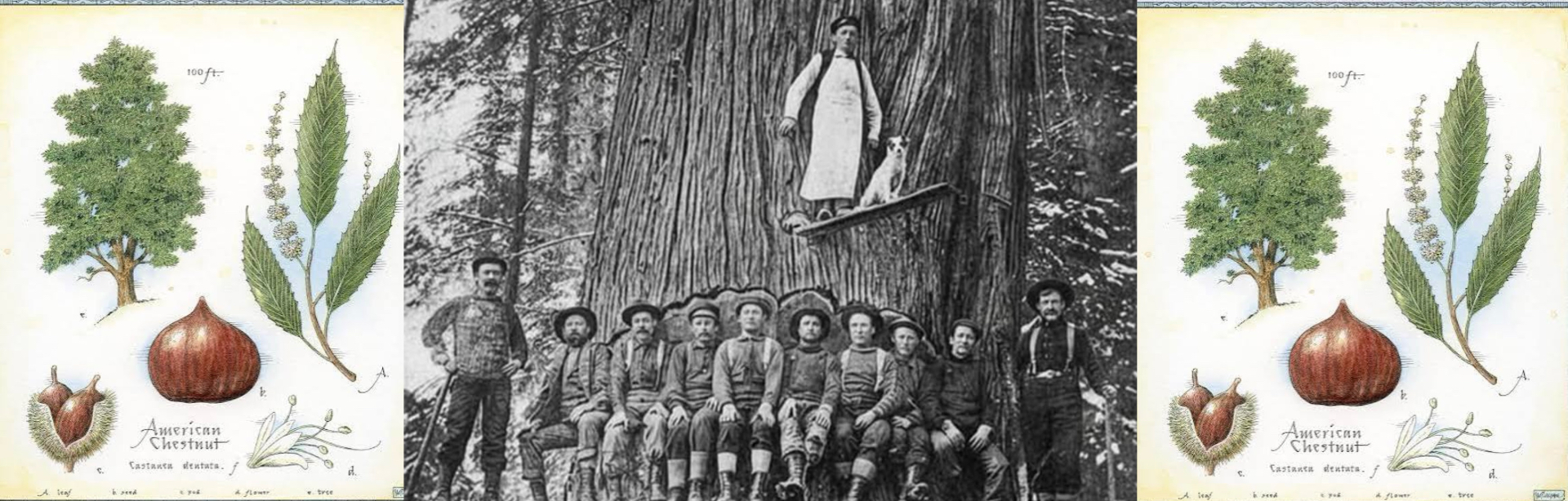
The construction of Devotion coincided with the demise of the American chestnut, destroyed across the Appalachians by blight in the 1920s. Rather than let the fallen timber rot on the forest floor, workers harvested it and built with it. The estate today holds one of the largest concentrations of American chestnut carpentry anywhere.
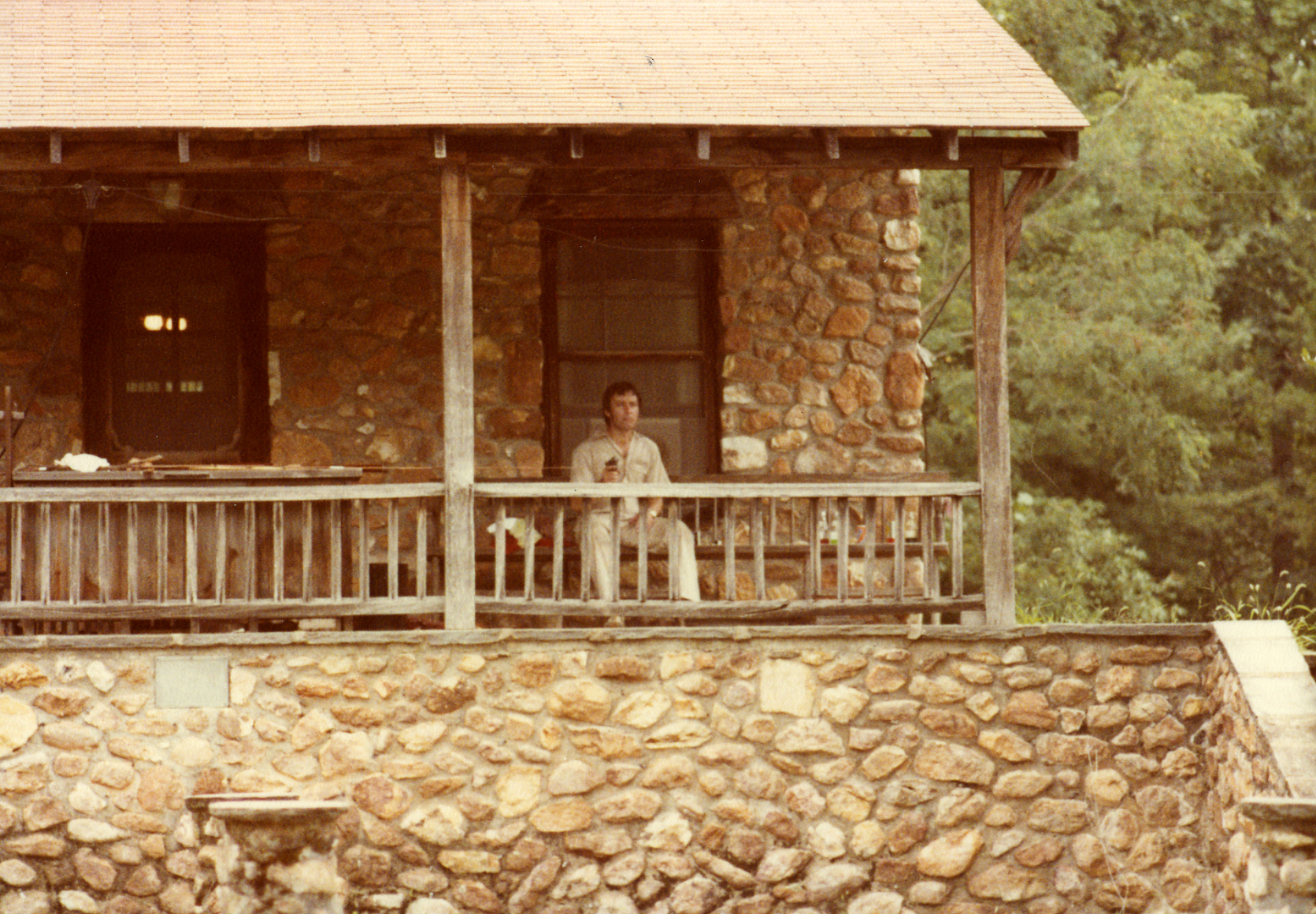
All of the rock for foundations, walls, and chimneys was blasted or gathered on the property, with river rock drawn from the Mitchell River and the creeks that course through it. The main house — the Lodge — is weathered chestnut board above a rough stone foundation, three stories tall, with a waterfall beside it and a porch that is literally part of the dam.
Interiors were meant to excite the senses: pine wall finishes, over-scaled stone fireplaces, exposed roof trusses, craftsman hardware from the estate's own blacksmith shop, and casement windows fitted with hinged "swing-out" copper screens. The cabinetry came from Devotion's woodwork shop.
Long Creek Lodge
The main house, built upon a dam
Long Creek Lodge is the main house at Devotion — the residence R. J. Reynolds Jr., known as "Dick" Reynolds, shared with his first wife Elizabeth "Blitz" Dillard Reynolds during their years on the estate. Two of their four sons were born here: Zachary Taylor Reynolds in 1938 and William Neal Reynolds II in 1940.
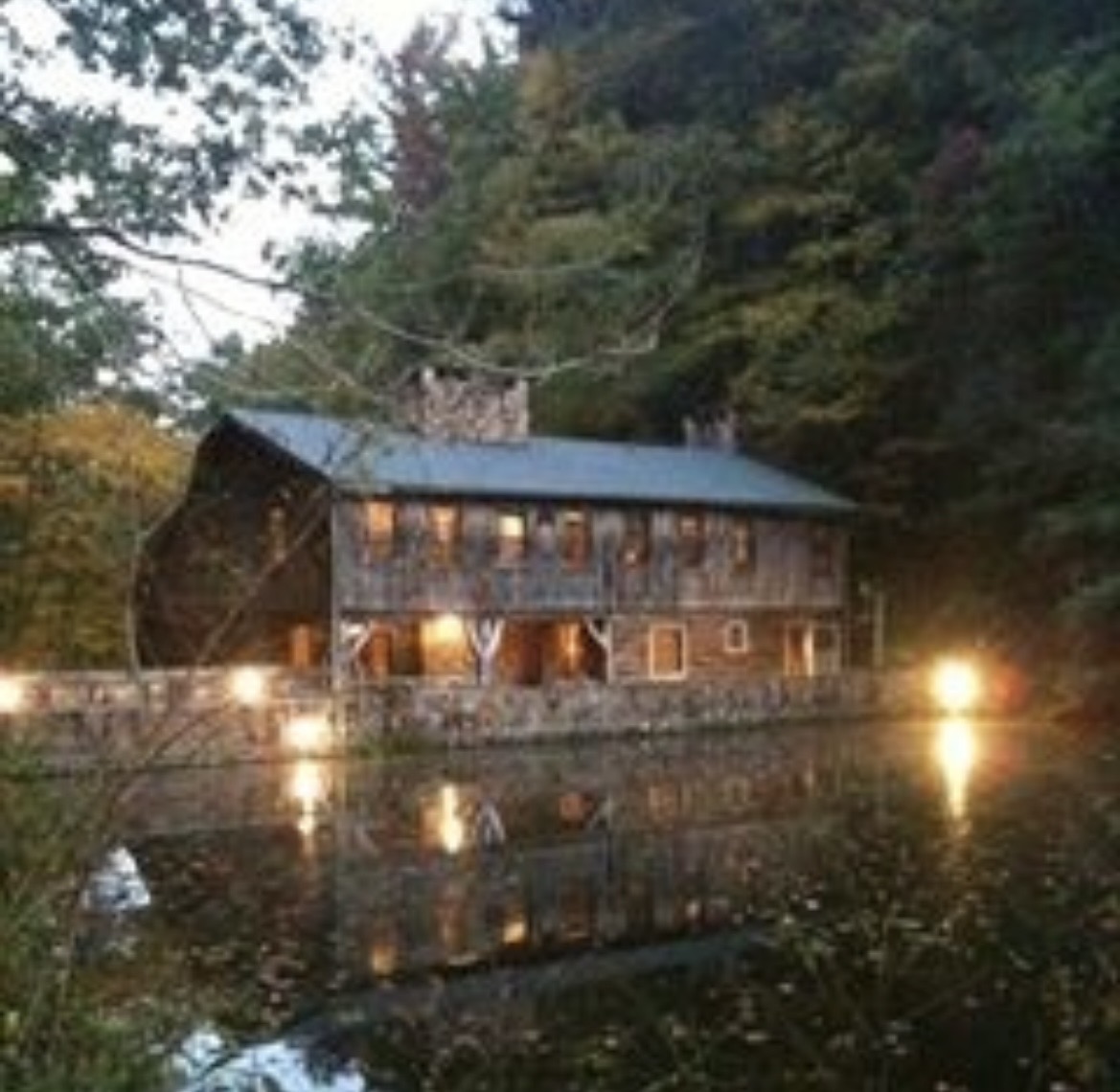
The Lodge is set directly upon the dam of a second large lake, so the water it impounds runs beneath and beside the house. Weathered chestnut board rises above massive river-rock walls gathered on the property, and an iron overshot waterwheel turns on the downstream elevation, fed by a timber flume that draws off the impoundment. Stone stairways, terraces, and a walled tailrace step the compound down the gorge alongside the spillway.
From the Lodge, covered walks and stone passages connected the household to the estate's workshops — the movie theater, the woodworking shop, and the metallurgy shop — so that entertainment, carpentry, and metalwork all stood within a few steps of the main house. Hardware, fittings, and repairs for the whole estate could be designed, forged, and finished on site, in keeping with Devotion's founding principle of self-sufficiency.
At dusk the house reads as a single object with its water: lit windows and lamps doubled in the still surface of the lake that its own masonry holds back.
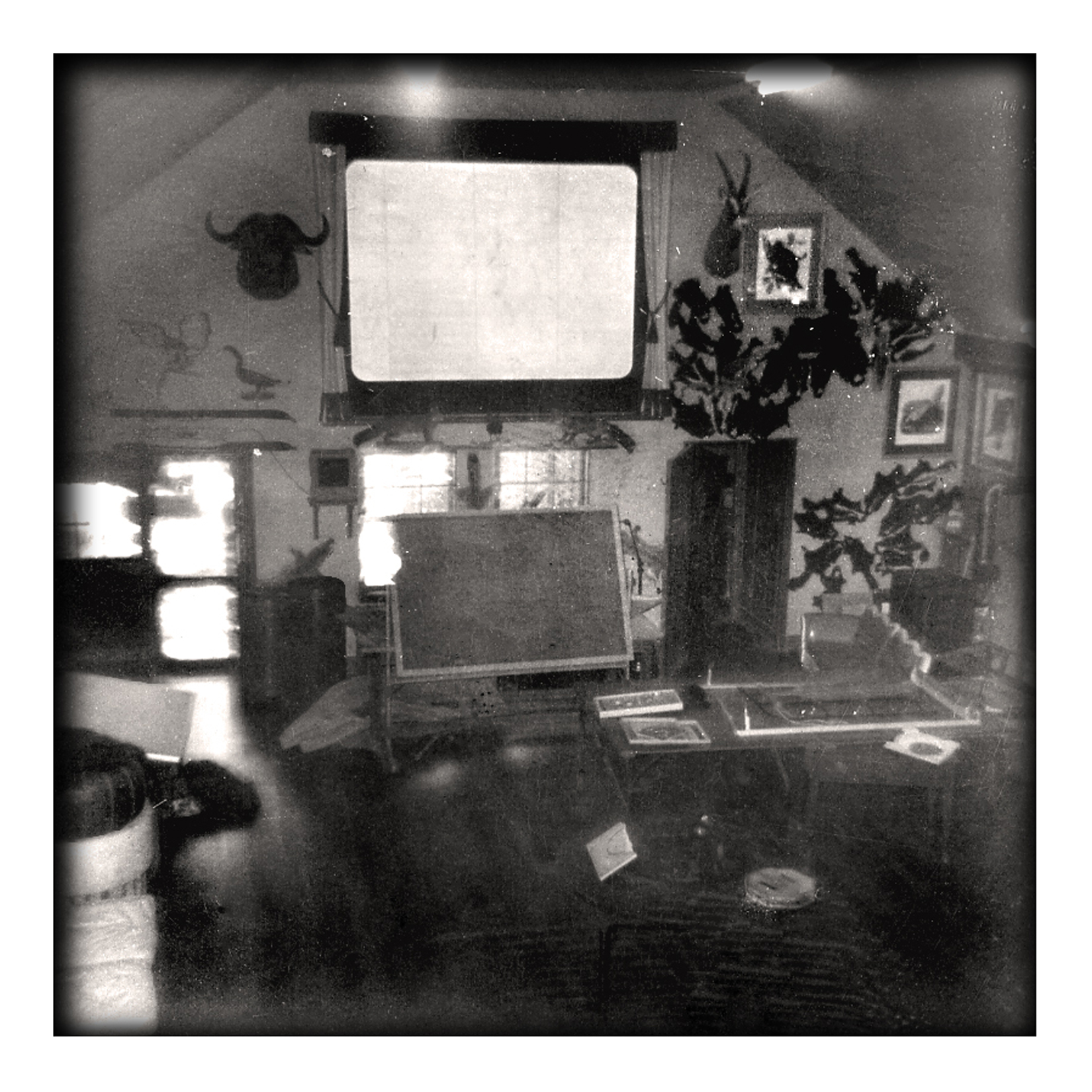
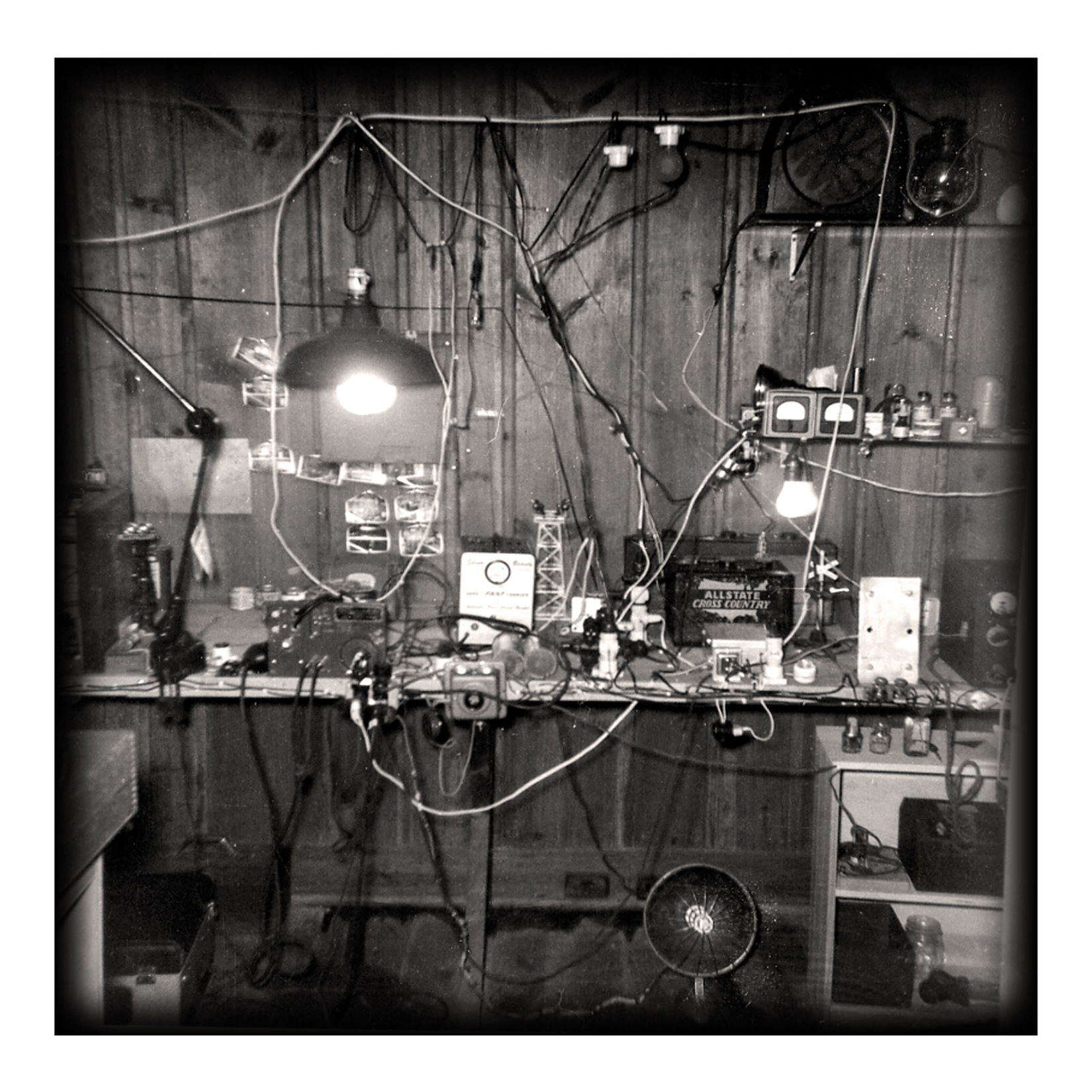
Life at the Lodge, 1953
Photographed by Zachary Taylor Reynolds
A set of black-and-white photographs made at Devotion in 1953 by Zach Reynolds — the boat house on the lake, the projection booth and screening room in the Lodge's movie theater, and his own electronics bench.
Reynolds Family Ownership
Four sons, four portions of one mountain
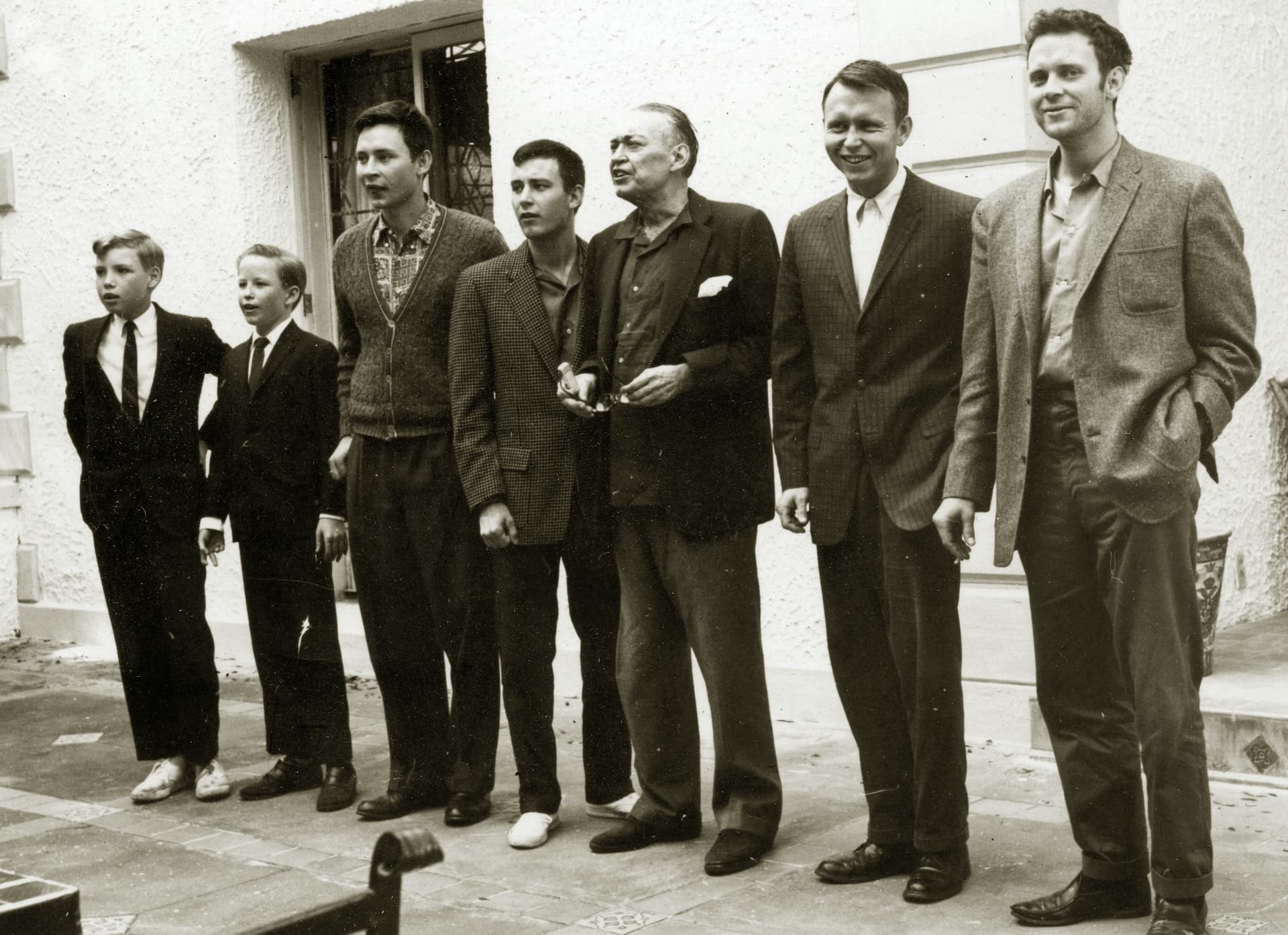
Dick Reynolds Jr. died in 1964. After his death and that of Elizabeth Dillard Reynolds, ownership of Devotion was divided among their four sons. Over the decades that followed, portions of the estate were sold outside the family while other sections remained in Reynolds hands.
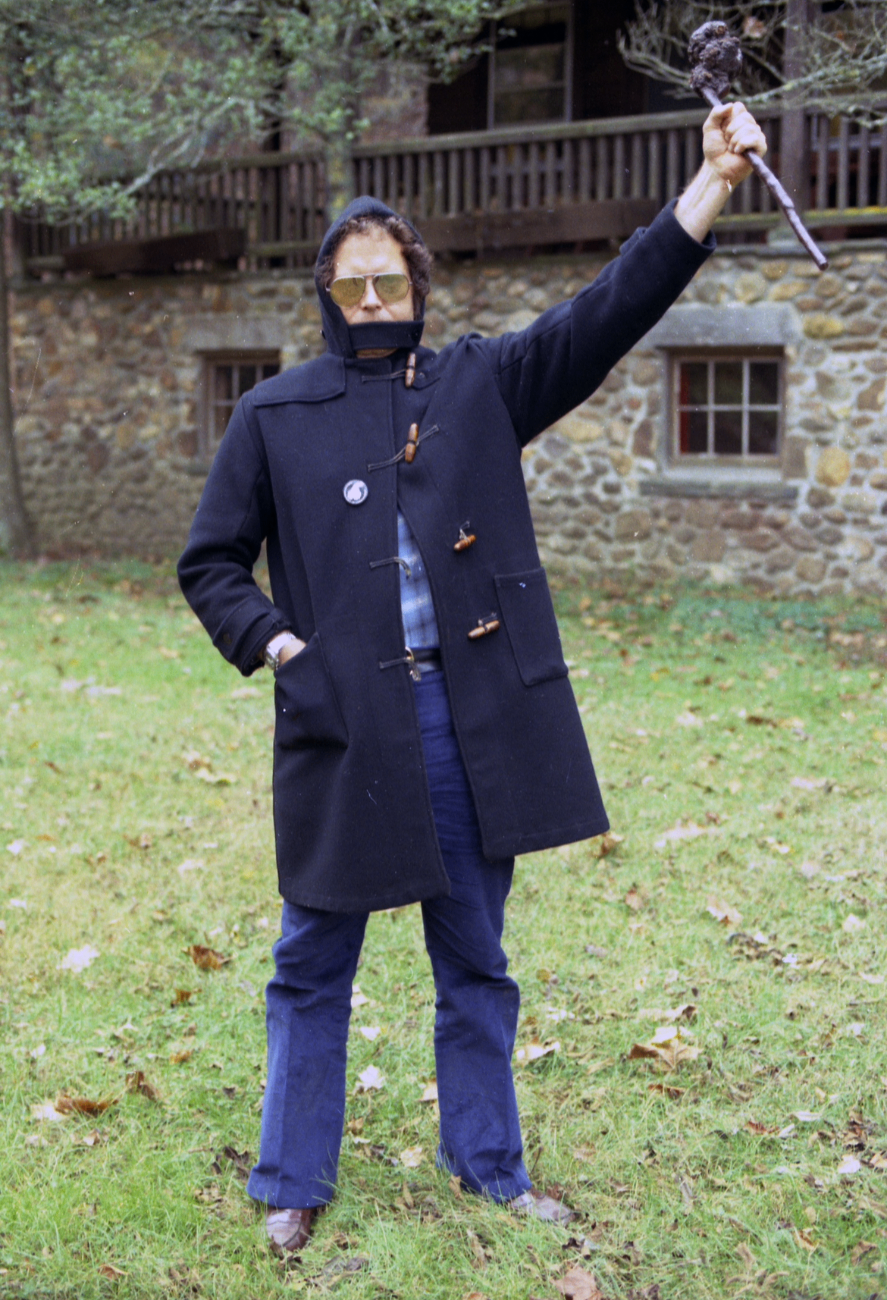
Richard Joshua "Josh" Reynolds III[3]
Steward of the portion of Devotion that later hosted independent researchers.
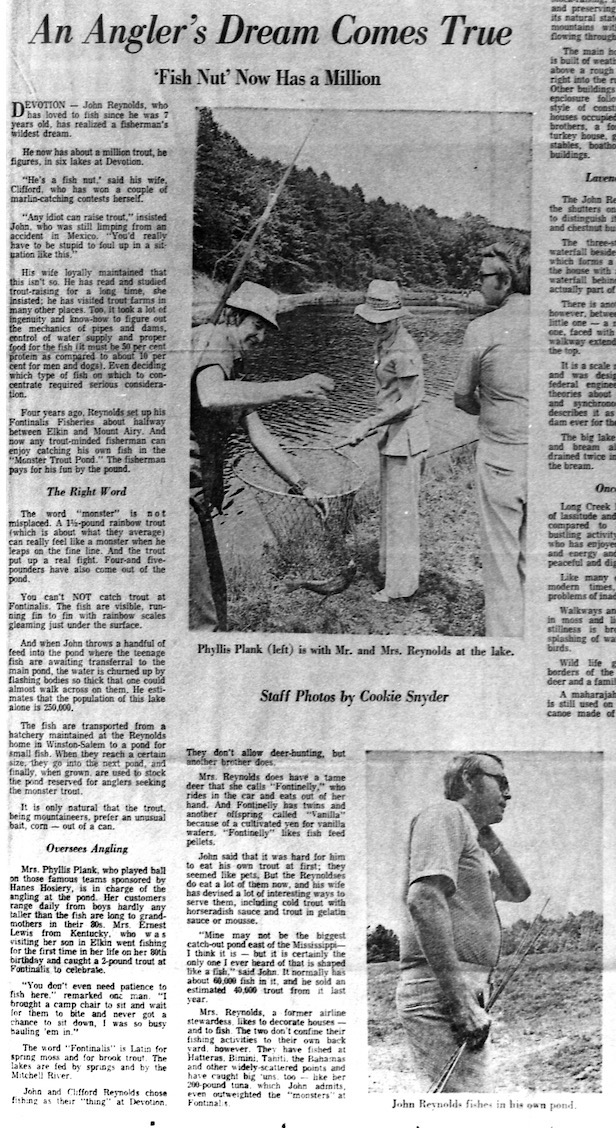
John Dillard Reynolds[4]
Built Fontinalis Fisheries, his own ponds and lakes at Devotion stocked with roughly a million trout.
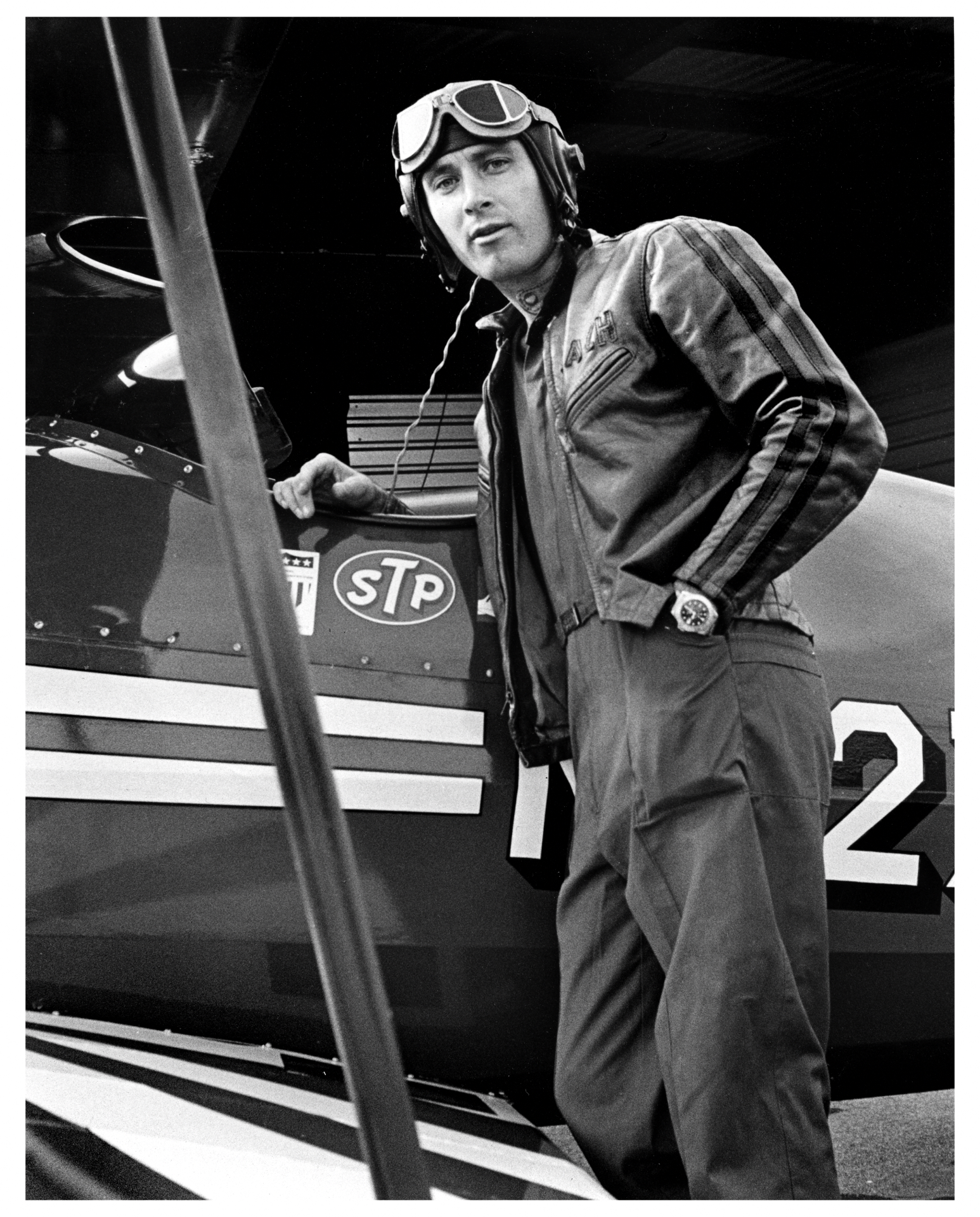
Zachary Taylor Reynolds[10]
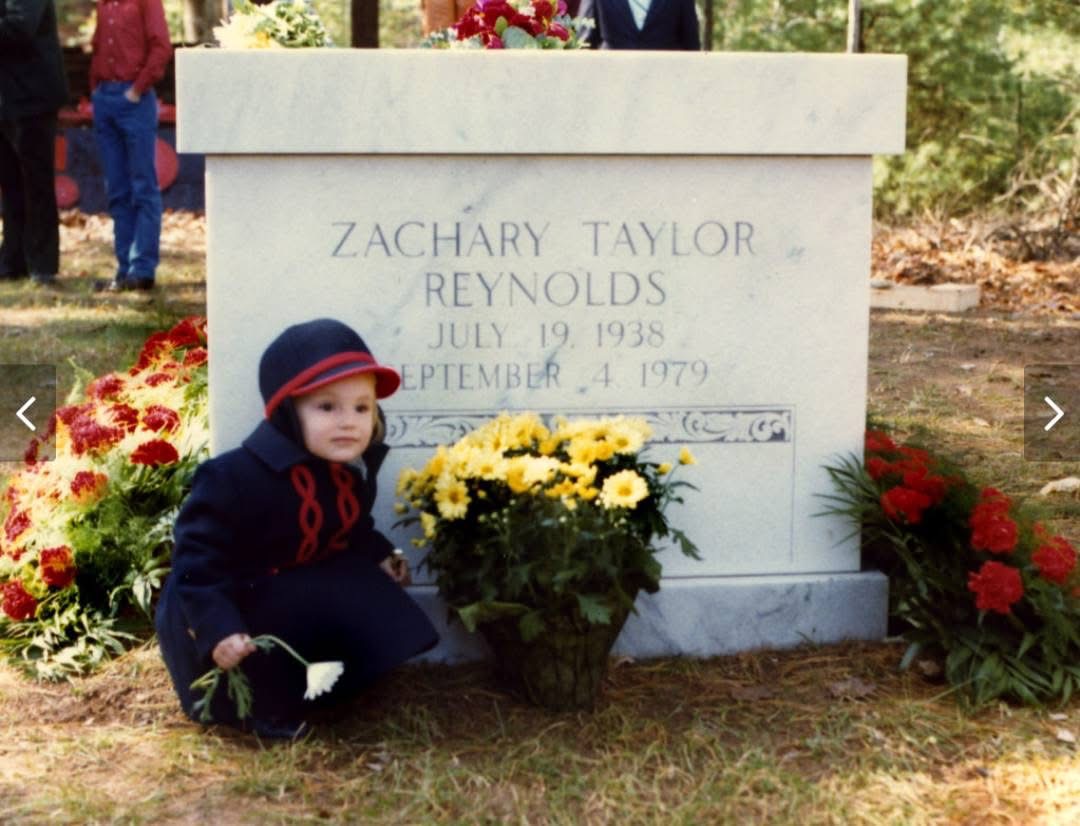
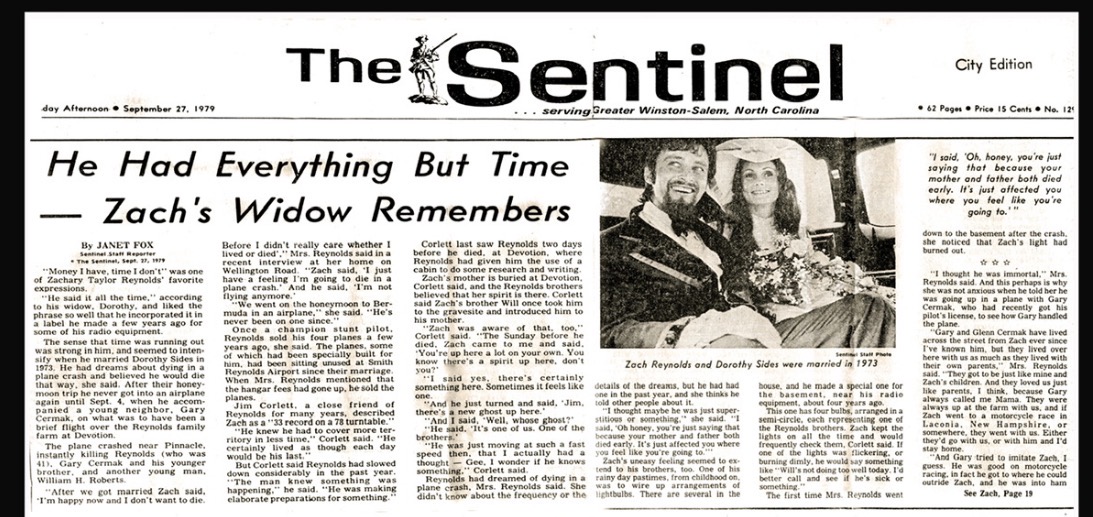
Racer and aviator; died in an airplane accident on September 4, 1979.
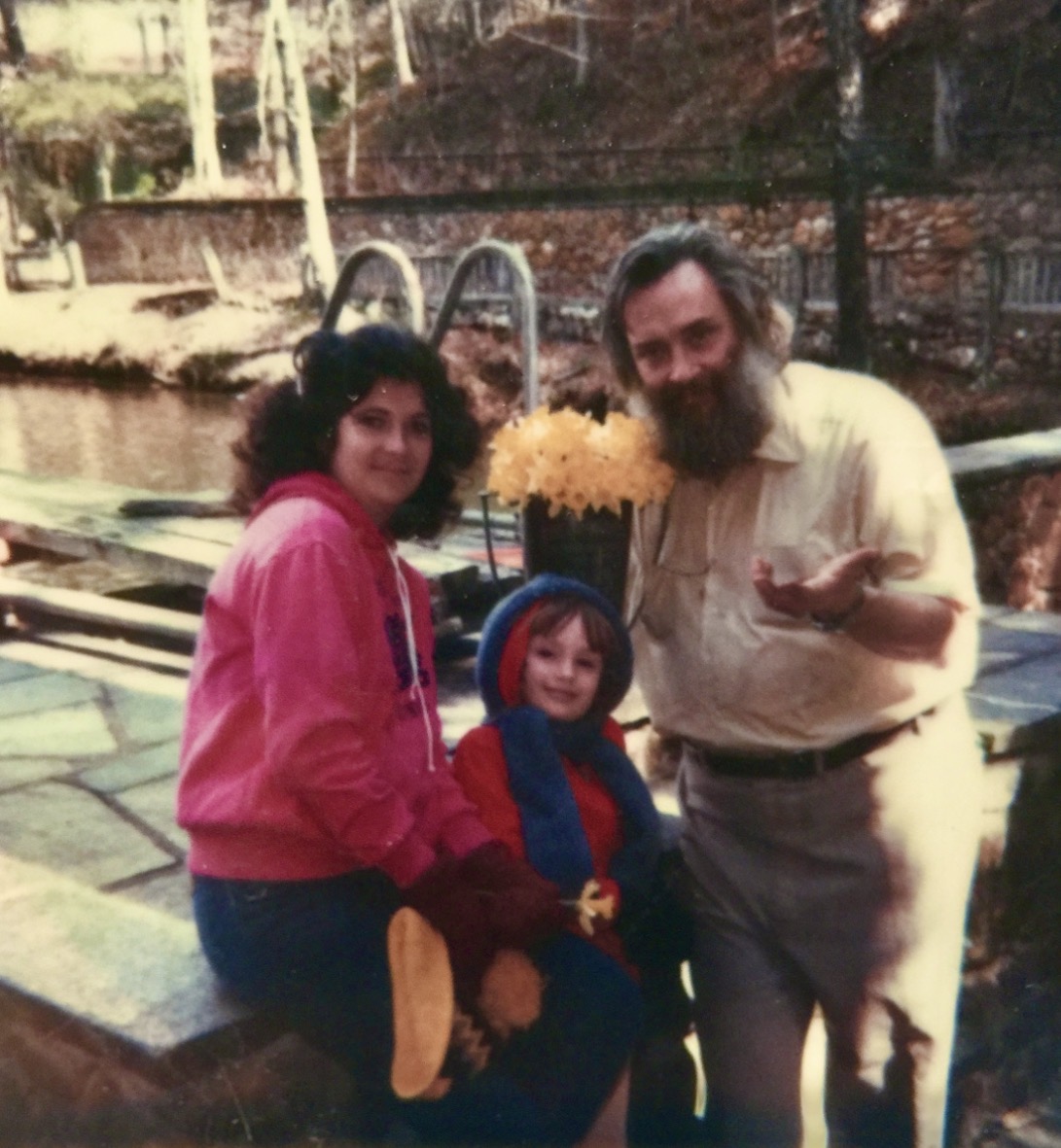
William Neal Reynolds II
Held his own portion of the estate following the division.
After Zachary Taylor Reynolds died in an airplane accident on September 4, 1979,[9],[10] his daughter, Kathryn Reynolds, has continued the family's vision of sustainable agriculture through active farming at Devotion.
1980 — Land Sold Outside the Family
A portion of the mountain leaves Reynolds hands
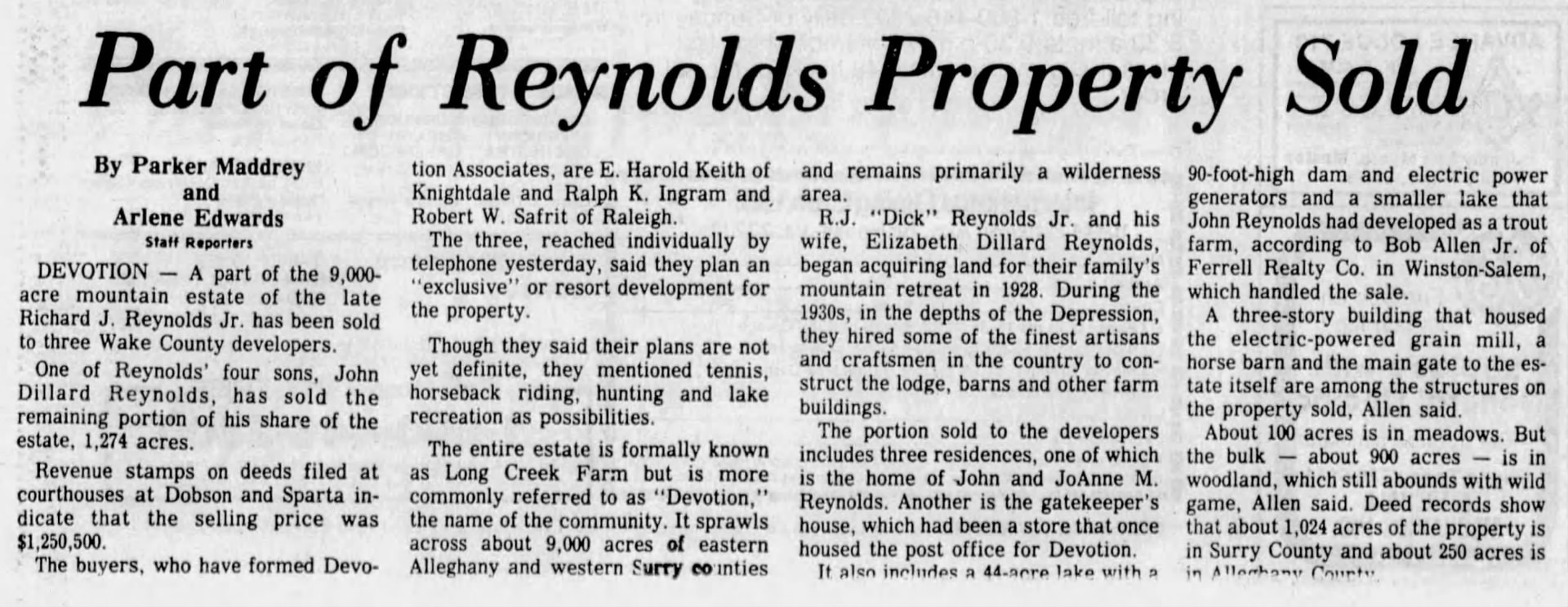
Not all of Devotion stayed within the family. In January 1980, the Winston-Salem Journal reported that John Dillard Reynolds had sold the remaining 1,274 acres of his share of the estate to three Wake County developers — E. Harold Keith of Knightdale, and Ralph K. Ingram and Robert W. Safrit of Raleigh — for $1,250,500, according to revenue stamps on deeds filed at the courthouses in Dobson and Sparta.
The buyers, who formed Devotion Associates, spoke of an "exclusive" or resort development, mentioning tennis, horseback riding, hunting, and lake recreation as possibilities. The portion sold included three residences — among them the home of John and JoAnne M. Reynolds and the gatekeeper's house, which had once been the store that housed the Devotion post office — as well as the 44-acre lake with its eighty-foot dam and electric generators, the smaller lake John had developed as a trout farm, the three-story electric-powered grain mill, the horse barn, and the main gate to the estate itself. About 100 acres lay in meadow; the bulk, some 900 acres, remained woodland still abounding with wild game.
Of the 1,274 acres, roughly 1,024 lay in Surry County and about 250 in Alleghany County. The sale marked the first substantial break in the boundaries Dick and Blitz Reynolds had assembled beginning in 1928 — and it is why Devotion today is a patchwork of ownership, with the Reynolds family retaining and farming its own portions while other tracts have passed through other hands.
Zachary Taylor Reynolds
Aviator, racer, and steward of Devotion
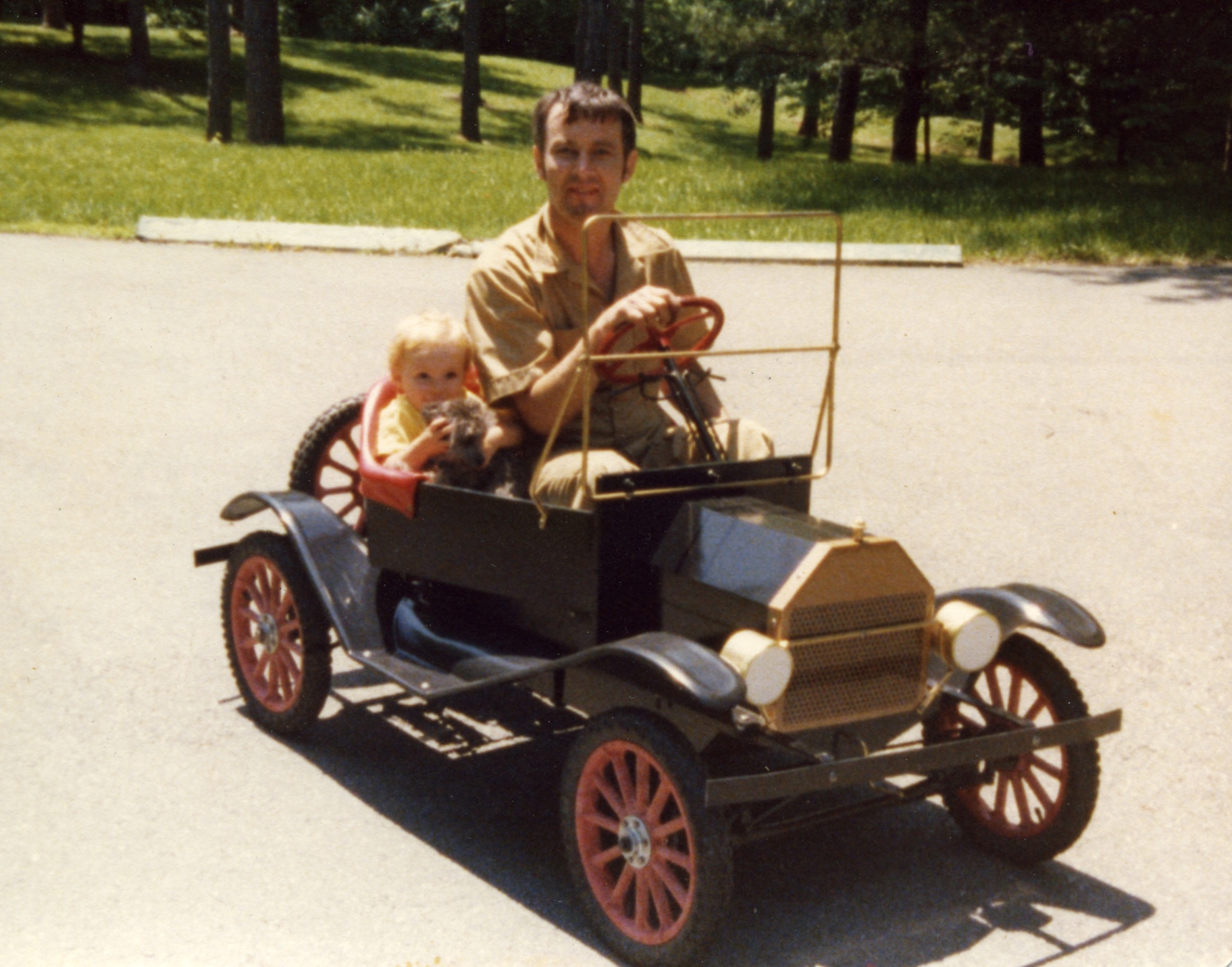
Born at Long Creek Lodge in 1938, Zach Reynolds inherited his father's appetite for machines and speed. He flew his own aircraft across the ridges of Devotion, raced and collected motorcycles, and photographed life on the estate. He died in an airplane accident on September 4, 1979.[9],[10]
1979 — A Daughter's Inheritance
Zach Reynolds died on September 4, 1979, and his portion of Devotion passed to his daughter, Kathryn Reynolds, who was a small child at the time. She has carried the estate forward ever since, returning it to the working, sustainable agriculture her grandfather intended.
After Dick and Blitz — Scientific Research
Where the mountains met independent science
Blitz Reynolds died on December 10, 1961, and Dick Reynolds followed on December 14, 1964, after which Devotion passed to their four sons.[25],[22] What followed on the eldest son's portion became one of the most unusual chapters in the estate's history.
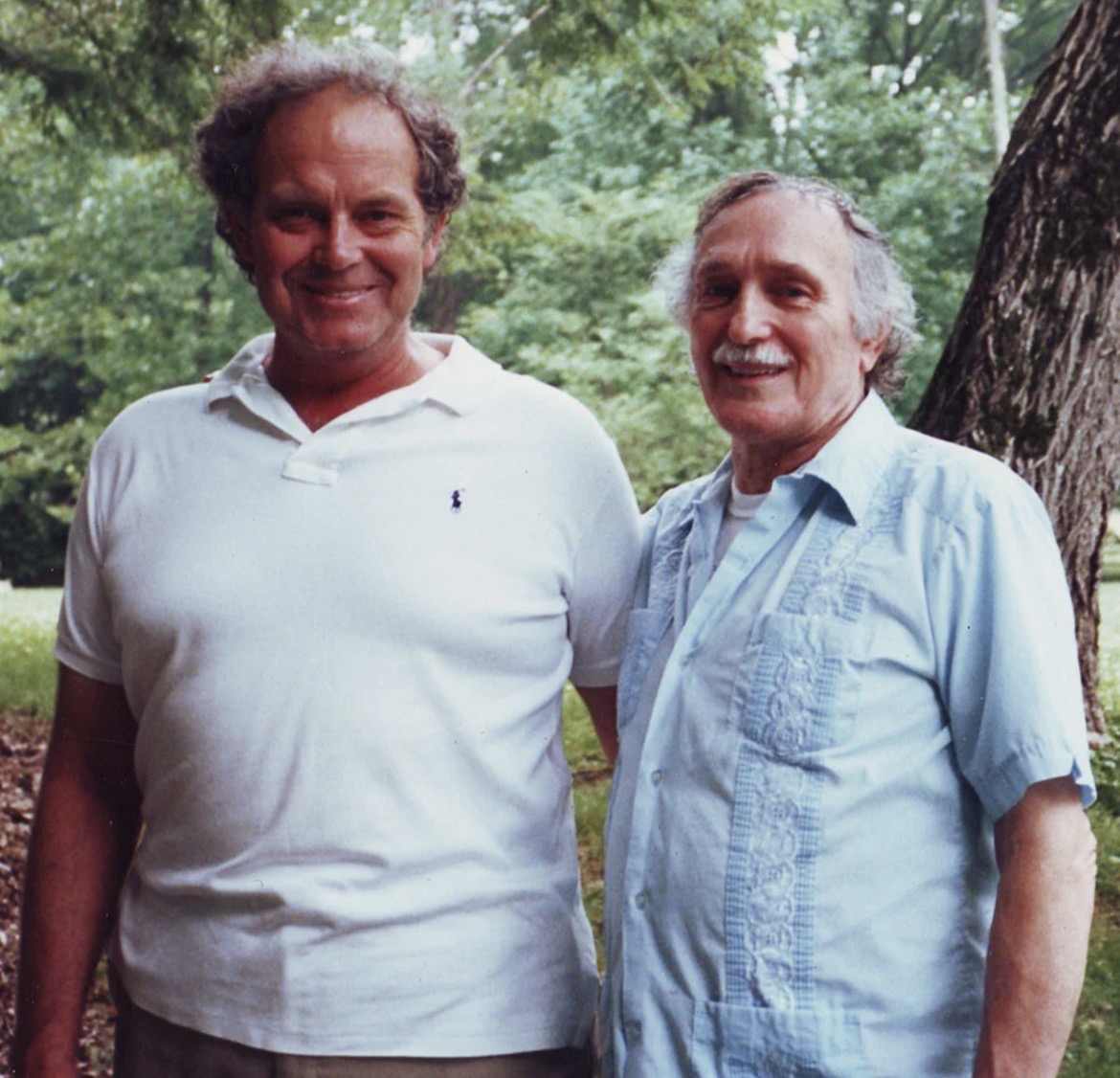
Beginning in the early 1980s, under the stewardship of Richard Joshua "Josh" Reynolds III — himself a scientist, philosopher, and poet — portions of Devotion became home to independent scientific researchers. The most notable was the physician and researcher[11] Andrija Puharich,[12] who lived and worked on the estate at Josh Reynolds' invitation until his death in 1995.[13]
Other researchers associated with Devotion in this period included physicist Dr. Elizabeth Rauscher and William Van Bise.[14]
The years that followed marked a distinct phase in the estate's history, in which Devotion became known as a place supporting independent scientific inquiry[15] — including electroculture and other sustainable agricultural farming practices.[16]

Devotion Today
Carrying the legacy forward
Following the death of her father, Zachary Taylor Reynolds, in 1979, that portion of Devotion passed to his daughter — Kathryn Reynolds, who owns and stewards it today.[9],[10]
A granddaughter of R. J. "Dick" Reynolds Jr., Kathryn is an award-winning fine art photographer, artist, writer, and poet. She keeps her section of the estate a working landscape rather than a museum piece, farming it actively and practicing sustainable agriculture — rotational grazing, restored pasture and soil, clean water from the same creeks that once turned the estate's wheels.
Alongside that work she founded and runs the Devotion Conservancy, a 501(c)(3) nonprofit devoted to heritage breed, threatened, and critically endangered avian species — preserving them through responsible selective breeding, careful husbandry, and public education. Her flocks include Asian gamefowl and Aseel chickens, an ancient lineage from the courts and villages of the Indian subcontinent that now stands at the edge of being forgotten, along with Devotion Serama bantams.[29]
"Raising Aseel chickens is not simply a hobby for me," she writes. "It is an act of devotion, preservation, and deep respect for a living lineage older than most written history." Every pairing and every season of husbandry is a small act of conservation — carried out on the same ground where Long Creek Lodge once shipped eggs and banded birds to Winston-Salem grocers. Ninety years on, Devotion is still doing what it was built to do: feed itself, and keep faith with the land.[29]
An Original Song
"Carolina Gold"
Written and performed by Kathryn Reynolds, "Carolina Gold" recalls Blitz Reynolds and the boys' life at Devotion — the creeks, the pastures, and the mountain years that made the place.
"Carolina Gold" — original song by Kathryn Reynolds, about Elizabeth "Blitz" Reynolds and her sons' life at Devotion.
Press & Archive
Devotion in the news
The 1995 Charlotte Observer feature on Andrija Puharich and the researchers who lived here, the 2014 filming of The Longest Ride, and clippings from the Winston-Salem Journal are collected on their own page.
Read Devotion in the NewsTimeline
Nearly a century in the mountains
1930
The first land
Reynolds buys a farm on Long Creek at the headwaters of the Mitchell River — the seed of what becomes Long Creek Farm.
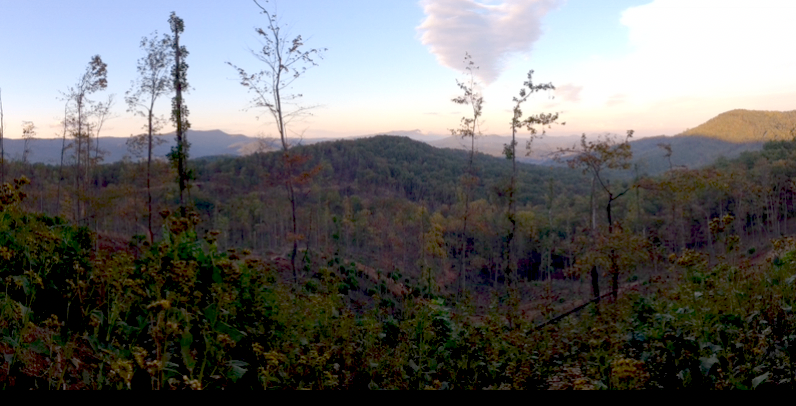
Ridgelines above the Mitchell River headwaters, where the first farm was bought. January 1, 1933
Dick and Blitz
Twenty-seven-year-old R. J. Reynolds Jr., known as "Dick" Reynolds (1906–1964), marries Elizabeth "Blitz" McCaw Dillard (born January 16, 1909; died December 10, 1961). Together they begin assembling land in western Surry County, about ten miles east of the summer colony at Roaring Gap.
Dick and Blitz Reynolds with two of their sons at Christmas. 1933–1939
A private WPA
Modeled on Roosevelt's public works programs, construction employs essentially every resident of the Mitchell River area for seven years. Every material — chestnut timber, foundation stone, river rock — is harvested, blasted, or quarried on site so the work would last as long as possible.
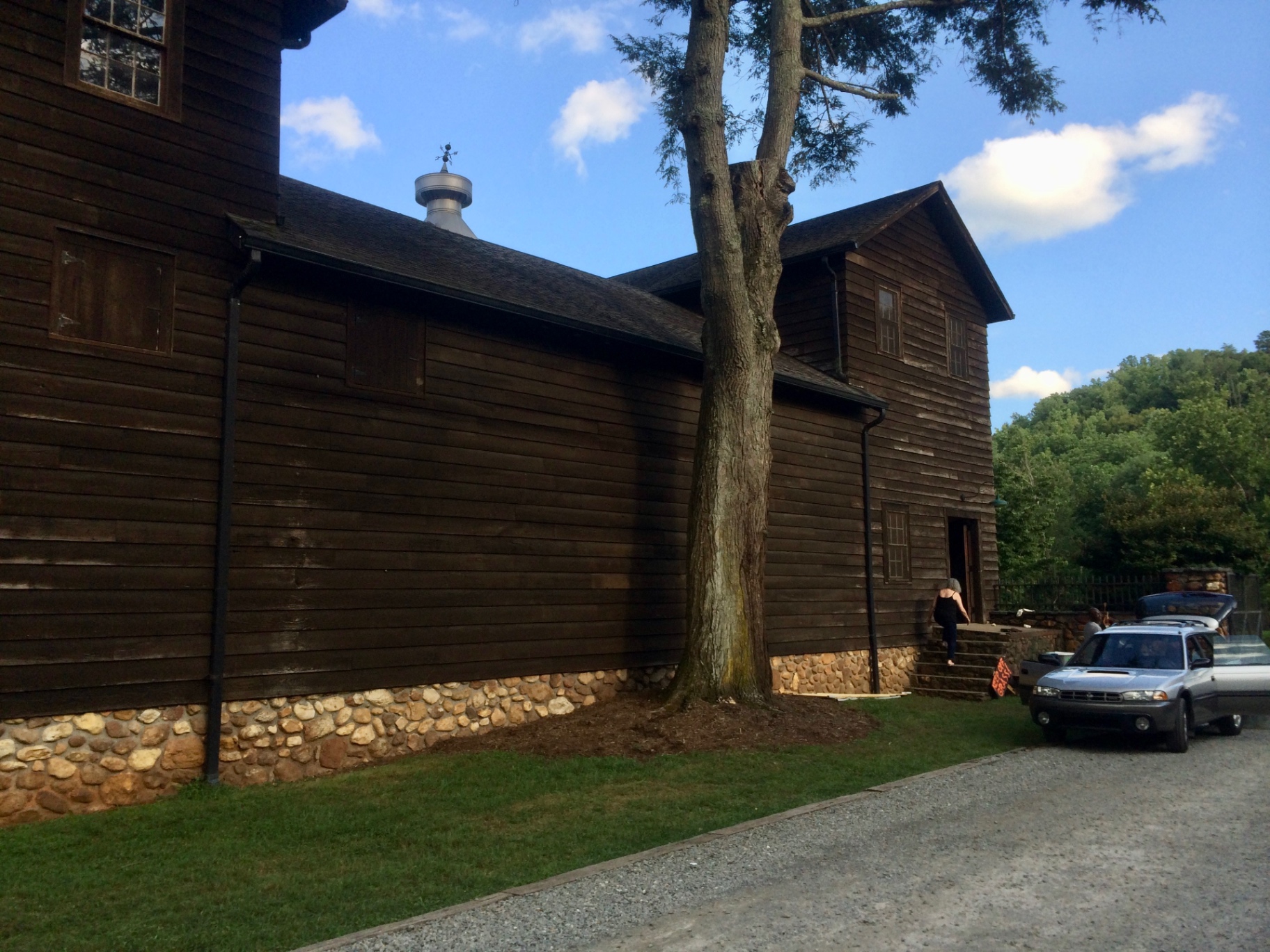
The mill house — chestnut siding over river-rock foundations, all sourced on site. 1935–1965
Farm and wildlife preserve
Long Creek Farms is managed as an agricultural farm and natural-resource preserve with the NC Wildlife Resources Commission and the U.S. Department of the Interior. The Reynolds family, alongside the Vanderbilts, helps reintroduce white-tailed deer to western North Carolina.
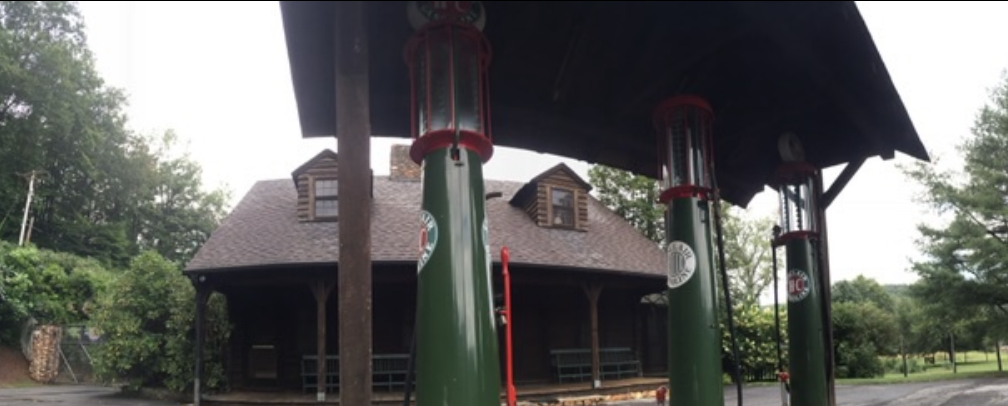
The general store and post office, the working heart of the estate community. 1940–1942
Winston-Salem and the war
Dick Reynolds serves as Mayor of Winston-Salem and as Treasurer of the Democratic National Committee for FDR's 1940 campaign, then leaves in 1942 to serve as a Lieutenant Commander aboard an escort carrier in the Pacific.
The stonework crest and spillway of the hydroelectric dam completed in the 1940s. 1961–1964
A generation passes
Blitz Reynolds dies on December 10, 1961, and is buried at Devotion at the site of the bowling green. Dick Reynolds dies on December 14, 1964, and the estate is divided among their four sons — Josh, John, Zachary, and William Neal Reynolds II — each pursuing his own interest in his own portion.
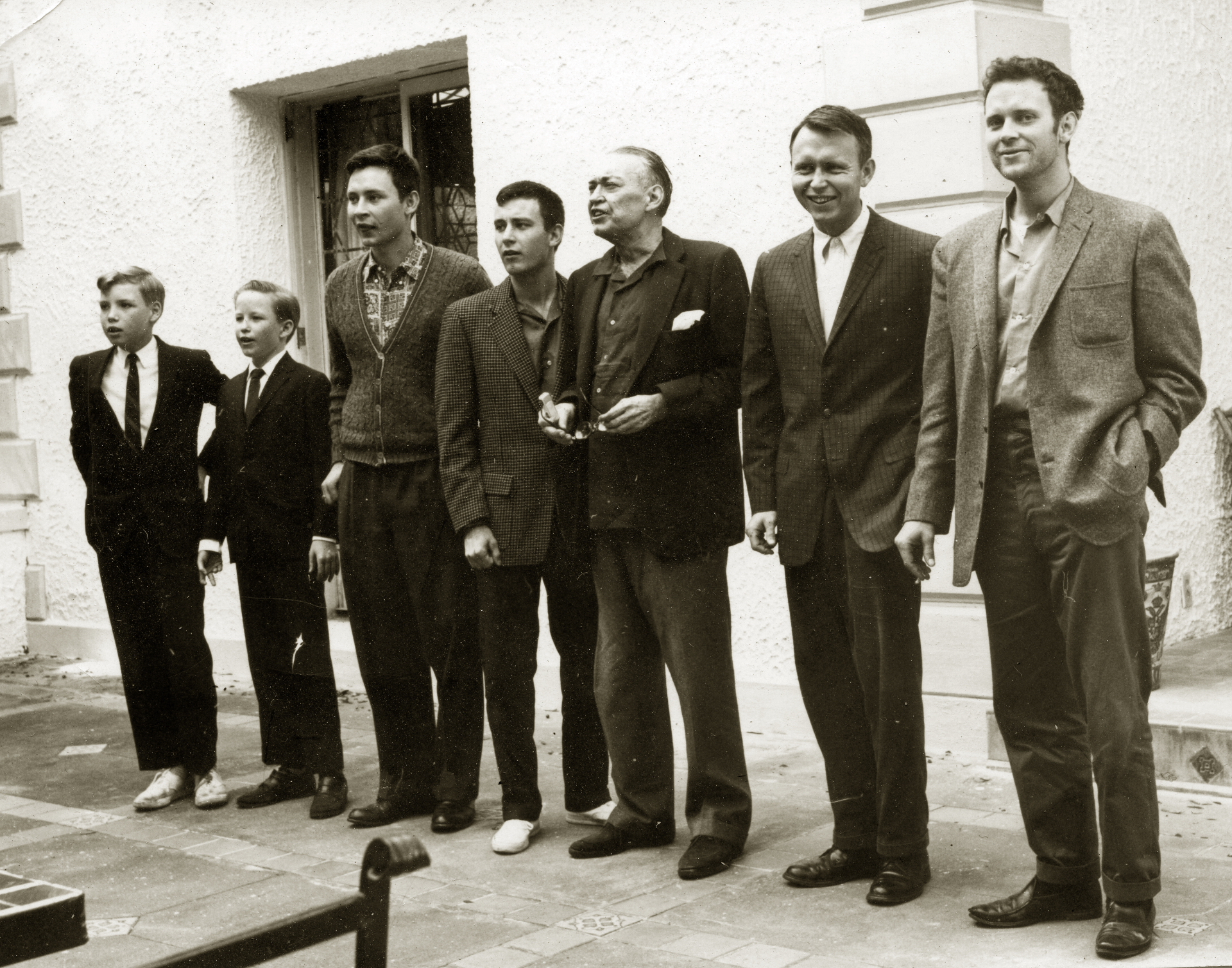
Dick Reynolds with his sons, gathered outside the family home. 1972
A million trout
John Reynolds — a self-described "fish nut" — runs Fontinalis Fisheries at his own portion of Devotion, a separate operation from the original gravity-fed hatchery below the hydroelectric dam. Working with his wife Clifford, he builds a system of ponds and lakes about halfway between Winston-Salem and Mount Airy holding, by his own estimate, roughly a million trout, including a catch-out "Monster Trout Pond" shaped like a fish where anglers pay by the pound.
"An Angler's Dream Comes True" — John Reynolds and Fontinalis Fisheries. 1977–1995
The scientists at Devotion
Josh Reynolds III befriends a circle of consciousness researchers at a 1977 conference in Iceland, invites Dr. Andrija Puharich to live at the estate in 1980, and in 1993 asks physicist Dr. Elizabeth Rauscher and William Van Bise to join them. After Josh's death in 1994, his executor moves to evict the group — a dispute that reaches the front page of The Charlotte Observer.
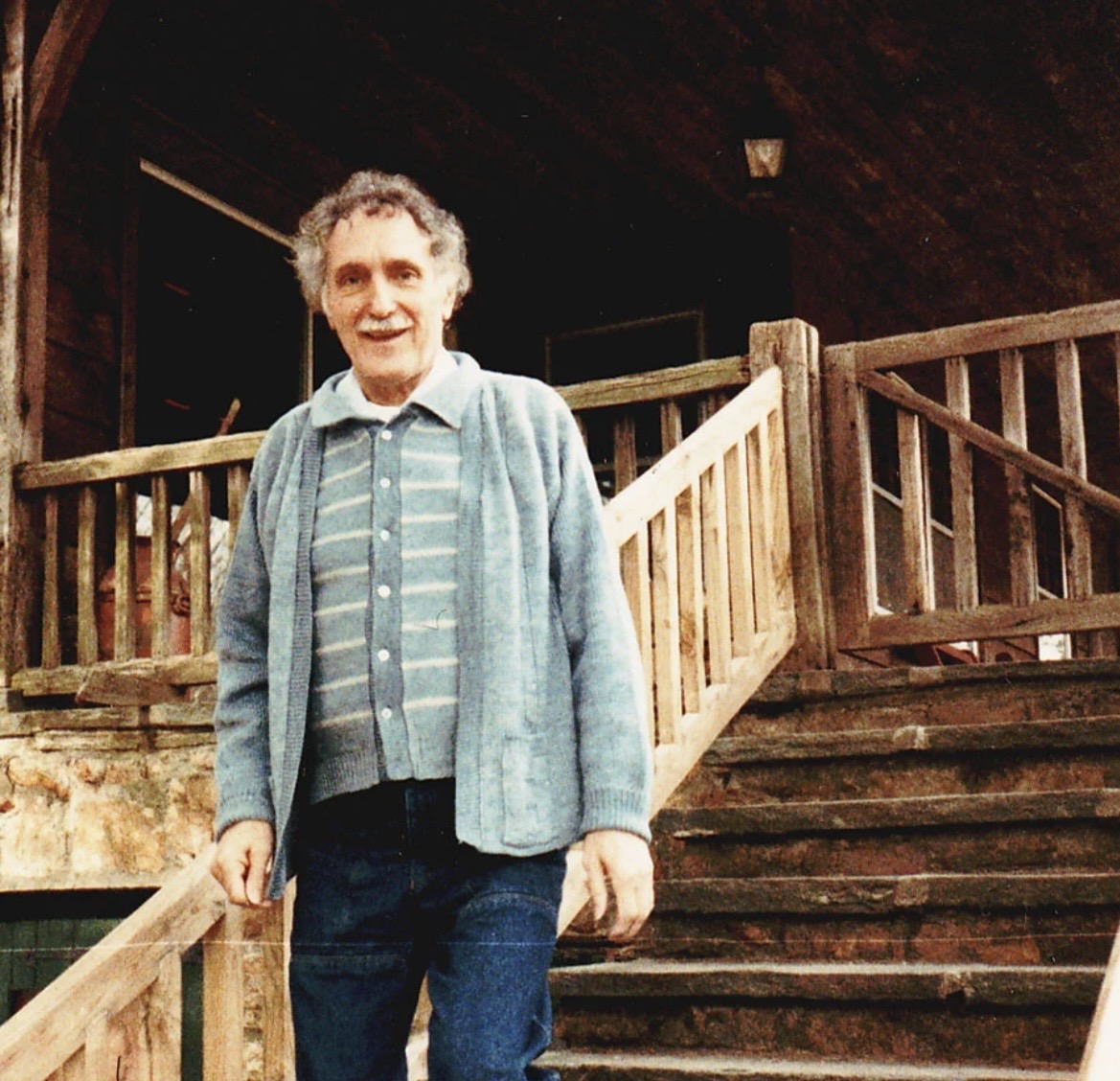
Dr. Andrija Puharich on the stone stairs at Devotion during his years at the estate. 1979
Loss and continuity
Zachary Taylor Reynolds dies in an airplane accident. His daughter, Kathryn Reynolds, carries the family's vision forward through active, sustainable farming at Devotion.
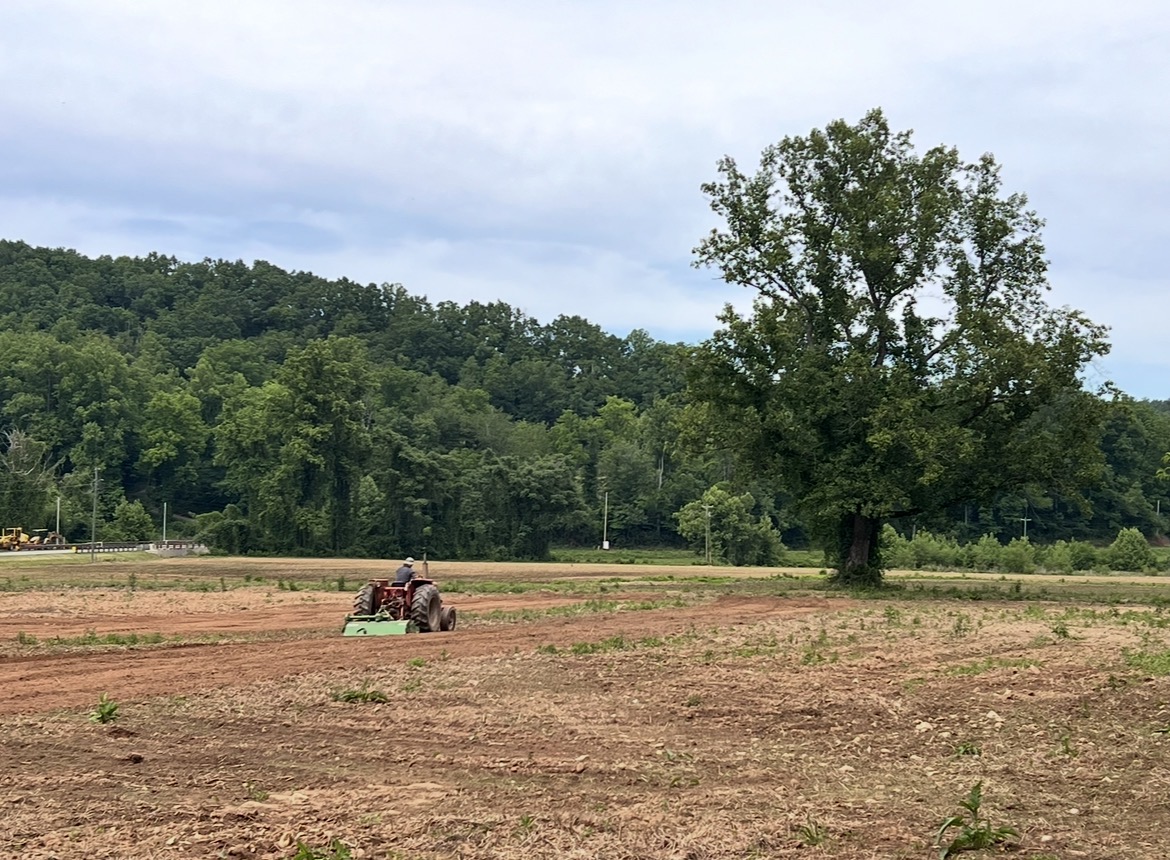
Pastures still in active, sustainable production under Kathryn Reynolds. Today
Largely intact
Much of the original infrastructure — the dams, the lakes, bridges, roads, and dozens of historic buildings — survives. The NC Department of Transportation designates the property the "Devotion Rural Historic District," and it has been recommended for the National Register of Historic Places.
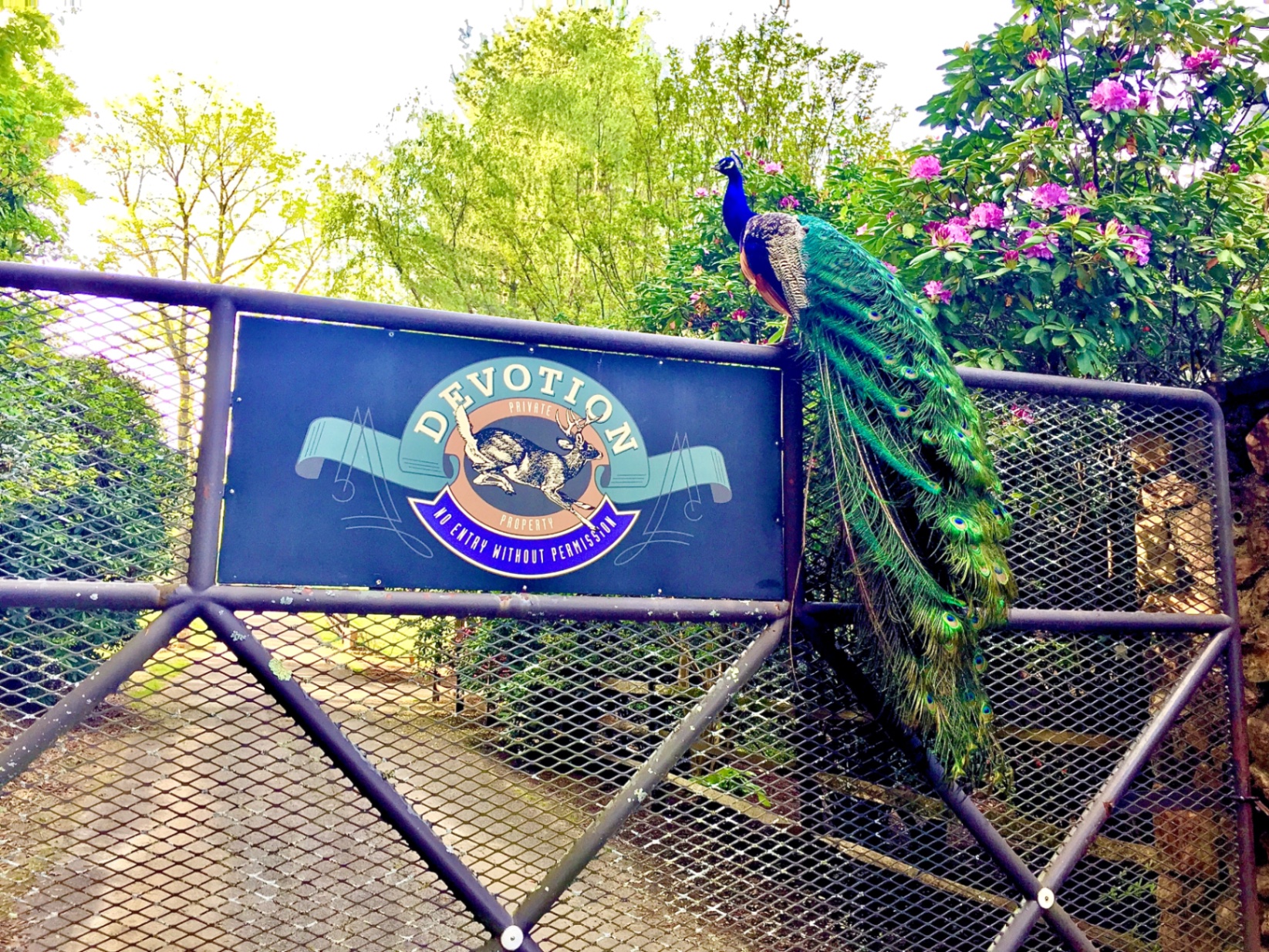
A peacock on the estate gate — Devotion remains private property, largely intact.
References
Sources and citations
- [1]Reynolds, Patrick (1989). The Gilded Leaf, 1st ed. Little, Brown and Company. ISBN 0-316-74121-3.
- [2]Reynolds, Noah. "Excerpt on Architecture (includes use of American chestnut timber for construction)." Devotion Rural Historic District — draft of research for application to the National Register of Historic Places (PDF). View the PDF
- [3]"Rare 1953 UFO Channeling Tape," The Cosmic Clock. thecosmicclock.substack.com
- [4]Greensboro News & Record, archived article on John Dillard Reynolds. greensboro.com
- [5]Zach Reynolds, biographical site. zachreynolds.com
- [6]"Drag Racer Zach Reynolds' Harley-Davidson Ironhead," Motorcycle Cruiser. motorcyclecruiser.com
- [7]"Issue 3: The Cigarette City Flash," DCIDS. dcids.substack.com
- [8]"1964 Ford Galaxie 500 Hard Top," Sports Car Market. sportscarmarket.com
- [9]"Rare 1971 Plymouth Hemi 'Cuda for Sale, Complete With Story," Business Insider (2013). businessinsider.com
- [10]"Grandson of R.J. Reynolds Killed With Three Others in Plane Crash," The New York Times, September 6, 1979. nytimes.com
- [11]CIA Reading Room, document CIA-RDP96-00787R000100190001-2 (PDF). cia.gov
- [12]"Mind Traveler," Lab9 Films. lab9films.com
- [13]"Mind Over Matter: The Mysteries of Andrija Puharich," Willem Witteveen. willemwitteveen.com
- [14]The Charlotte Observer, Charlotte, North Carolina — Sunday, January 15, 1995, page 8.
- [15]"What happens when radio waves penetrate the human skin," UNESCO Digital Library (1974). unesdoc.unesco.org
- [16]The Secret Life of Plants (1973). ISBN 0-7139-0594-8, via archive.org (PDF). archive.org
- [17]Reynolds, Kathryn. "RJ Reynolds Estate." rjreynoldsestate.com
- [18]Powell, William S. (1968). The North Carolina Gazetteer: A Dictionary of Tar Heel Places, p. 142. Chapel Hill: University of North Carolina Press. ISBN 0-8078-1247-1.
- [19]"Parts of 'The Longest Ride' Filmed in the Triad," WFMY News 2, April 2015. wfmynews2.com
- [20]"On Location party set at Dobson farm for The Longest Ride actors & background extras," Foothills Arts Council / Ray Publishing, April 10, 2015. raypublishing.wordpress.com
- [21]"Richard Joshua Reynolds, Jr.," Encyclopedia of World Biography (Gale), via Encyclopedia.com. encyclopedia.com
- [22]"R. J. Reynolds Jr., Tobacco Heir, Dies," The New York Times, December 16, 1964. nytimes.com
- [23]"The Reynolds Estate at Devotion," Winston-Salem Journal and Sentinel, September 3, 1950, p. 2B.
- [24]"The Reynolds' Farm: Solitude, Sufficient," Winston-Salem Journal, "The Home Place" section, September 24, 1978.
- [25]"Elizabeth McCaw Dillard Reynolds (1909–1961)," Find a Grave Memorial no. 132531733. findagrave.com
- [26]"Mrs. Reynolds, 52, Dies Here," Winston-Salem Journal (NC), December 11, 1961.
- [27]"Reynolds's First Wife Dies In North Carolina," Associated Press, December 11, 1961.
- [28]"Overview" and "Self-Sustaining Facilities," R.J. Reynolds 'Devotion' Estate, family history site. rjreynoldsestate.com
- [29]Devotion Conservancy, "Why I Raise Asian Gamefowl & Aseel Chickens" — Kathryn Reynolds, owner, Devotion Conservancy / Devotion Serama / Devotion Farms LLC. devotionconservancy.com
Reference list adapted from the Wikipedia article "Devotion, North Carolina", available under CC BY-SA 4.0.